
Aketa no Mise
Jazz of Japan #350 (Premium) — Aketa no Mise jazz bar, located near Nishi-Ogikubo station in Tokyo, Japan
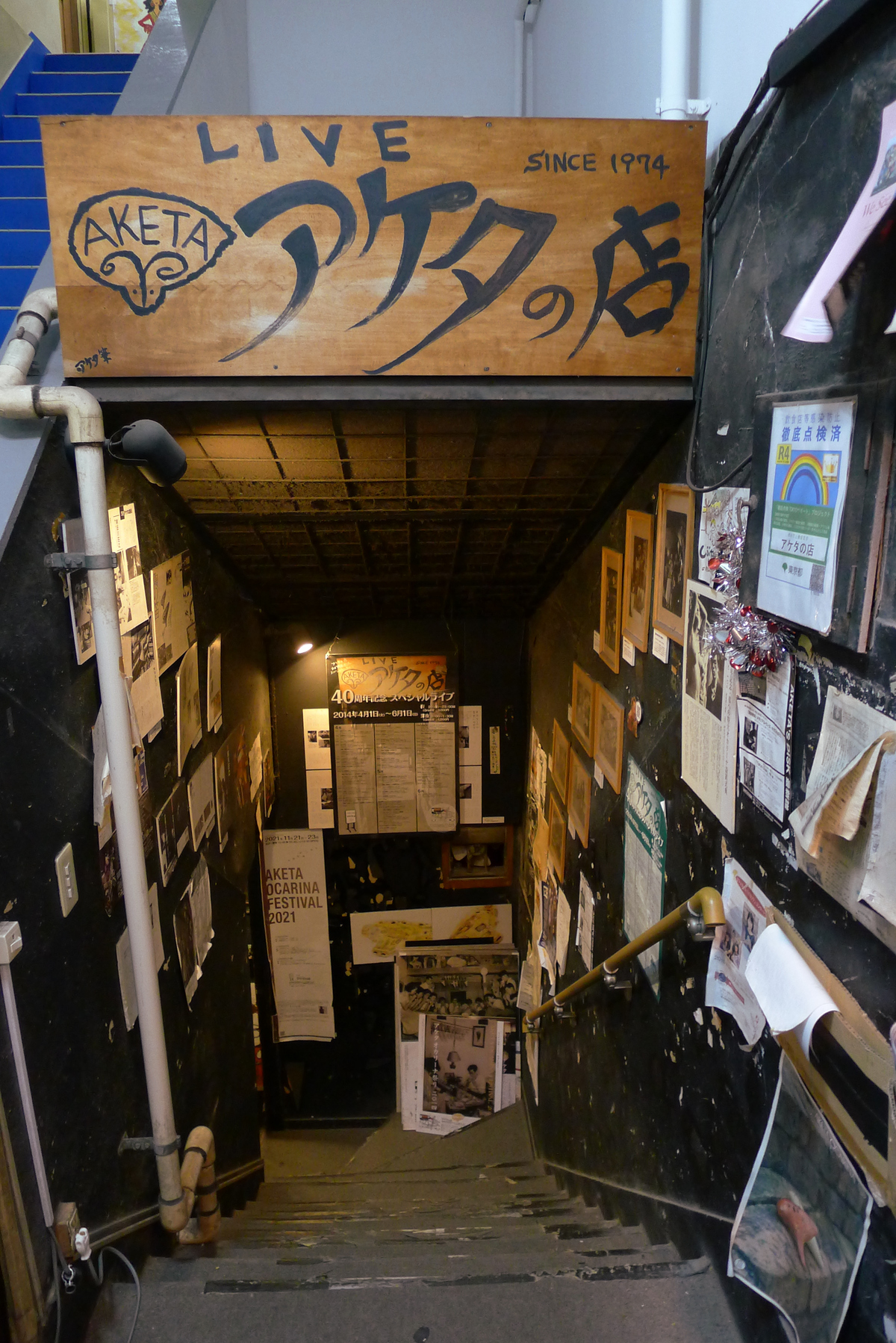
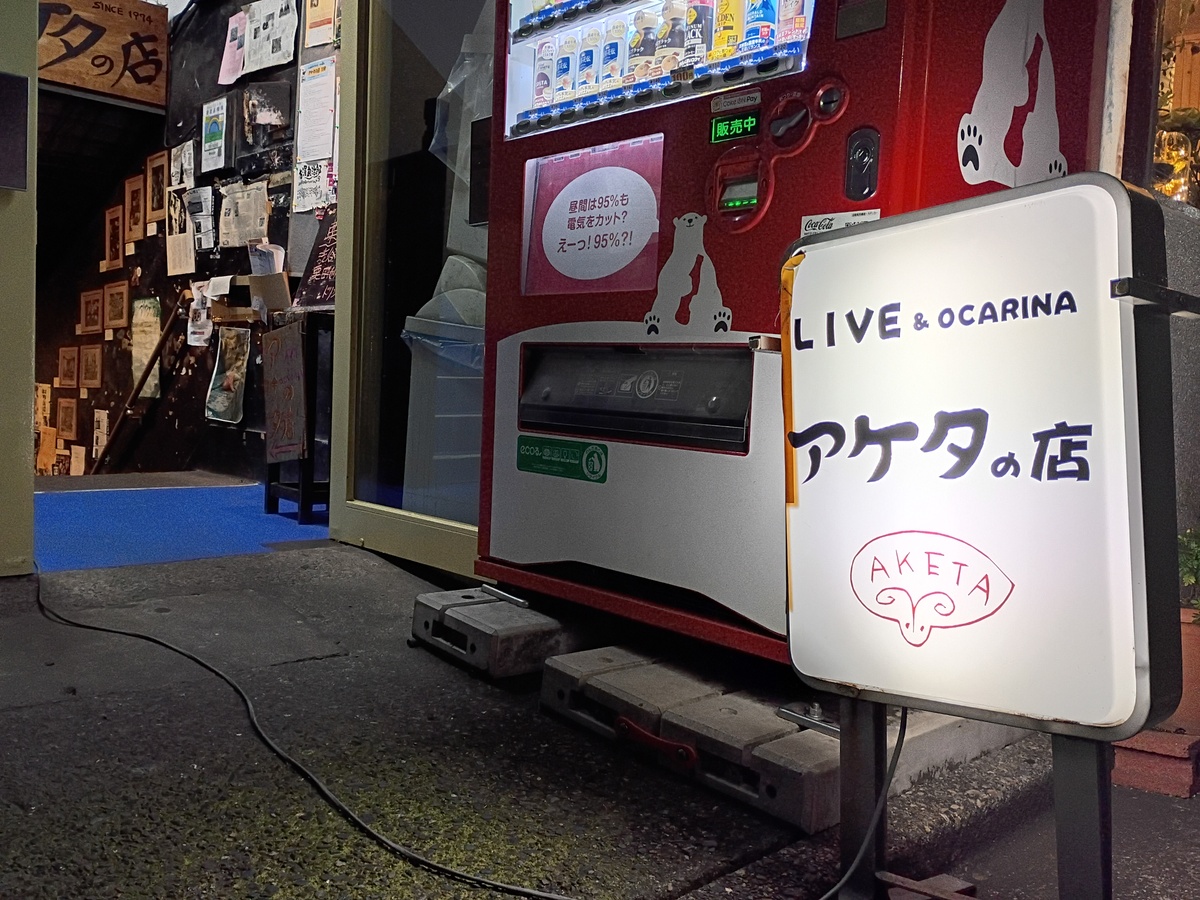
A few minutes walk from Nishi-Ogikubo station in Tokyo lies a scruffy stairway that leads down to the entrance to Aketa no Mise jazz bar. Above the stairway lies the Japanese name アケタの店 (Aketa no Mise — more on this later) and the words LIVE, SINCE 1974, and, in small print in a corner, アケタ革 (Aketagawa), and attached to the walls are crinkled flyers, schedules, and faded pictures of jazz events. There are enough clues for first-timers who lack Japanese fluency to know that this must be the jazz bar near Nishi-Ogikubo station that they were told about. Plus, it’s another legendary jazz spot right off of the lengthy Chuo train line, aka the “jazz line”, along with Velvet Sun, Manhattan, Shinjuku Pit Inn, and others.
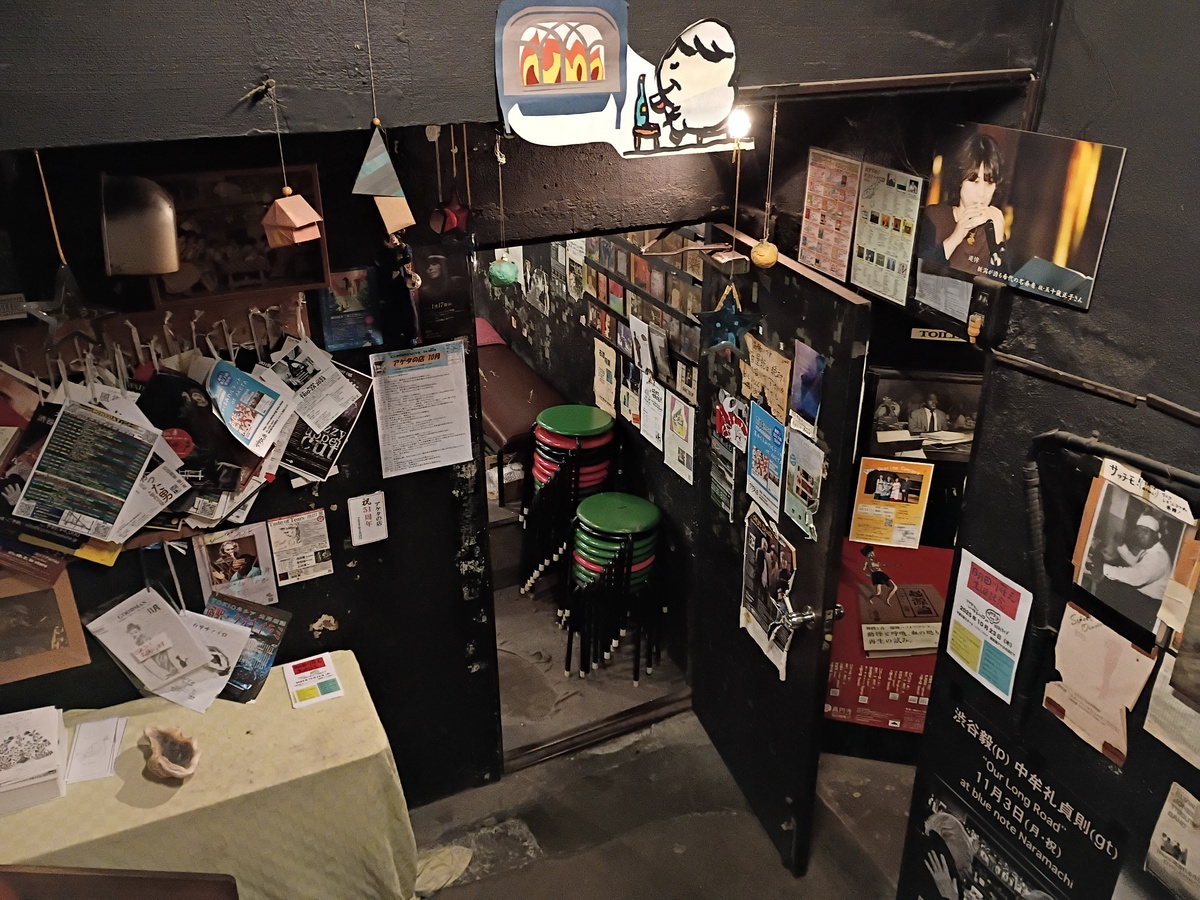
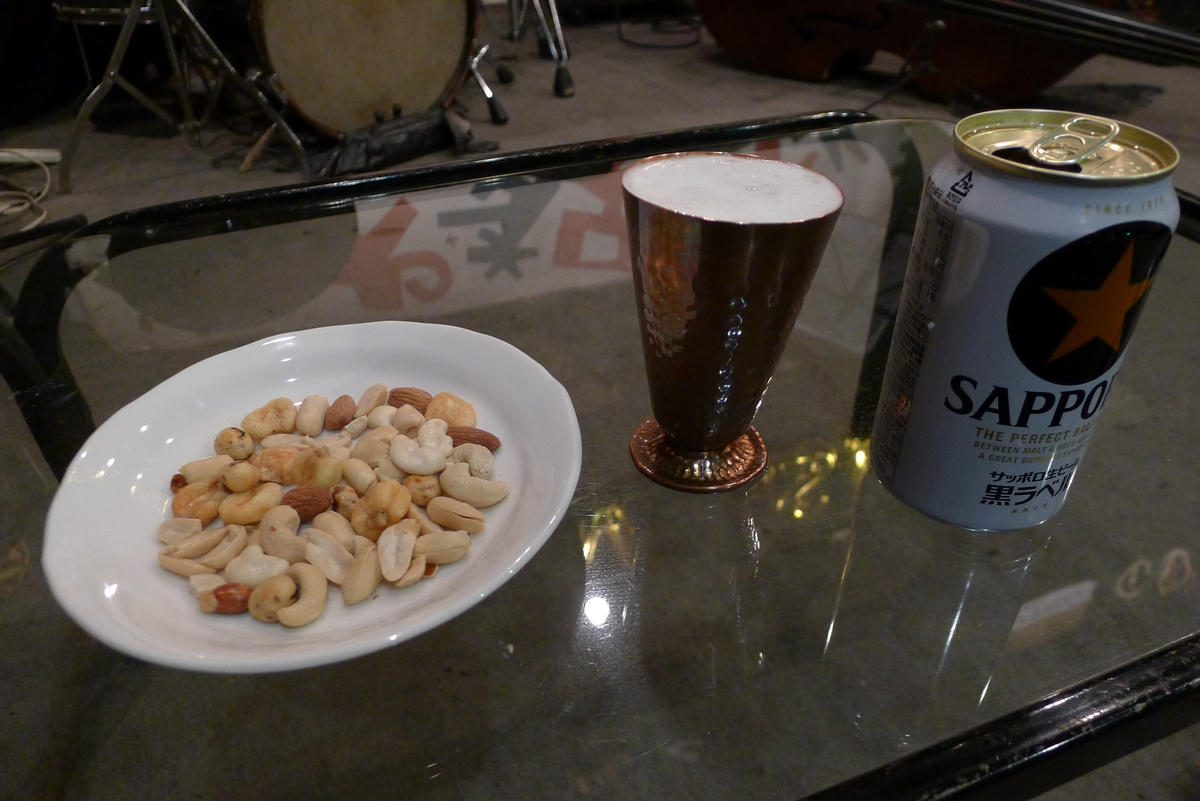
Descending the well-worn stairs leads to a lower landing and the inner door to Aketa no Mise. This leads to a dark and plain square of a room with a floor-level stage and instruments set against the back. As you step in and to the left, a simple handwritten menu is on the wall just to the side, making it convenient to order a drink or a snack (quickly scanning the handwritten Japanese menu) as you pay the admission fee to enter. Once done, take a seat from either the various low tables and basic chairs in the room or on the few bench-style seats against either side wall.
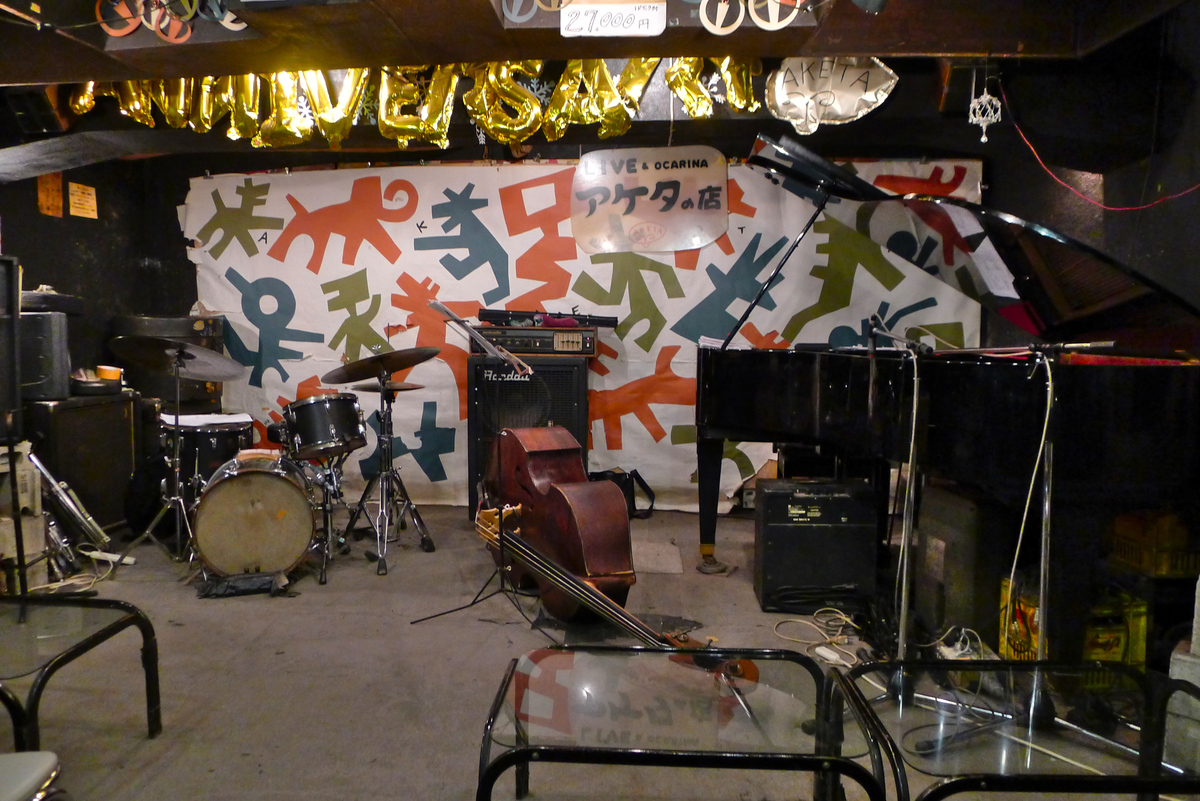
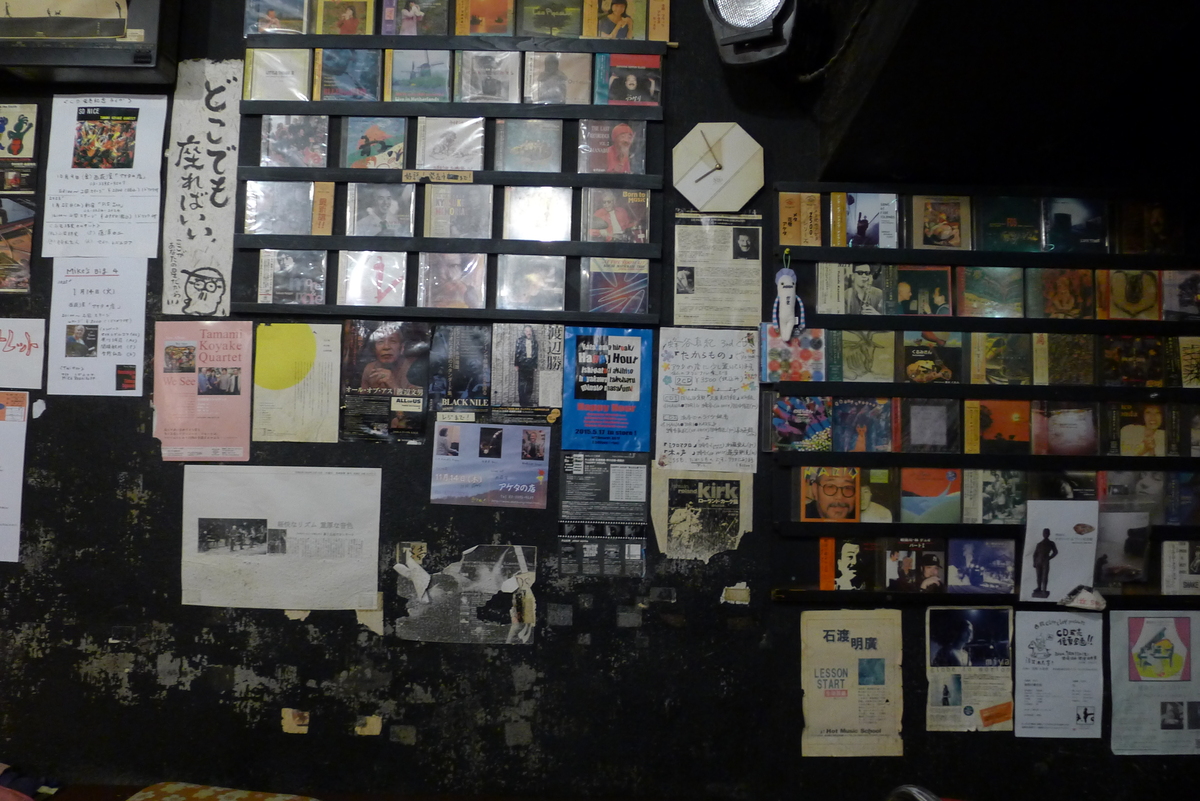
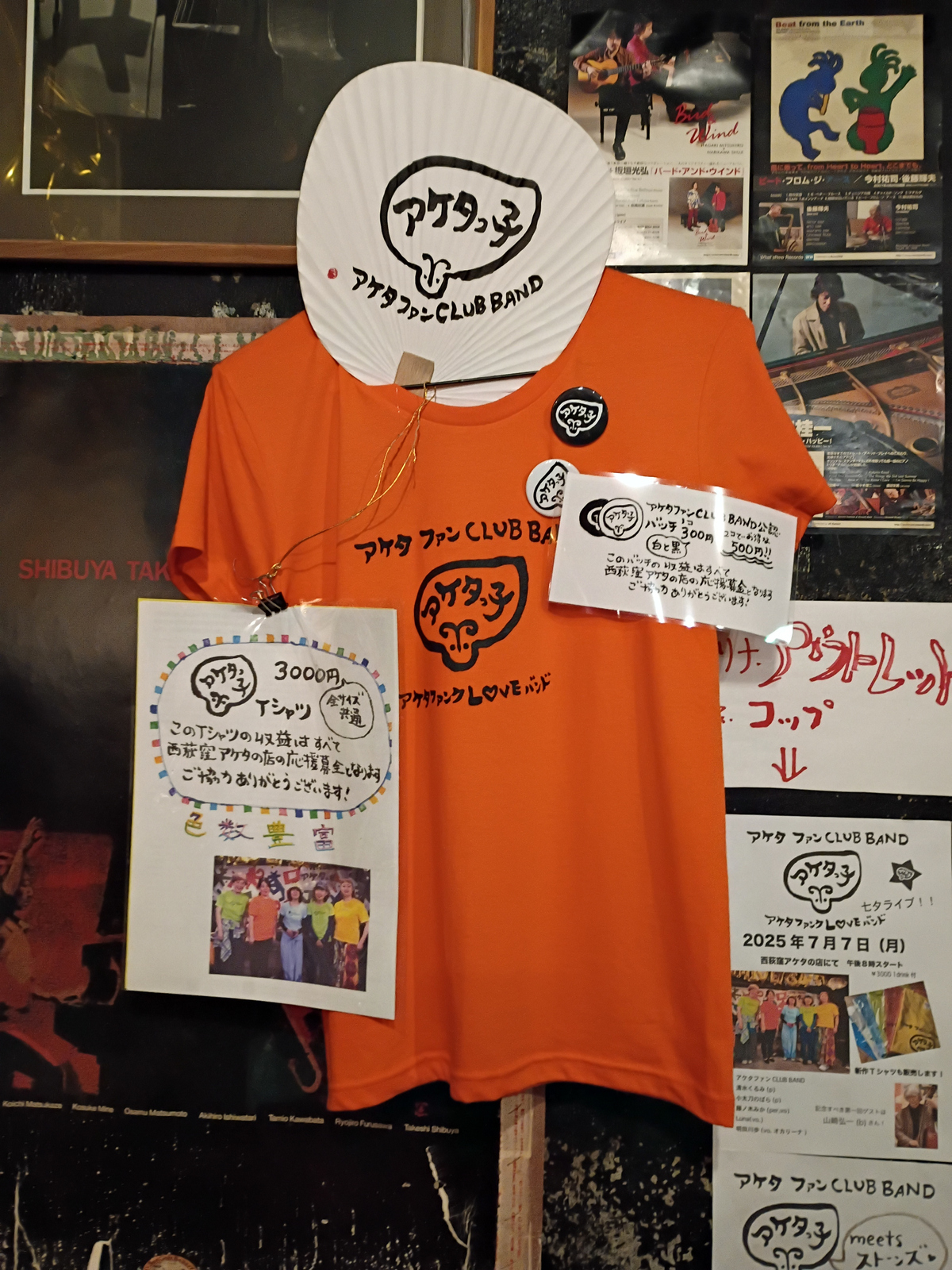
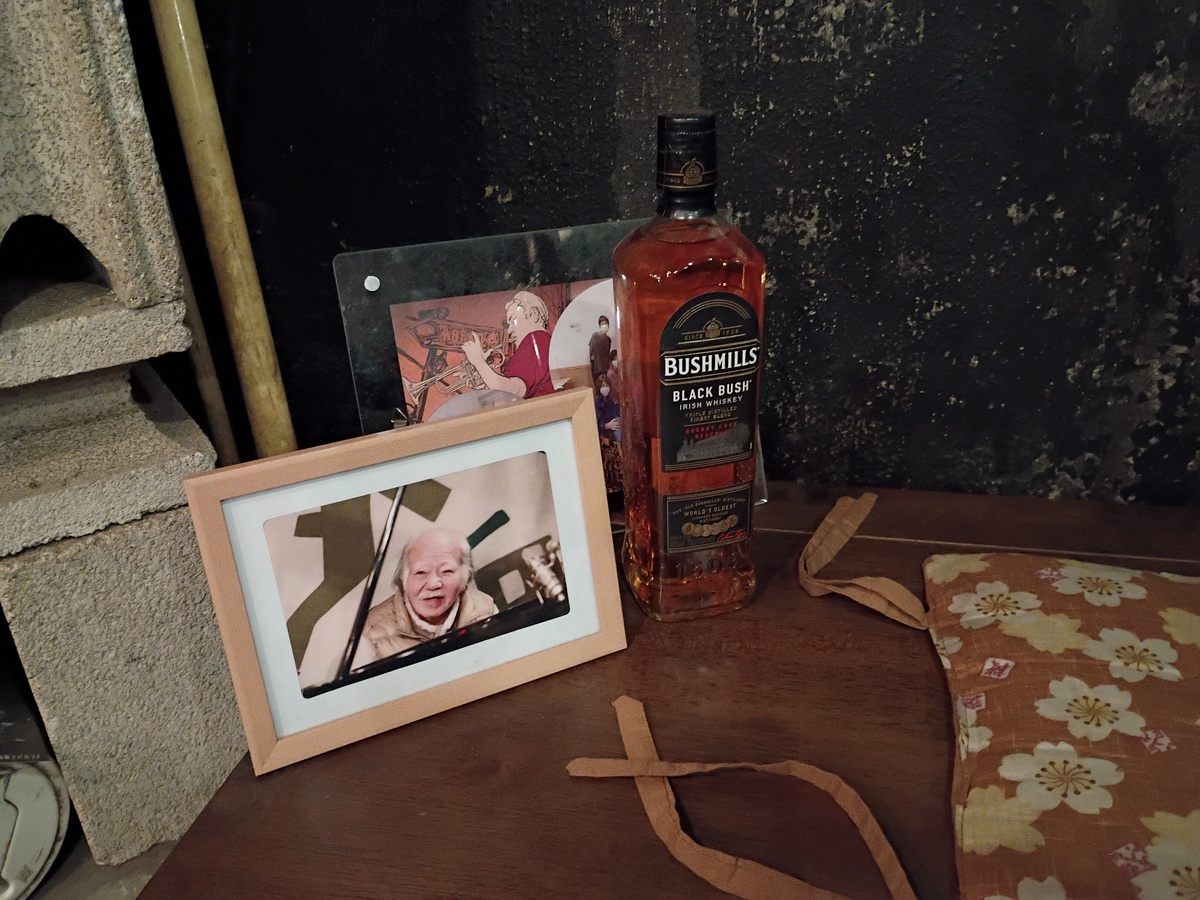
Take in the small room at a glance. A grand piano, drum set, and instruments at rest fill up the stage area before an expressively colorful wall mural with a funky beatnik vibe. Crates prop up speakers, cables are draped over and run where necessary, and threadbare carpet is repaired in patches with tape. Decorations may be hanging from some previous celebration. The walls are covered with papers, signs, and plastic CD cases that have absorbed decades of captive smoke. An independent spirit lives here in a genuine sanctuary for improvised music where artistic freedom is uncompromising.
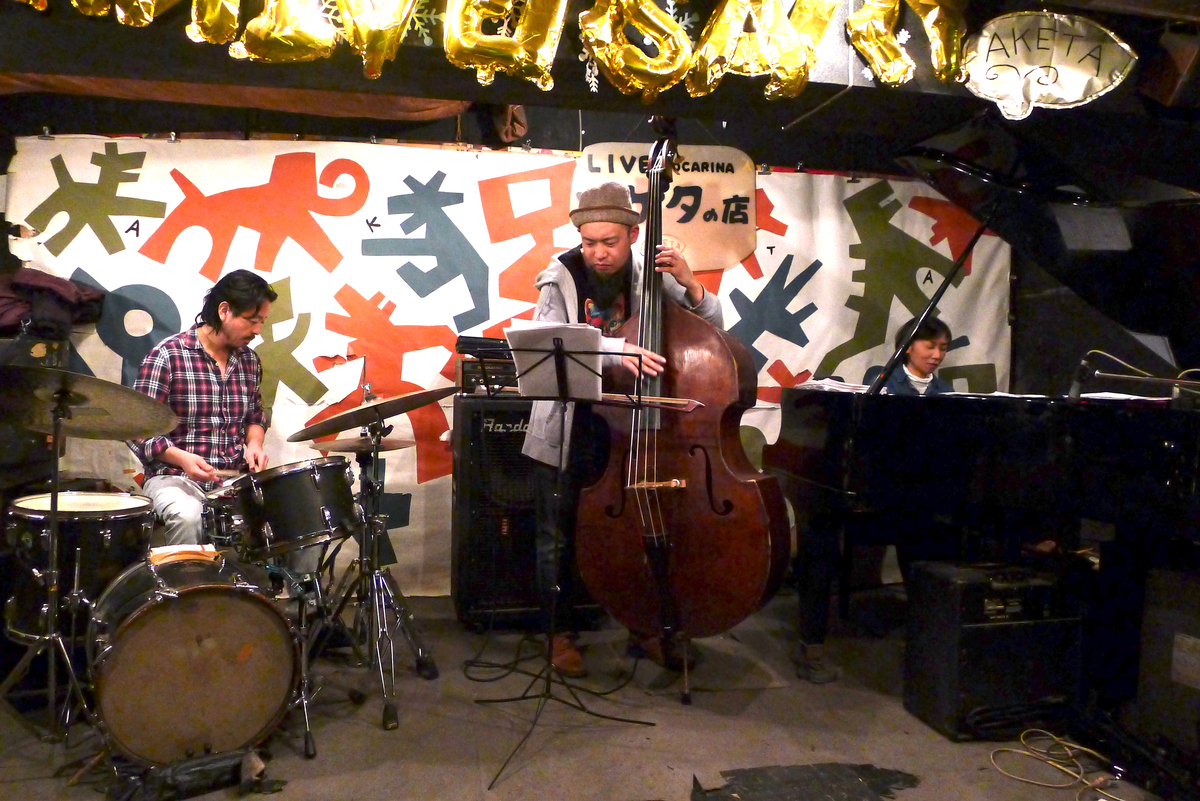
As a mild caution, the initial ragtag impression that the bar exudes may be offputting, especially to those who avoid dark, dingy spaces. It may even seem intimidating, like a members-only spot where outsiders seldom go. While its may be true that the setup is spartan and some of the furnishings are improvised and frayed, Aketa no Mise is welcomes jazz lovers with a live and let live attitude. Those are come to listen and appreciate the art and edge of jazz will feel comfortable here.
This all results in a great sense of authenticity, history, and support through the generations of opened minded jazz fans and the musicians who play here. It is a jazz haven with deep roots and a tangible soul. The fact that Aketa no Mise has been in business for over 50 years (opened in 1974), and much loved by jazz musicians and dedicated listeners throughout, makes itself immediately felt. The musicians take their music seriously here, and the piano sounds great.
As an overview for the general jazz club goer who is deciding whether to try this spot, there are two things that make Aketa no Mise a unique spot among the many places in Tokyo. One is the shop’s support of and focus on diverse acts including avant-garde, experimental, and free jazz.
The other is Aketa’s spotlight on one particular instrument, the ocarina, which is a type of small, potato-shaped ceramic or clay flute with a lineage to vessel flutes going back 12,000 years.
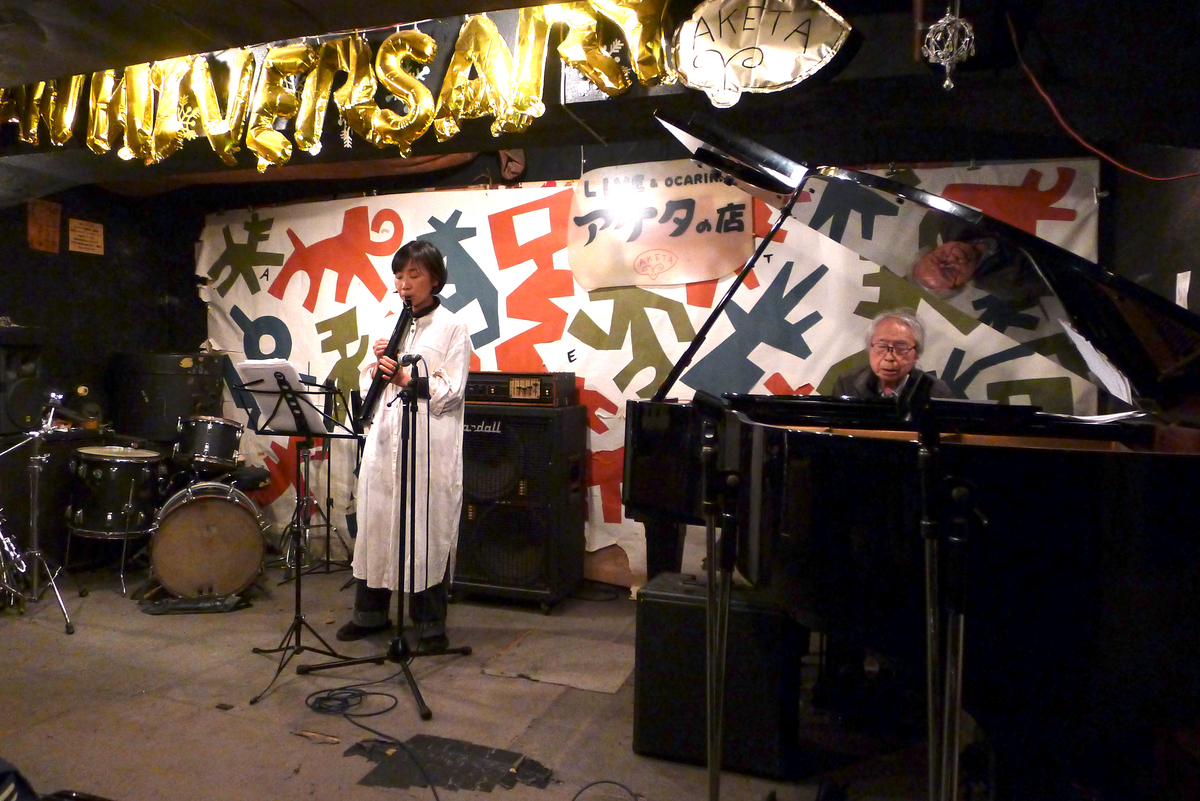
Something that may put off some jazz bar seekers is the name of this jazz bar, written in Japanese as アケタの店 rather than the “Aketa no Mise” romanization used here. Unlike many other jazz spots in Japan, considering a shop name that is in Japanese among the abundance of English-named venues in Japan (many borrowed from the names of popular jazz songs or familiar jazz themes) could put up a hurdle that makes it an easy place to skip over and possibly look into later. Yet, the use of Japanese script should not be seen as an exclusive “Japanese speakers only” indication, and it does not mean to imply anything. It’s just an unpretentious name, clear and to the point.
The name “Aketa no Mise” literally means “Aketa’s Shop”, and Aketa is an abbreviated nickname for the owner Aketagawa (明田川) Shoji (荘之), or Aketa in short. Aketa’s full name is Shoji Aketagawa (明田川荘之) (discography).
The man Aketa is famous for being a performing pianist, ocarina player/instructor/maker/museum curator, writer, jazz bar owner, and an overall jazzy guy. He inherited and ran the original ocarina storefront passed down from his father, Takashi Aketagawa, who was widely known as the father of the Japanese ocarina, responsible for creating the 12-hole style of ocarina modified from the traditional 10-hole European model in 1928, and a fully chromatic ocarina in 1948.
Shop-owner Aketa also started his own independent record label Aketa’s Disc in 1975, and he also operated a storefront for those same instruments known worldwide as “Aketa ocarina” that were designed by his father Takashi Aketagawa.
Although ocarinas are not often played in jazz contexts , Aketa did a lot to promote the instrument in the world of Japanese jazz, being one of if not the central figures in the spheres of the country’s jazz and ocarina scenes. Popular knowledge of the instrument increased tremendously due to Nintendo’s popular 1998 ocarina-themed video game The Legend of Zelda: The Ocarina of Time. In the jazz context, a superb ECM recording that features ocarina is Eberhard Weber The Colours of Chloë (full album, playlist) from 1974.
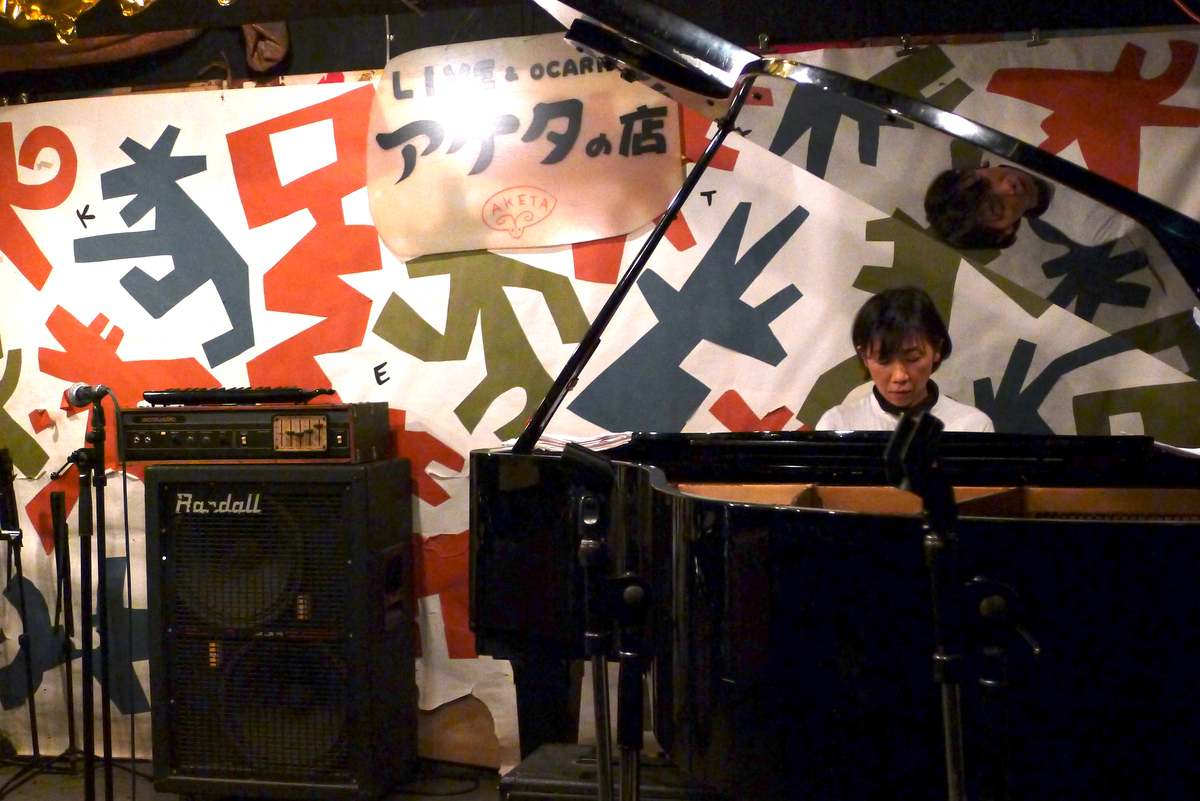
Ever dedicated to having a regular schedule with a great lineup of musicians, Aketa no Mise has nighttime shows on most nights, usually from 8:00pm to 11:00pm. In addition to these nighttime shows, there are also some daytime events (3-6pm) and occasional late-night after shows (12:00am to 1:30am).
One last aside about this bar’s name:When translated to English, “Aketa no Mise” simply means “Aketa’s shop”. But with some imagination, it could also be read as “The Open Store” through some playful wordplay.
Outside of written context, the spelling for “Aketa” can be both 明田, from his name Aketagawa, and 開けた, from aketa. Aketa is the past tense of the verb to open, akeru (あける). The middle word no is the possessive marker in Japanese, like ’s in English. Mise (店) is store or shop. So, with some imagination, Aketa no Mise (アケタの店) could be interpreted as “The Open Shop” or “The Store that Opened”, in a roughed-up grammar sort of way. Ok sure… but the letters for Aketa in the signage are written in katakana (アケタ) rather than hiragana (あけた) or even kanji (開けた, etc), reinforcing the impression that this is really a name rather than a common verb when used here. The spelling for “Aketa” can be both 明田, from his name Aketagawa, and 開けた, from aketa, opened.
For more information:
Jazz of Japan #350 (Premium) • Feb 9, 2026 • Brian McCrory
Add a comment: