
Ayumi Koketsu: Struttin’
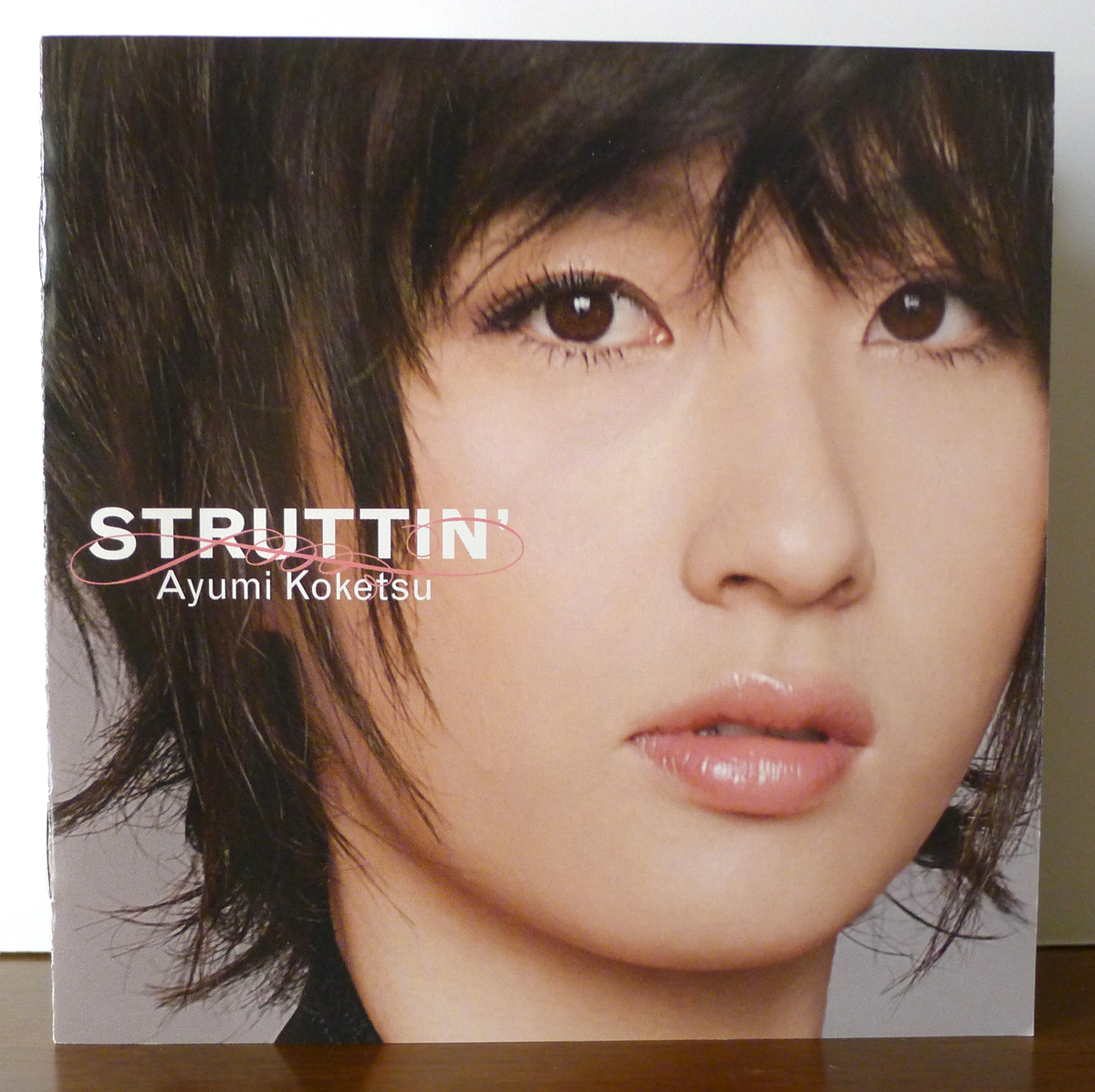
Struttin’ is saxophone player Ayumi Koketsu’s jazz quartet album released in Japan in 2010. This is her debut album, the...
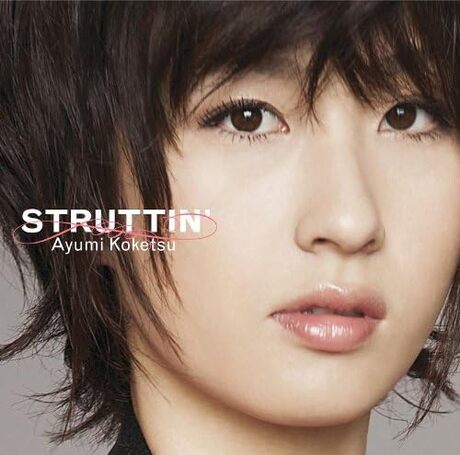
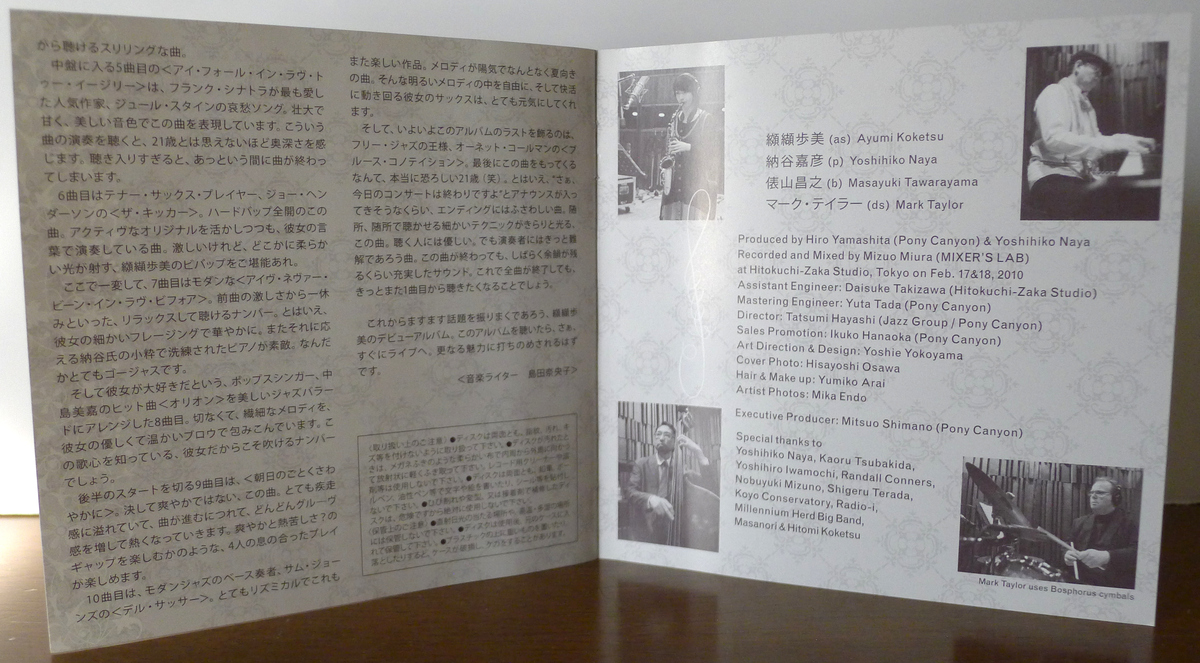
Struttin’ is saxophone player Ayumi Koketsu’s jazz quartet album released in Japan in 2010. This is her debut album, the first of over a dozen killer jazz albums that she has been releasing through the years, each filled with material ranging from straight-ahead, cool jazz, hard bop, ballads, bossa nova, and other themes. This first album features Koketsu on alto sax with her quartet of Yoshihiko Naya on piano, Masayuki Tawarayama on bass, and Mark Taylor on drums.
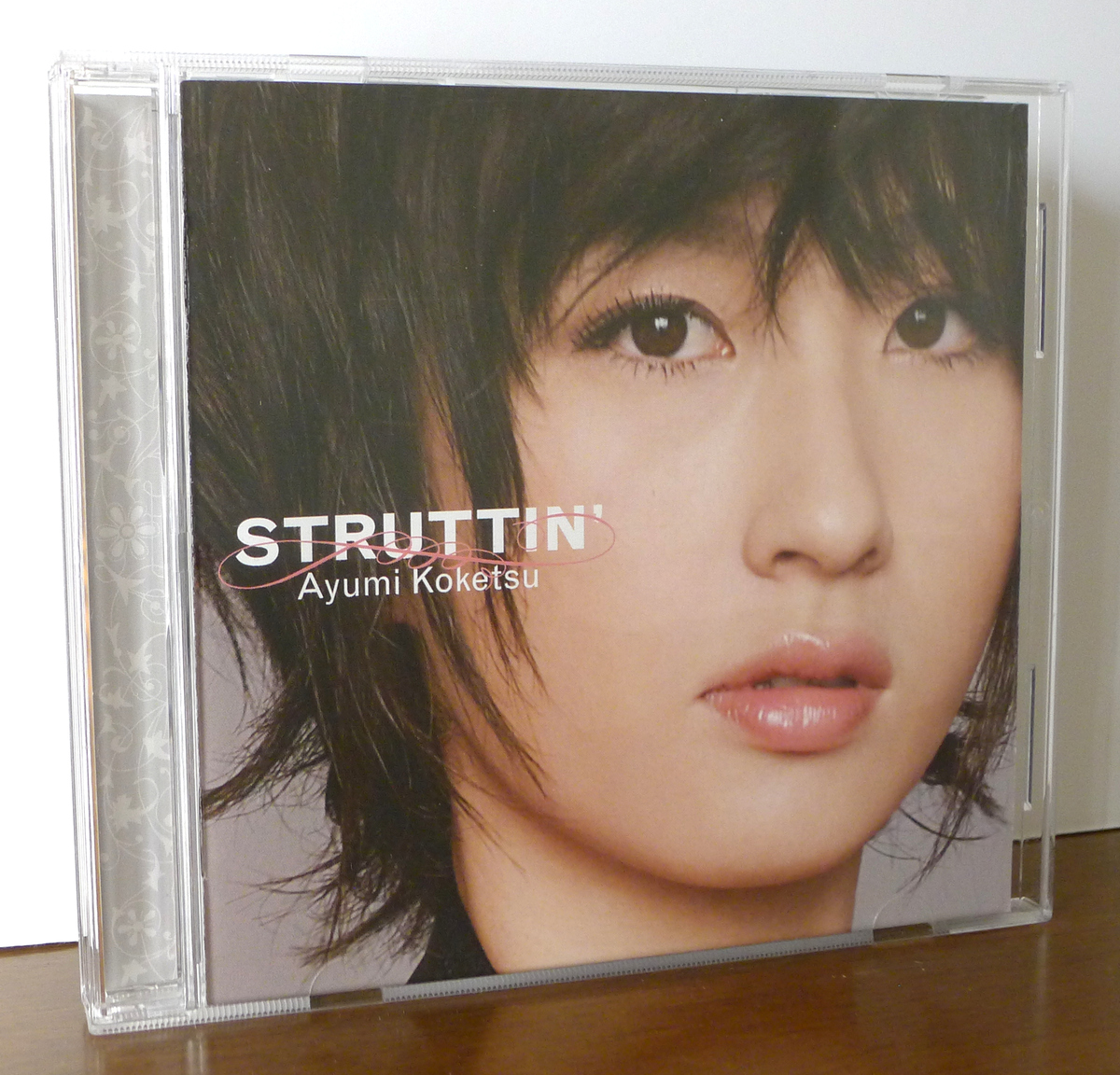
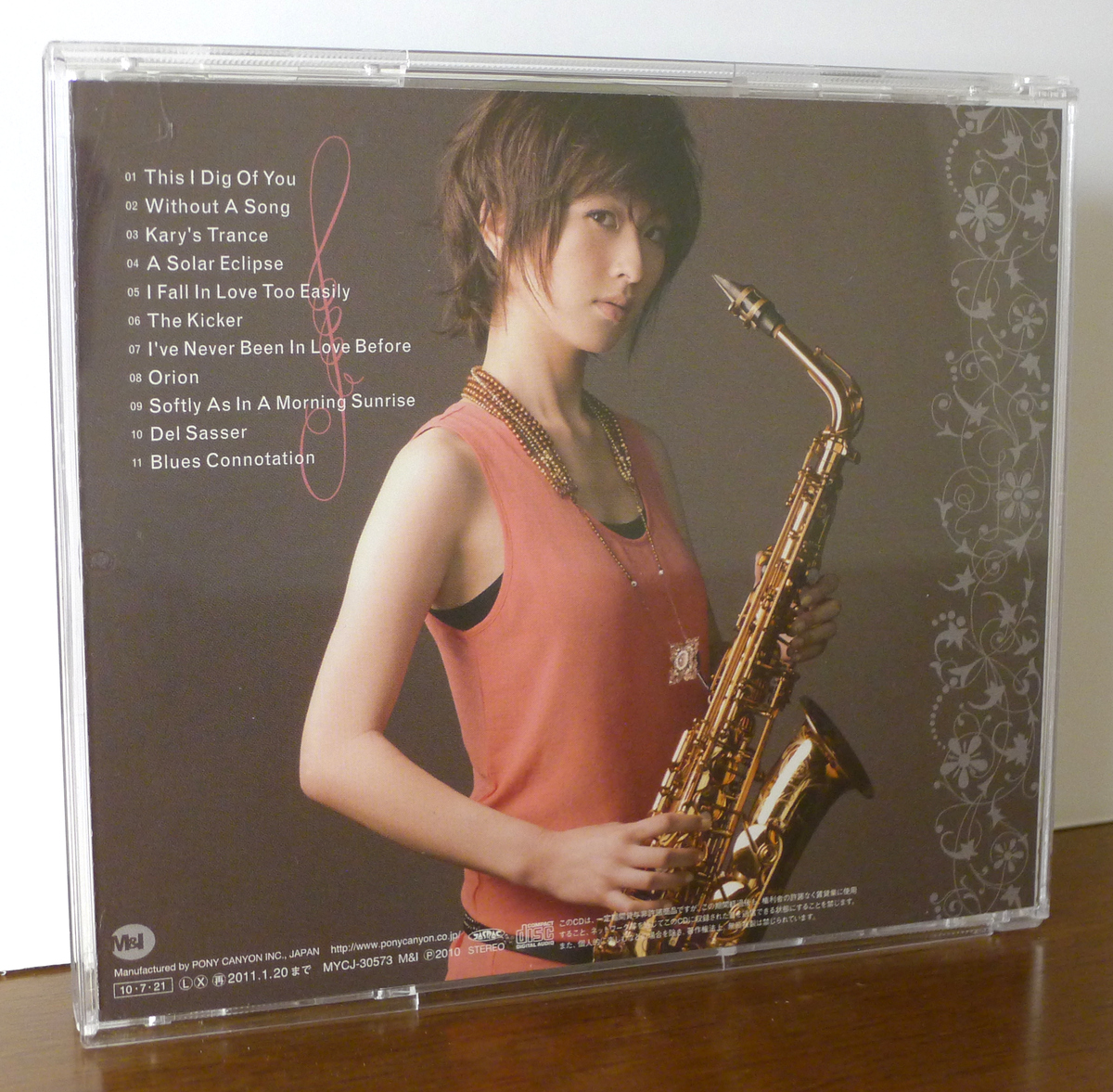
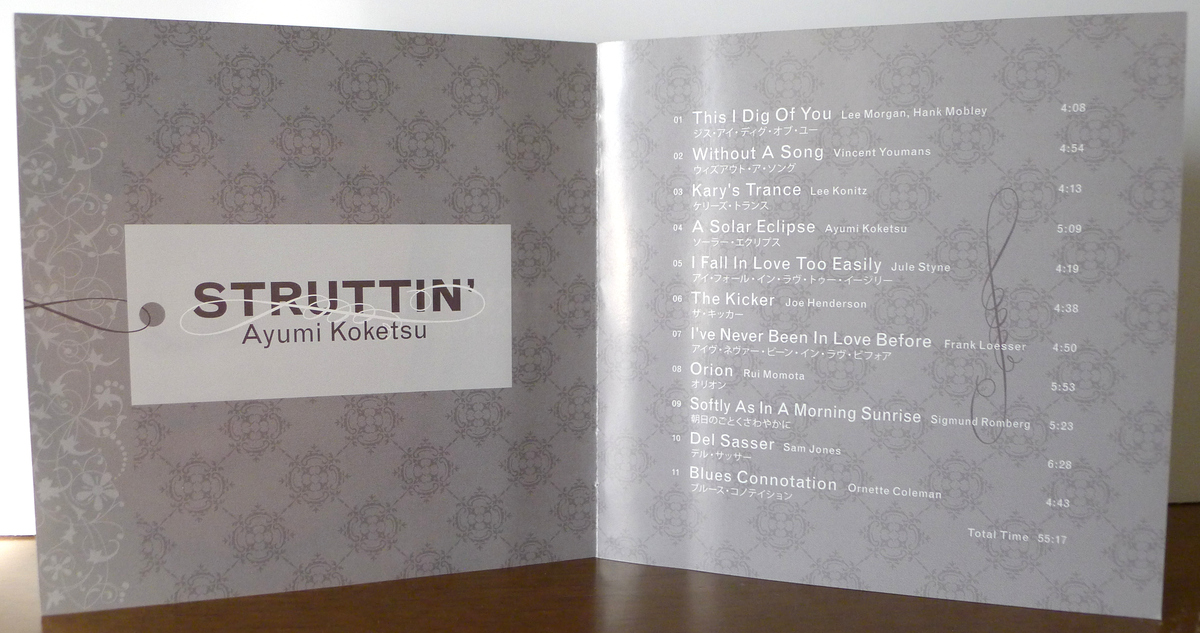
Along with Koketsu’s impressively dexterous sax improvisation is her embodiment of a real jazz sensibility. Although quite young when she made this album, her jazz language is authentic, filled with the spirit and tradition of influential jazz players. The giants of jazz sax players in particular are represented well, not only through Koketsu’s language but also by the songs she chose to record. The rousing excitement of Hank Mobley’s “This I Dig Of You” starts the set, and the band is off to the races from there. With similar associations to famous sax players, Sonny Rollins famously recorded track #2 “Without a Song” and #9 “Softly, As In A Morning Sunrise”, track #3 “Kary’s Trance” brings in the cool mode of Lee Konitz, #6 “The Kicker” is Joe Henderson all over, #10 “Del Sasser” is for Cannonball Adderley, and #11 “Blues Connotation” screams Ornette Coleman. Other candidates for some of the remaining songs could be Dexter Gordon, Stan Getz, and trumpeter Chet Baker. In any case, these songs are not only great vehicles for Koketsu and her band to interpret and improvise over, they must also serve as an homage to the renowned players that she listened to and learned from.
In addition to these choice jazz selections and some jazz standards, Koketsu also recorded an original song as track #4 “A Solar Eclipse,” a powerfully heavy tune in 5/4 time, and a hit pop song #8 “Orion” as a pretty ballad originally performed by Japanese singer Mika Nakashima.
After the long-awaited and popular release of Struttin’, Koketsu continued to release albums every few years with her own bands and with partners, such as the 2024 release Trust, a duo album with pianist Akane Matsumoto. Her tenth album, Echoes of 15 Years, is a double album that was released in 2025 as a retrospective, best-of album.
Liner Notes
(Translated from Naoko Shimada’s original Japanese liner notes)
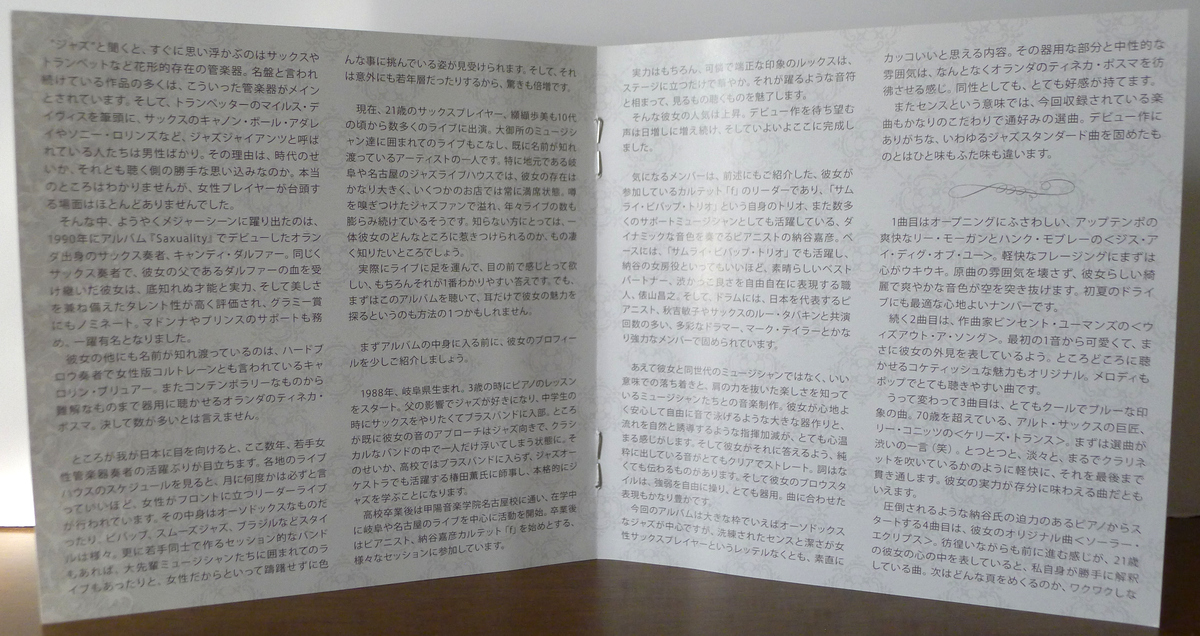
When you hear the word “jazz,” what immediately comes to mind are the leading wind instruments like sax and trumpet. Many works that are continuously called masterpieces often feature these wind instruments as main features. Also, the people that we refer to as jazz giants, like trumpeter Miles Davis and saxophonists Cannonball Adderley and Sonny Rollins, are all men. Was the reason for this a result of the times, or the assumptions and subjective impressions of listeners? I don’t know the truth of the matter, but there were almost no scenes were female players rose to prominence.
One player who did burst into the mainstream in the midst of that was Dutch saxophone player Candy Dulfer, who released her debut album Saxuality in 1990. She inherited the talent of her father who was also a saxophone player and continued the Dulfer bloodline with her boundless skill, ability, and beauty on top of all that. Highly praised, she received a Grammy nomination, became famous quickly, and started to perform as a supporting musician for Madonna and Prince.
Another woman that became famous is Carolyn Breuer, a hard-blowing player that could be likened to a female version of John Coltrane. There is also Tineke Postma from Holland, who ranges expertly from contemporary to challenging music. But, we can’t say there are many women like these.
If we look at Japan however, the rise of young female horn players in recent years has stood out. If you look at the schedules of jazz clubs in different parts of the country, you can always find groups led by female players many times each month. That content includes various styles including traditional jazz, bebop, smooth jazz, and Brazilian. Moreover, in an environment where young colleagues form jam session-type bands and are surrounded by veteran musicians at live performances, we can see a situation where female musicians don’t hesitate to take on different challenges just because they are women. And the fact that they are from younger generations makes it even more surprising.
Currently 21 years old, Ayumi Koketsu is another sax player who has performed in numerous live concerts since her teenage years. She is an artist whose name has already become known for performing alongside distinguished musicians. She is especially known at live spots in her hometown of Gifu and Nagoya, where several of the venues are always sold out when she plays. Those jazz fans who are in the known fill up the venues and the number of appearances seems to keep growing year after year. For people who have not heard of her, they may wonder what it is that attracts such a great amount of attention.
Of course, the best and obvious recommendation is to go experience her live concert in person. But listening to this album might be another way to discover her charm using just your ears.
Before jumping into the contents of the album, let’s introduce her profile briefly.
Koketsu was born in Gifu in 1988. She started piano lessons at three years of age. She became interested in jazz through her father’s influence and became attracted to the saxophone, joining the brass band in middle school. By this time her tonal approach was already geared towards jazz and made her adrift in a classical band setting. Likely due to this, she did not join the brass band in high school, joined the jazz orchestra studying under Kaoru Tsubakida, and began to study jazz in earnest under Kaoru Tsubakida who was active in jazz orchestra and other activities.
After graduating from high school, she attended the Nagoya branch of Koyo Music Academy and, while in school, began to perform live in clubs based around Gifu and Nagoya. Upon graduating, she joined Toshihiko Naya’s Quartet “f” and began to play in diverse sessions.
She has real skills, of course, but even just standing on stage with sweet and graceful looks creates a gorgeous appearance. This visual combined with the sound of musical notes that seem to fly around creates a magnetic charm.
Her popularity is on the rise. The number of people eagerly awaiting her debut release has been growing day by day, and at long last, this album now been completed.
The notable members include Yoshihiko Naya, a player with a dynamic tone who was introduced earlier as the leader of the Quartet “f” that Ayumi Koketsu is a member of. Naya also has his own trio, Samurai Bebop Trip, and is very active as a supporting musician with many other activities. On bass is Masayuki Tawarayama, a wonderful bassist who also plays in Samurai Bebop Trio and could be called Naya’s right-hand man and best partner, a craftsman who expresses freely with a cool style. On drums in Mark Turner, a versatile player who has performed countless times with Japan’s preeminent representative pianist Toshihiko Akiyoshi and sax player Lew Tabackin. These members form quite a powerful lineup.
It’s an album deliberately not made with players from the same generation as Koketsu, but with musicians with a certain composure who know how to let loose and have fun with the music.
There’s a very heartwarming feeling to the ease with which she freely seems to swim comfortably and confidently through the sounds, together with a natural flow together with her leading and conducting the music to some degree. And as if in response to that, the pure sounds she produces are very clear and direct. Even though there are no lyrics, she is communicating things. Plus, she has a very skillful style of blowing the horn, freely manipulating the degree of strength and intensity. The expressions that go along with each song are also considerably rich.
If you were to put this album in a category, broadly speaking, you could call it orthodox or traditional jazz. But its contents are filled with a refined sensibility and grace, while even not considering the label of female sax player, you could call it unaffectedly cool.
Those agile parts of her playing and the neutral atmosphere remind me of Tineke Postma from the Netherlands. As a fellow woman, I feel a great affection for them.
Also from the perspective of taste, the songs included on this recording were carefully selected and appeal to connoisseurs. It’s completely different from those debut albums that can sometimes be a collection of the usual jazz standards.
The first song is a great opening as the uptempo, invigorating tune “This I Dig Of You” from Lee Morgan and Hank Mobley. The nimble phrasing is immediate and exciting. Without spoiling the original composition, her beautifully fresh playing breaks for the sky. It’s a pleasant number that also feels perfect for an early summer drive.
Next is track #2, “Without a Song” by composer Vincent Youmans. It’s adorable from the first note, as if truly representing Koketsu’s outward appearance. Here and there, you can hear a coquettish charm surfacing, which is also original. The pop melody makes it a song that is very easy to listen to.
Track #3 completely changes things with a song that gives a very cool blue impression. It’s “Katy’s Trance” by Lee Konitz, a jazz sax giant in his seventies. What has to be said first is, this song selection is just too cool (ha ha). She continues her steady flow with composure all the way though to the end, with a jaunty lightness that is almost like playing a clarinet. You could say that this song fully showcases her ability.
The fourth song, starting with overwhelmingly powerful piano playing from Naya, is an original from Koketsu called “Solar Eclipse.” It’s a song that I personally interpret as wandering about while advancing forward, reflecting the mind of a 21-year-old woman. It’s a thrilling song that generates excitement while you listen and wonder what the next page will uncover.
In the middle of the album, the track #5 is “I Fall in Love Too Easily,” a melancholic song written by Frank Sinatra’s favorite popular songwriter, Jule Style. This song is played with a majestically sweet and beautiful tone. Hearing the song performed like this makes it hard to believe that such depth is expressed by a 21-year-old. Becoming absorbed in the listening brings the song to its conclusion before you know it.
The sixth track is Joe Henderson’s “The Kicker,” a pure hard bop song. While making active use of the original music for this take, Ayumi Koketsu expresses herself through her own vocabulary. You can feast on her bebop style, which is intense but also has a soft light shining through in places.
With another about-face, the seventh track is a modern version of “I’ve Never Been in Love Before.” It’s a relaxing number to listen to after the intensity of the previous song. Still, her detailed phrasing is brilliant, and Naya’s stylish and sophisticated piano played in response is lovely. It’s somehow all very gorgeous.
Track #8 is a beautiful jazz ballad arrangement of a hit song that Koketsu says she loves, “Orion” by pop singer Mika Nakashima. The poignant, delicate melody is wrapped up by Koketsu’s warm and gentle playing. It’s a number that she can play so well because she must understand that poetic sentiment.

Kicking off the final stretch of the album is track #9, “Softly as in a Morning Sunrise.” Yet, the song is definitely not played softly. It overflows with a sense of a mad dash, and as the song progresses, the groove intensifies and gets hotter and hotter. You can enjoy the musicians’ skillful coordination as they play with the contrast between refreshing softness and sweltering heat.
The tenth song is “Del Sasser” by modern jazz bassist Sam Jones. This is another fun piece that is very rhythmic. The melody is very cheerful and somehow feels like a song for summer. The way Koketsu’s sax moves through this bright melody so freely and full of spirit is really uplifting.
And finally, closing the album as the last track is “Blues Connotation” by the king of free jazz, Ornette Coleman. It’s so astonishing that a 21-year-old brings out this song at the end (ha ha). But it’s a fitting song to be played as the ending, as if there’s an announcement saying “Well, today’s concert is over!” You can hear intricate techniques shining all through this song. It’s easy on the listener, but it’s probably a difficult piece for the musicians to understand. The song has a substantial sound that lingers in mind even after it’s over. And after all the songs are finished, it makes you want to listen from track #1 again.
This debut album from Ayumi is sure to create even more buzz going forward. Listening to it creates the feeling of immediately wanting to go to her live concert. You’re sure to be astounded by her charm even more.
Naoko Shimada, Music Writer
Obi Notes
Her passion is jazz!
A talented woman makes her debut on the scene with her light yet intense performance at 21 years old!

Struttin’ by Ayumi Koketsu
- Ayumi Koketsu - saxophone
- Yoshihiko Naya - piano
- Masayuki Tawarayama - bass
- Mark Taylor - drums
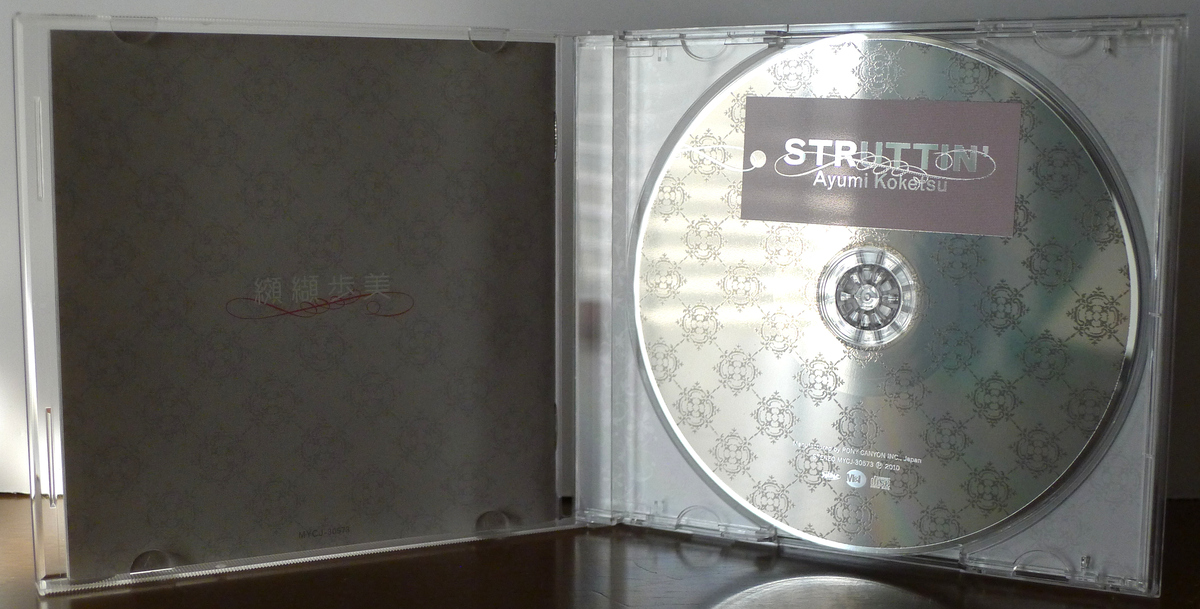
Released in 2010 on Pony Canyon as MYCJ-30573.
Japanese names: 纐纈歩美 Koketsu Ayumi 納谷嘉彦 Naya Yoshihiko 俵山昌之 Tawarayama Masayuki
Audio and Video
- Ayumi Koketsu: Struttin’ - full playlist
- Excerpt from track #3: “Karys Trance”
Jazz of Japan #365 • May 17, 2026 • Brian McCrory
Related albums: Rainbow Tales (2012), Art (2016), Trust (2024)