
First-Timer’s Guide to Live Jazz in Japan
Jazz of Japan #331 (Premium) — Introduction There are some common impressions of hurdles that newcomers need to overcome with live...
Introduction
There are some common impressions of hurdles that newcomers need to overcome with live jazz performances, and challenges with jazz in general for beginners. Jazz bars and clubs can seem hard to enter, especially on your own, and for the first time. What is the payment system? What music, and from which albums, is being played? Is it written down music, pure improvisation, noise? What’s a performance versus a jam session? When do I clap?
This article is aimed to help first timers navigate the world of jazz spots in Japan, with Tokyo as a base example. I hope it is also interesting for anyone who wants to know more about what it’s like to be experience live jazz music in Japan.
The topics in this article include glossaries of useful terms used in the Japanese jazz universe, what preparations to make and know about before going, and what happens at the venues. Finally, the last section of this article presents a descriptive example in narrative form of what it is like to go to a jazz club in Japan for the first time.
Basic Lingo
For some helpful terms that appear in Japanese jazz, here is a brief list of common words and phrases. Japanese translations are included to help when searching for or looking at venue websites and online information.
Useful Terms:
- Jazz: ジャズ (jazu)
- Musician: ミュージシャン (myūjishan)
- J Jazz: J・ジャズ (j jazu) Japanese jazz: What’s J Jazz?
- Live: ライブ (raibu) or ライヴ (raivu) Live music, often shortened to just “live” in Japan. Live performance concerts and events.
- Stage: ステージ (sutēji) A set, as in “1st stage” and “2nd stage” used to show the starting times for each set
- Leader live: リーダーライブ (rīdā raibu) A performance with the specified musician as the leader, the main artist, the key musician, or the star for the night’s event. Jazz musicians often perform with many groups concurrently, in many group formats such as duos and trios, and can be side-musicians or co-stars just as often as leaders. Using the term leader live for certain concerts highlights their main, signature performances as recommended and helps to elevate the visibility of those events.
- Jam session: ジャムセッション (jamu sesshon) A relaxed gathering of community musicians made up of amateurs, students, and professional musicians who gather together to practice jazz songs and improvisation using common jazz standards. Informal but organized. Also called jazz session. ジャズセッション (jazu sesshon).
- Session: セッション (sesshon) Usually means jam session, but sometimes used for an informal jazz performance centered around a leader or theme.
- Vocal session: ボーカルセッション (bōkaru sesshon) A jam session that is oriented for singers to join, as opposed to a jam session primarily for non-vocal instrumentalists.
- Open mic: オーペン・マイク (ōpun maiku) Commonly audience participation showcase for singer-songwriters and other genres besides jazz.
- Workshop: ワークショップ (wākushoppu) A class, lecture, or guided hands-on sessions for students of jazz.
- Regular customer: 常連 (jōren) or 常連客 (jōrenkyaku) or 常連さん (jōrensan) A regular customer at a certain venue, someone who is recognized for going there frequently.
About the Venues
The phrases jazz club, jazz bar, jazz spot, and others are mostly used interchangeably to mean any place that jazz music is featured, usually through live concerts, and sometimes through recorded music with a high-end stereo system and a fanatic’s personal collection of jazz CDs and LPs. However, perceptive customers may notice subtle differences between how the terms are used, briefly explained here.
Useful Terms:
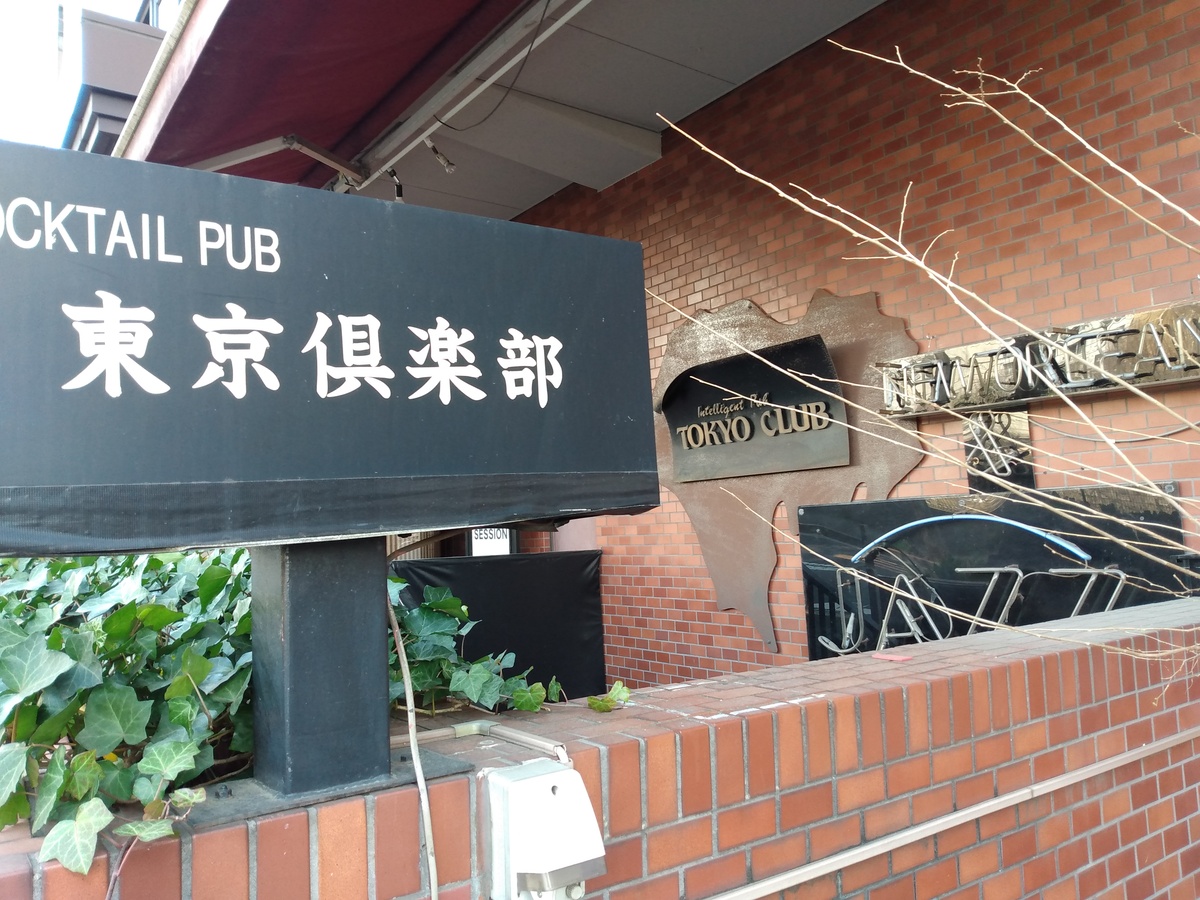
- Jazz club: ジャズクラブ (jazu kurabu) Usually a venue for live performances. Club is sometimes also written 倶楽部, as with Tokyo Club / 東京倶楽部. Clubs may be more motivated to offer a “performance venue” or “listening” experience, sometimes with a pre-pay system, or even pre-sale tickets offered. Reservations are not necessarily required but sold-out events are possible. Some examples are Blue Note Tokyo, Pit Inn and JZ Brat. Sometimes include a restaurant-style menu.
- Jazz bar: ジャズバー (jazu bā) Usually a venue for live or recorded music and drinking. Some bars are more motivated to sell drinks, thus the use of the word “bar” with a similar bar atmosphere. Bars may offer snacks and light dishes, but generally not restaurant-style meals or complicated/cooked dishes.
- Jazz cafe: ジャズカフェー (jazu kafe) A jazz spot with good coffee or in a coffeehouse setting.
- Jazz kissa: ジャズ喫茶 (jazu kissa) A listening bar with recorded music. Usually a small bar for appreciating a curated selection of jazz while drinking. The atmosphere can be dimly-lit, authentic, and personal. (Kissa comes from the word kissaten 喫茶店, meaning coffee/tea shop, though alcohol is much more common now.)
- Jazz spot: ジャズスポット (jazu supotto) Any type of place for jazz, useful as an umbrella term to cover a wide variety of jazz-related spots. One famous Tokyo jazz club was named Jazzspot J.
- Live house: ライブハウス (raibu hausu) Live venues for jazz, differentiated from kissas, bars, and listening rooms by emphasizing live performances.
- Jazz joint: ジャズジョイント (jazu jointo) Another umbrella term, an older slang term made even more popular in the context of Japan with the success of the Tokyo Jazz Joints project and published book.
- Jazz fes: ジャズフェス (jazu fesu) Jazz festivals, like Yokohama Jazz Promenade, Sumida Street Jazz Festival, and Sapporo City Jazz.
- Performance space: (pāfōmansu supēsu) Usually a general-purpose venue which can be used for concerts, plays, and similar non-genre events.
- Listening room: (リスニング ルーム) A little vague, but can indicate a place for straightforward listening and music appreciation.
Before You Go
Understanding the System (システム)
Useful Terms:
- Daytime show: 昼の部 (or 昼 (hiru no bu, or hiru)
- Nighttime show: 夜の部 (or 夜) (yoru no bu, or yoru)
- Non-reserved seating: 自由席 (jiyūseki)
- Reserved/assigned seating: 指定席 (shiteiseki)
- All seats unreserved: 全席自由 (zenseki jiyū)
- No replacement/changeover: 入れ替えなし, 入れ替え無し, 入替なし, and 入替無し (irekae nashi) No audience replacement during the intermission. Customers may stay for both sets with one admission fee.
- Reservation: 予約 (yoyaku) There will be an online form, email address, or phone number for reservations.
- Same day (as the event): 当日 (tōjitsu) Same-day entry/reservation price, or price without advance reservations. The price may be higher than advance reservations made more than one day in advance.
- Few seats remaining: 残りわずか (nokori wazuka), also called zanseki wazuka: 残席わずか (zanseki wazuka)
- Full house: 満席 (manseki) Fully booked, sold-out shows (no tickets available).
- Sold out: ソルド・アウト (sorudo auto) Fully booked, sold-out shows (no tickets available).
- Waiting list: キャンセル待ち (cancel machi) A waiting list may be offered in case seats become available due to cancellations.
Some jazz venues include a System, or システム (shisutemu), or general information page on their websites, menus, cards, and signs. The system briefly explains their house rules, business hours, showtimes, reservations, and prices.
Most important is the establishment’s business hours. Most places open at night, about 30 minutes to an hour before the first show. Some places are also open during the daytime on certain days or holidays, to serve lunch or host daytime performances. There also places that are open all day, and a few places that are open all night for jam sessions and late night events.
Just as important when going to jazz bars are the live showtimes, or the start times for each set of a performance. Each set, or stage, constitutes about an hour’s worth of songs, usually about four to five tunes that may be a mix of original songs, covers, and jazz standards. For newcomers to jazz, this may seem different from some other genres, as many jazz performances are not always runthroughs of the group’s recent hits or albums. Many times, experienced jazz performers may not even decide what they are going to play until the day of, or minutes before the show begins.
The first stage is the set before the intermission, followed by the second stage. The listings for the stage start and end times are often fairly closely observed (although perhaps not as closely as Japan’s famously accurate and impeccably timed train schedules).
At most places, there are two sets of music per night separated by an intermission. There may also be one longer set, three sets, or different systems based on the venue and the event. This details will usually be described on their website.
For example, a schedule may show the calendar of events including business hours and live showtimes in a list, like these two days for example:
- MON 17: OPEN: 18:00 LIVE: 19:00~ & 21:30~ CLOSE: 23:00
- TUE 18: OPEN: 18:00 LIVE: 19:00~ & 21:30~ CLOSE: 23:00
This shows the venue opening at 6:00pm, the first set starting at 7:00pm, the second set starting at 9:30pm, and a closing time of 11:00pm.
As another example:
- 夜の部 1st 19:00〜20:00 2nd 20:30〜21:30
- 昼の部(土日祝) 1st 13:00〜14:00 2nd 14:30〜15:30
The first line shows that for evening performances (夜の部), the first set is from 7:00pm to 8:00pm, and the second set is from 8:30pm to 9:30pm
The second line shows that for daytime performances (昼の部) on weekends and holidays (土日祝), the first set is from 1:00pm to 2:00pm, and the second set from 2:30pm to 3:30pm.
Understanding the Costs
Useful Terms:
- Music charge (MC): ミュージック・チャージ (myūjikku chāji) Admission fee, per person. May also be called Live charge ライヴ・チャージ (raivu chāji) or Admission fee 入場料 (nyūjōryō).
- Table charge (TC): テーブル・チャージ (tēburu chāji) Seating charge, per person. Sometimes waived for bar seats (depends on the place, and may be rare).
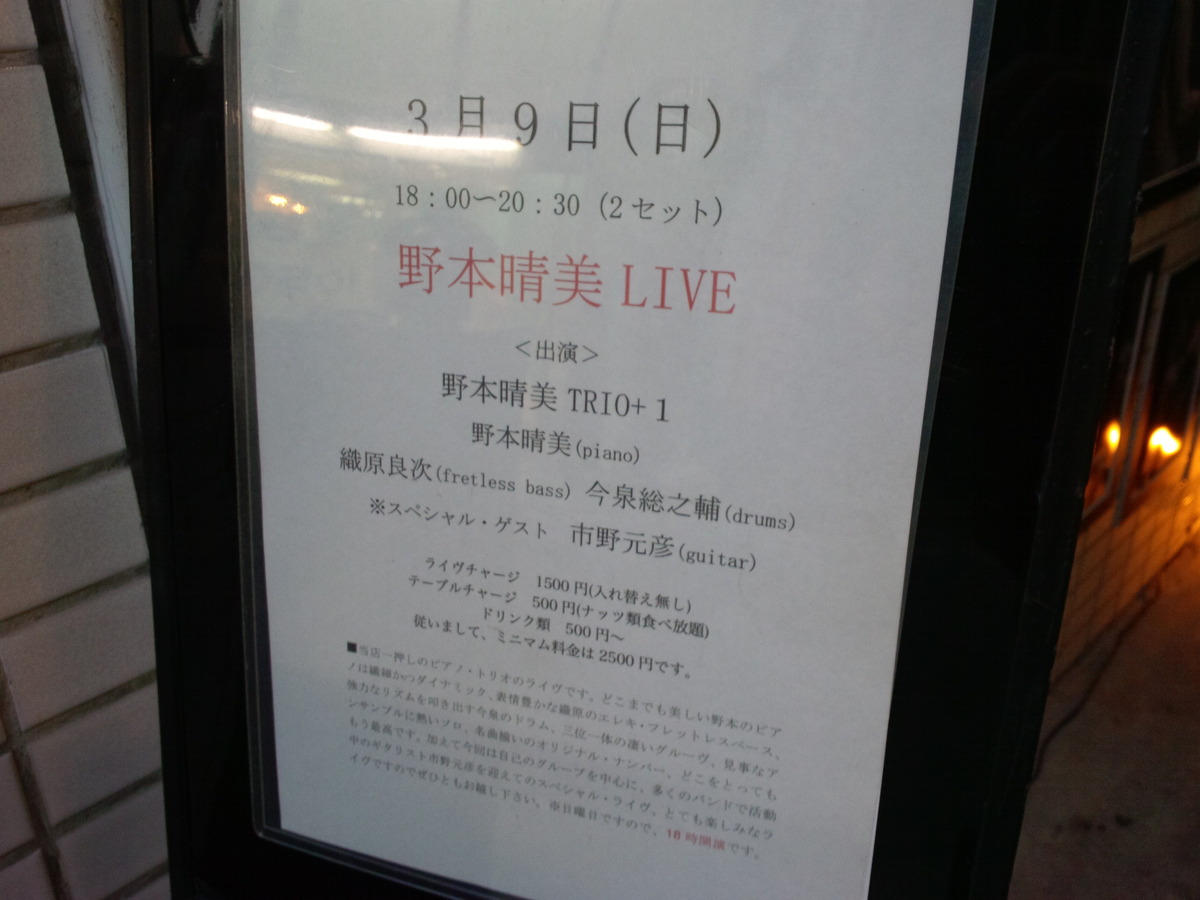
- Minimum order: - ミニマム・オーダー (minimamu ōdā) Usually one drink/food order per customer per set (depends on the venue). For example, ドリンク類 500円〜 means that drinks cost 500 yen and up.
- Minimum charge: ミニマム・チャージ (minimamu chāji) or ミニマム料金 (minimamu ryōkin) A minimum amount spent (total bill) per customer.
- Service charge (SC): サービス・チャージ (sābisu chāji) or サービス料 (sābisu ryō) A final percentage charge (5-10%, for example) applied to the total bill. More typical at higher-end places (similar to a luxury cost), but not exclusively.
- Consumption tax: The current consumption tax rate in Japan (generally 10%). For prices including tax, you’ll see 税込 or 税込み (zeikomi). For prices that do not include tax, you’ll see 税抜 or 税抜き (zeinuki), 税別 (zeibetsu), or 外税 (gai-zei).
- Otoshi: おとし (otoshi) A small appetizer, a seasonal or curated “dish of the day” starter that comes automatically with a small charge added. A “table charge appetizer” served at certain bars.
- Otsumami: おつまみ (otsumami) Small plates, finger foods, or snacks typically eaten with alcoholic drinks. Listed on the menu for optional purchase when available.
- Other charges: Any other miscellaneous charges. For example, in some cases, if a customer does not order the required minimum number of drinks, then the supplemental cost of drink(s) required to meet the minimum may be added. One considerate Tokyo jazz bar, The Deep, has started offering take-home cans of juice or tea, in cases where the customer needs to fulfill the two-drink minimum, but only ordered one drink before leaving.
The venue’s system will usually list their prices clearly. This is specific guidance about what customers should to expect to pay for any given night’s performance.
The price system at jazz venues is made up of some combination of the following: table charge, music charge, and minimum orders/charges. Other possible charges are listed in the Useful Terms section above.
At first, it seems like there are a lot of possible extra fees to worry about, but this is really just information that the venue provides to make their price system transparent and clear from the start. Usually the presented bill boils down to music charge, table charge, and the cost of all drinks/food ordered, taking in to account the minimum order requirement (or minimum charge) to meet the rules.
This amount of detail regarding the various costs seems like a lot to understand at first, and you may be tempted to examine the final check to see how it was all calculated. However, usually just the grand total is presented on a simple customer receipt, a single slip of paper, in the end. You don’t need to worry too much about the breakdown or if you are being treated unfairly, such as with surprise fees or additional surcharges, which is why the system goes into price details up front.
What is the Music Charge?
Music charge (MC) is the basic admission fee for the live concert performance.
This term can be confusing when appearing just as MC and alongside other fees like table charge, minimum charge, and the rest. One jazz bar, Izumi, helpfully explains the charges in English for foreigners, as follows:
To first-time customers
What is Music Charge? Apart from food and drink, the fee paid for music. (Please refer to the ticket prices for concerts, etc)
Basically, it will be the performance fee of the performer. In general, like our venue playing live jazz music, it is not a ticket system but a charge fee.
- The music charge according to the musicians who perform each day. You pay the same price for music at any stage of the live
- There is a 10% consumption tax and 10% service charge.
What is the Service Charge?
Service Charge (SC) can be an unclear addition. What service are you getting? This additional charge may be added at higher-end restaurants or bars with well-mannered staff in nice uniforms, for example, similar to a luxury surcharge at a five-star hotel or casino.
Some venues explain their rules on calculating service charges. Here are some recent examples from September 2025 for a few venues (always check venues’ official websites for the latest accurate information).
- Velera jazz club has a 10% service charge plus consumption tax.
- Independence jazz club introduced a 5% service charge + 10% consumption tax.
- The Moment jazz club lists a 1,100 yen service charge
This additional fee is just another way that certain venues break down their fees for clarity. Many clubs do not have an explicit service charge, and just roll up all their fees into music charge and table charge to keep things simple.
When and How to Pay
Most of the time, payment is made when you are ready to leave, but some places use a pay on entry system: Pit Inn, Velvet Sun, Zimagine, and Bon Courage for example. In these cases, the admission fee is paid at first, before taking your seat. The fee may include one drink order taken at the time, while additional orders will be pay on delivery. This makes exiting easy, as you can leave without having to settle a final bill.
For pay on exit places, the admission fees, table charges, orders, and any other costs are calculated and presented for payment when you are ready to leave. This is usually not presented in an itemized invoice, and can actually be as simple as one single figure, the total cost in yen, written down on a simple customer slip.
In these case, special payment requests like splitting a check, or asking for an itemized receipt on demand, is possible, but may be a frustrating experience — for example, if many customers are filing out at once and there is only one person collecting payments. If a detailed receipt, split checks for a group, or other special payment situations are a concern, it’s best to mention this first.
Regarding payment methods, some jazz clubs accept credit cards or electronic payments, and a few clubs even have a pre-ticketing system to allow ticket purchases when reservations are made.
But still, there are still many jazz spots that only accept cash (in yen, of course). It’s usually stated on their entry sign or website information page. It’s not uncommon to see customers surprised when they pull out a credit card and are told that only cash is accepted. In those cases, if the customer does not have enough currency, they will usually be pointed to the nearest ATM or a convenience story with a cash machine.
Reservations
Making reservations before going to go a jazz club is often a good idea, but not an absolute requirement. If you are flexible with your plans and like to roll the dice, showing up without a reservation, especially as a single guest, usually works out fine. The downsides are possibly having a poor seat in the back, or being told that all seats were sold out. Sometimes leaving it up to fate is fun, but other times, making reservations is the smart thing to do.
Some places offer reservation forms on their websites (e.g., Blue Note Tokyo, Body & Soul, Pit Inn), or phone numbers to call to reserve a seat. Same-day reservations are often only available by phone.
On the other hand, making reservations shouldn’t be made lightly. Be committed to going, as it’s a nuisance to the owners to deal with no-shows, not to mention for other customers who could use those seats.
Sold out shows are not uncommon at both large clubs with popular events and small clubs where seats are limited. For nights where the musicians are known to be popular, or for clubs that you want to be sure to visit without any problems, making reservations ahead of time is recommended.
On the other hand, arriving early at jazz bars without a reservation, alone or in a two-person group, usually works out at most places on most nights.
Also keep in mind that many jazz spots in Japan are pretty tiny, and sharing a table with other customers is common. This can be the case with or without reservations. Rather than being an inconvenience, serendipitous meetings at shared tables can turn into highlights when friendly conversations become authentic, local experiences.
Snacks, Bar Food, and Dinner
When preparing to head to a jazz spot in Japan, you should consider whether you will want to eat there or to eat before you go. Since many nighttime concerts take place around dinnertime, it is convenient to decide to eat and drink while listening to the music, but not all jazz venues are equipped with food order kitchens.
There are certainly some great places with full menus, but the range of dinner options at different jazz spots can vary significantly. Some places have nice, full menus prepared in back kitchens, while others have simple home-cooking style Japanese dishes prepared right at the bar.
Other places may only offer bar food, snacks, and appetizers that come straight out of grocery or convenience store packages. Many of the simpler, smaller places for live jazz only offer lights snacks like dried fruits, beef jerky, a cheese plate, and the almost ever-present dish of mixed nuts and kaki-pi. Thin individually-sized pizzas, prepared simply and cooked quickly in toaster-ovens, are also common.
The best advice is to check the venue’s website beforehand to see what kind of menu is available. If you don’t know if the place you are going to has a full menu, then try to avoid arriving hungry. Bringing your own food in is never allowed (although there are one or two exceptions, allowing outside food/drinks is very rare). Check the venue’s online information for their menu and look at reviews and photos of the menu or food options to know what to expect.
If there is no other information, then the best assumption to make when going to a jazz bar for the first time is that there may not be a full menu, but snacks, light appetizers, and plenty of alcohol, should be available.
The Moment jazz club includes this advice on their event calendar (translated to English):
This restaurant’s menu centers around alcoholic beverages, so meal preparations are limited to appetizers and light snacks. We recommend that you have dinner before arriving.
Alcohol
It can seem that jazz venues specialize as much in alcohol as they do in jazz music. The amount of different bottles and varieties of whiskeys, scotches, liquors can be impressively stunning. And similar to wine, the different regional varieties of shochu (焼酎 shōchū, Japanese distilled spirits from sweet potatoes, barley, and other ingredients) and sake/nihonshu (日本酒 nihonshu, Japanese rice wine) can pack a delicious punch, and they make quite an impression when poured from their large and beautifully decorative bottles.
Many venues even implement a bottle keep system, whereby customers can purchase personal bottles of alcohol directly from the venue and identify them by name-tags, special straps and badges. With this system, the customer keeps their personal purchased bottle at the venue and can drink from it, with additional mixers, ice, or chasers, whenever they return.
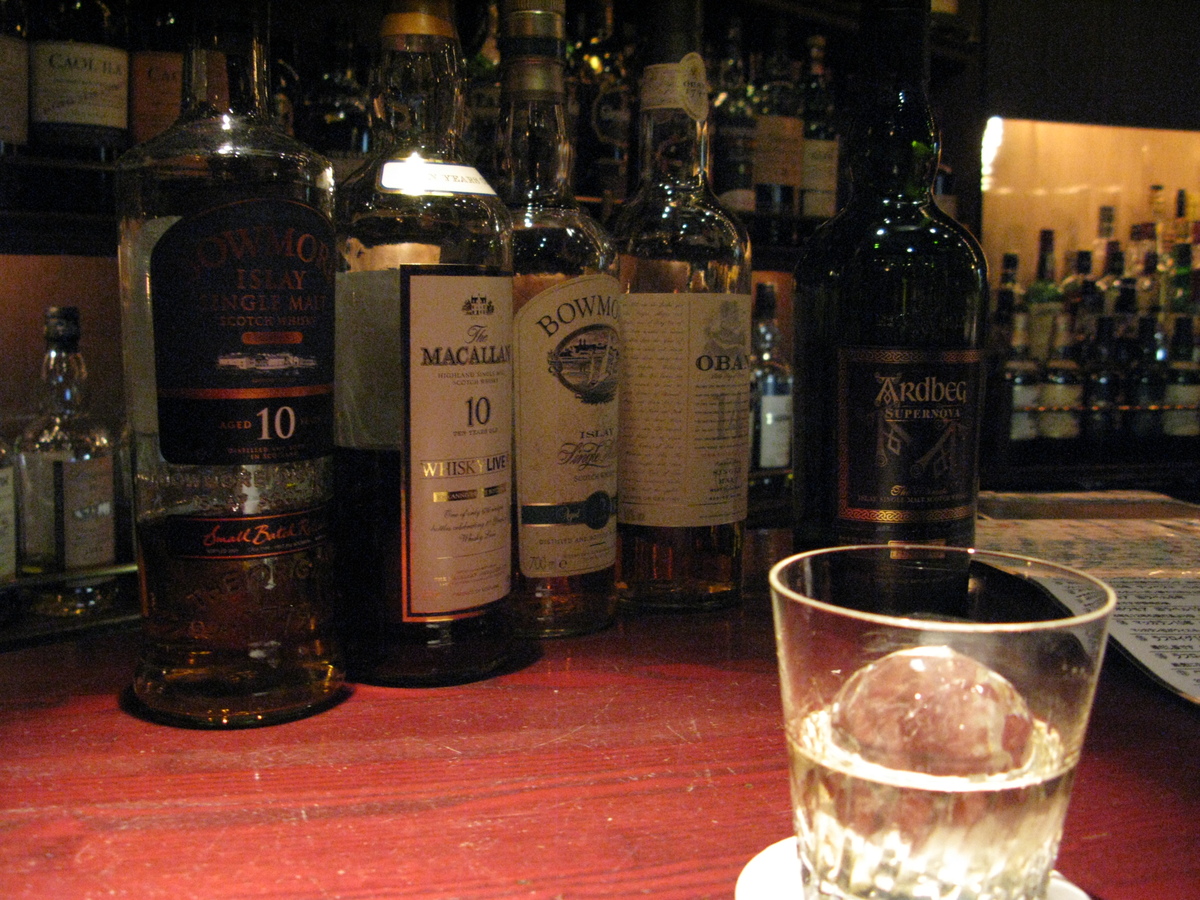
While getting tipsy or liquored up once in a while can certainly add to the musical experience, it can sometimes be too much of a distraction, or even an unhealthy one. Everyone needs an alcohol-free day, a liver-resting day (the pun 休肝日 kyūkanbi), from time to time. There are also those jazz fans who don’t drink alcohol, but want to go to jazz bars without feeling the pressure of having to order alcoholic drinks.
Luckily, every jazz venue offers a small selection of non-alcoholic drinks, usually called soft drinks on the menu. Normally you can choose from ginger ale (dry, 辛口 karakuchi, or sweet, 甘口 amaguchi), oolong tea (ūroncha), orange juice, grapefruit juice, coffee, tea, non-alcoholic beer, and alcohol-free beer. There’s no shame in ordering from the soft drink menu, and ginger ale, oolongcha, and coffee are popular orders for many customers.
Smoking
The allure of a smoky, dimly-lit jazz bar filled with happy customers focused on passionate performers is an attractive one, and fits with the popular jazz image. Collectors of jazz records can no doubt easily bring to mind famous album covers with smoke-filled portraits or featuring players with lit cigarettes in their photos.
In the past, some Tokyo jazz bars were so small and smoke-filled that it was a guarantee that customers would return home with clothes, skin, and hair permeated with the smell of cigarettes. This was just part of the environment. I’ve even heard stories of places where the smoke was so thick, the audience could barely see the musicians on stage, and vice-versa.
These days, the rules and changes and the atmosphere has cleaned up a lot — as in, the air in jazz venues — and there don’t seem to be any establishments left where smoking is allowed inside. There may be a smoking corner or an area near the outdoor door where smoking is allowed, and it’s common to see customers go outside during the intermission for a smoke break. But, for customers who are allergic to smoke, you need not worry, as it’s no longer a part of the scene.
Going Alone
Some solo travelers or listeners may want to try visiting a jazz club but worry about going alone. However, many customers in Japan do go to jazz venues alone, men and women alike, so this should not be a concern. In addition, many regular patrons of jazz clubs begin to recognize one another from unplanned meetings at various venues, and it’s often easier to strike up a conversation as a solo customer as opposed to being engaged in a couple or group conversation that other customers may not want to interrupt.
Of course, like any other place, going to jazz clubs in couples and groups is also common, but large groups (more than four-five people, say) is not as common, as most venues are small with layouts that do not accommodate well large groups to always be able to sit and talk together. Even worse is the rare case that a large group makes a reservation and then doesn’t show up, making the bar owner worry over a large section of seating that was never filled, the money that was lost, and the other customers that were turned away due to no unreserved seats being available.
As for bringing children to a jazz venue, the audiences at jazz venues are mostly made up of adults, but I have seen parents bring their kids to jazz concerts a few times. Different venues may have their own rules about this, but as long as the kids are well-behaved and quiet, and not disturbing any other customers, it shouldn’t be a problem.
At the Venue
Walking In
How the venue handles entering customers depends a lot on their pay system, described earlier.
For places with post-pay systems, you usually just walk in, make contact with the bar owner or an employee, and then you will be directed to a seat, or be invited to choose any seats from those available.
With a pre-pay system, you will likely pass through a reception area to pay your entry fee. Then, you will be guided to your seat, if seats are reserved/pre-assigned. If not, you may be told that all seats are unassigned and you can sit where you like.
Note that in many small jazz clubs, it’s common to be seated next to or at the same table with other customers, with or without reservations.
If you have bags, coats, or small items that you would like to remove, there are usually baskets under the seats or close by that you can use to store your things, instead of on nearby chairs or tables.
Arriving Late or Leaving Early
Regarding the opening and start times, customers may arrive and leave at any time, but most people try to follow the schedule. That is, they try to arrive before the start time, and leave after the end time, to avoid disturbing the musicians and audience, and to be able to enjoy the entire show.
Of course, Japan is a busy place where working overtime is common, which may cause late arrivals. Plus, when returning home after a show, there can be long transit times for some out-of-city dwellers. Also, there are unpredictable events like trains being affected by weather and accidents. Late arrivals and early departures are sometimes unavoidable for totally justified reasons. At those times, customers will usually go out of their way to politely enter or disappear with a minimum of fuss.
Having said that, there are some places that are so small that arriving, leaving, or going to the restroom during a performance basically requires walking through the stage area, and the musicians may have to physically move or reposition their instruments to allow customers to pass. (Asagaya’s Manhattan [web, map] and Kita-Senju’s Birdland [web, map], for example). At these places, customers will usually try to time their entrance or exit to take place between songs, at least, for a minimum of disruption.)
Audience Replacement
Most jazz bars have a “no replacement” or “no changeover” system, meaning customers can stay for both sets for one price, in a two-set system, for example.
The term for this was listed in the terms section earlier: 入れ替えなし (with spelling variations such as 入れ替え無し, 入替なし, and 入替無し ) irekae nashi, literally meaning no replacement/changing.
This means no audience turnover/changeover during the intermission. With few exceptions, it is the norm to pay one admission price to be able to stay for the entire night, which usually includes two sets of music by one band.
While most places allow customers to stay for both sets when paying one admission price, some places do turnover the audience during the intermission. These are usually higher-end venues like Blue Note Tokyo, especially when particularly popular or famous acts are featured and demand is high. In these cases, the system should be clearly stated, and the venue will ask that customers leave or purchase a separate admission ticket for each stage. The standard rule regarding audience replacement for any particular venue is usually indicated on their website. Fortunately, most of the time, it is it 入れ替え無し (no audience replacement).
Talking and Conversation
Like any other place, conversational talking at your table is normal and allowed before the music starts, during the intermission, and after the music concludes. In fact, it’s not uncommon for strangers seated at the same table to strike up a conversation and make small talk.
In almost every case, however, talking during the performance is not allowed. Many jazz fanatics come to live events to listen closely to the music, and jazz venue owners will sometimes politely ask that any loud customers hold their conversations until the end. Plus, the performing musicians (listening to one another with especially attenuated ears) strive for inspiration and energy as they improvise on stage, and, unfortunately, random voices and other noises from the audience can negatively impact their concentration.
That said, it’s also common for the tuned-in audience members to regularly clap, or even whoop and exclaim, after an improviser’s particularly impressive solo section during the songs. This can be another big part of the fun and a way to become one with the event and the music.
Musician and Song Introductions
During the concert and between songs, the leader will often use the mic to take a few minutes to introduce the band and thank the audience for coming. Many times, they also will announce upcoming concert or tour dates, promote their new album, or tell an anecdote or two about the origin or meaning of some of their songs.
I was initially surprised at how much MC-ing (‘Master of Ceremonies’ mic-work, not ‘Music Charge (MC)’ from earlier) there was at some concerts. Some musicians can be as skilled as minutes-long monologues as they are on their instruments, telling funny stories about recent tours, the origins of their songs, or their on-stage partners. This is all part of the fun, and it’s an extra benefit to be able to get to know the people behind the music as part of the show. Even if you don’t understand Japanese, a lot of personality comes through their way of speaking, which can be a lot like the way they play music.
Taking Photos
While taking a few photos politely and discreetly is usually not a problem at a jazz venue, in general, taking photos in overt or distracting ways during performances is frowned upon. Most places have their own rules about this, clearly stated or otherwise understood.
Some places have signs declaring “photography not allowed.” That’s right, some clubs have a strict “no photographs during the performance” rule, sometimes more softly phrased in Japanese as “Please refrain from taking photos during the performance.” The rule may not be clear at first, but a staff member may ask customers directly if they see them taking photos in a no-photos venue.
However, there are many jazz spots where taking photos is allowed during performances, although the rules may change based on specific performers or events.
The manner of taking photos is also important. Using flash or auto-focus spotlights is a no-no, and loud, audible camera sounds are distracting. Restraint is also key, and if a customer is taking too many photos, and holding up a bright screen in front of other customers, they may be asked to stop.
Even in a venue that typically does not allow photos, the rules can be flexible, depending on the situation. Some customers will quickly snap a photo or two, without flash or shutter noises, at the end, during an encore, or after the last song has stopped and the musicians stand for final introductions during applause.
When unsure of the rule, it's usually smart to first watch what others are doing, try not to stand out, and to follow the behavior of other customers. If you don’t see anyone else taking photos, then it is probably because this venue doesn’t allow it. To be sure, customers can also politely ask the staff or musicians beforehand if taking one or two photos is okay.
For clarity, some places have recently begun to set specific rules for photography. For example, photos may be allowed only during the last song of a set, or maybe just the encore. Sometimes, photos are not allowed at all during the music, but the musicians will stay for group photos on stage after the performance. Interested customers may also be invited to take photos with the musicians after the performance if time allows.
The reason that taking photos is often prohibited is in consideration for other customers and the musicians. Shutter sounds, bright flashes, and the glow of screens can be a distraction to all and lessen the impact of the music or even disturb the performers to the point that the music suffers. The musicians may also have a harder time concentrating, improvising, connecting with their band mates, and reading the music in front of them, when auto-focus lights, flashes, or camera lenses are pointed towards them.
Lastly, taking videos and audio recordings is almost never allowed, unless it is organized and approved by the shop owner and musicians beforehand.
Tipping
Tipping is not a common custom in Japan, and similarly, tipping jazz musicians is pretty much never done at jazz clubs in Japan (there are some rare exceptions). Also, tip jars are almost never seen. In general, tipping is not something that you ever need to think about at jazz spots in Japan.
Having said that, there are some places that hold free performances, and at these events, tips may be requested for the musicians. For example, the jazz spot A-Train lists many events on their calendar with the fee is listed as “Tipping”, instead of more common admission fees of around 3000 yen. In such cases, for figuring out what to tip, tipping with bills (1000, 2000, 3000 yen, for example) is the norm, and not with coins. As always, use your judgment with consideration for the musicians and the establishment.
In general, tipping is never expected or required, but in those rare cases with a tipping system, it will be stated or otherwise made obvious when it is in use. As with the A-Train example, it may be stated explicitly on the schedule, or on a sign near the entrance. At those times, a tip jar or bucket may even be passed around at the end of each set.
Encores
As the music progresses from the first set, the intermission, and the second set, the leader will often announce when they are about to play the last song for the night. After the last song ends, the final applause from the audiences may start to gel into one unified, steadily repeating slow clap that is a request for one more song.
Performing an encore is fairly common, and many musicians will come to their gig with a chosen song in mind as part of their set list. That is, those band leaders that do prepare a set list in some form may have also thought about the encore. Some leaders will improvise and decide what to play based on what feels right in the moment. Sometimes the leader will think for a few seconds and start to play any song that comes to mind, trusting that their experienced partners know all the standard material and can handle anything that comes their way.
After the Show
Many jazz bars will continue to play background music and sell drinks for a while after the live performance is over. Other places will start to close down the shop, and perhaps play a few songs as customers pay and exit.
This post-concert time is also an opportunity for customers to buy any CDs that the musicians brought to sell and sign. Sometimes, customers will also take photos of the musicians together on stage, or even join them for a photo together and for some brief conversation. The musicians may also have brought fliers and printed-out schedules to distribute during the intermission and after the gig.
A Typical Scenario: First Time at Salt Peanuts
Although the experience of visiting a jazz club is not like a movie with surprises or critical developments that could be given away prematurely, some visitors like to be surprised and enter with an open mind. So, in the spirit of “no spoilers”, I recommend skipping this last story-like section if you’d rather go in without a preconceived image of what it will be like to visit a jazz club in Japan for the first time.
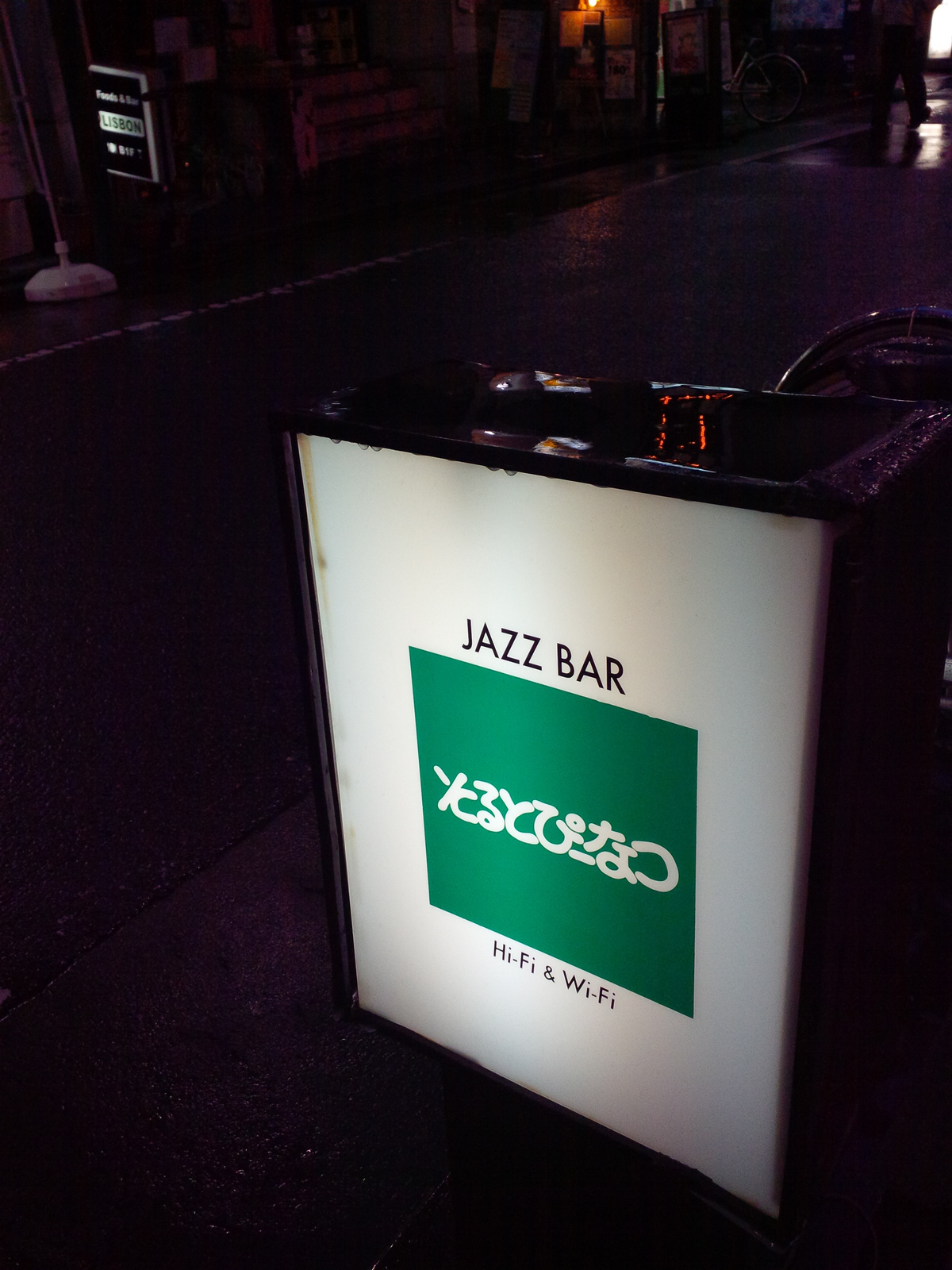
Scene: About 7:00 pm on a cool fall night in Tokyo.
You’re a solo traveler in search of live jazz and heard about this place called Salt Peanuts in Tokyo. You get off the train at Ekoda station and walk through a few winding streets when you spot an illuminated sign that says “JAZZ BAR” with some Japanese that you can’t quite read… but this must be the right place.
You take the stairs straight down and open the heavy steel door to find a dark space with half-a-dozen tables spread from the front stage area towards the back. Since you arrived without a reservation, you hesitate by the door and look around for the owner, the barmaster Nanako-san, who is the sole staff member and who works here every night.
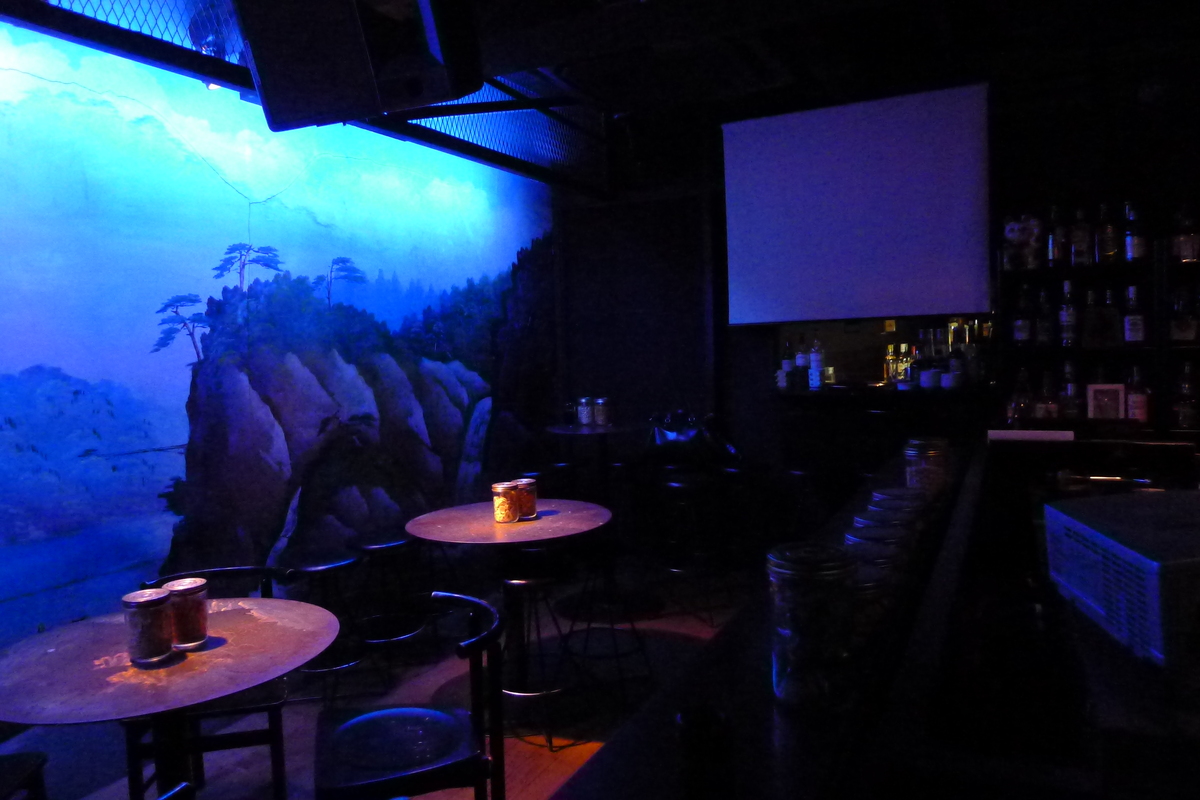
You stand near the entrance, make eye-contact with the man, and hold up a single index finger to indicate that you are looking for a seat for one person. (Of course, you know it’s not the done thing to look around and immediately head to a seat, unless you are invited to do so.) The barmaster points to an empty seat and says douzo, walks to the back, and returns with a hard plastic menu listing a lot of different drinks. It’s all in Japanese, but you know the basic words for beer bīru, Asahi Super Dry asahi sūpā dorai, and scotch sukotchī… or ginger ale jinjā ēru.
You look around and see that the musicians are sitting at the back table, thumbing through music sheets, and talking about arrangements. One is eating a small snack for energy before they play.
The front of the bar has a stage area where a grand piano, upright bass, and drums are set up. A back brick wall is painted pink and illuminated, and used as a display showcase for what seems to be a vintage racing bicycle. You remember reading somewhere that this was a bicycle-friendly bar, and that the owner used to occasionally change the decoration by rotating through his collection of bicycles.
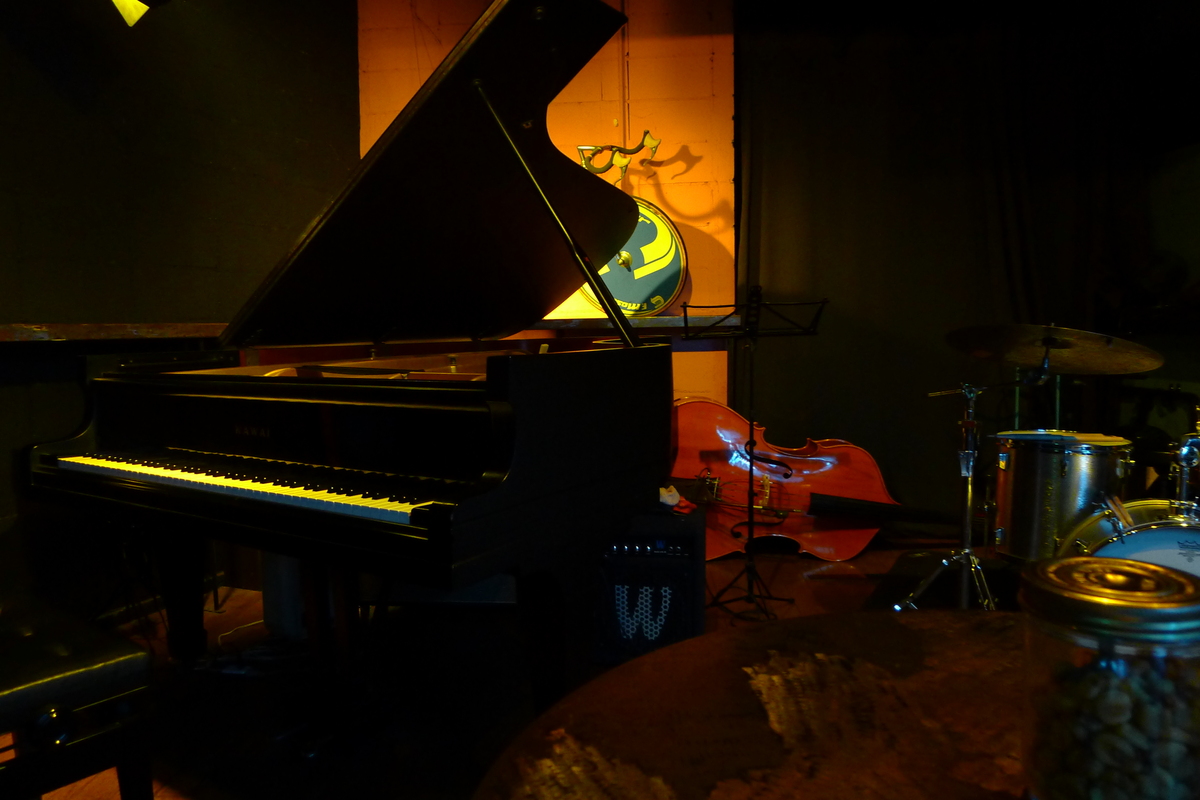
The first set is scheduled to start at 7:30pm, so you check your watch and see you have about fifteen minutes to settle in and get comfortable. You have a table to yourself, but you notice another coaster with a slip of paper with a name on it nearby, and you figure that another customer has reserved that seat and will be sitting here when they arrive.
The barmaster asks if it is your first time here, and you say yes. He apologizes for not speaking English well and explains the basic rules of the bar (prices based on September 2025 system):
- The music charge is 1500 yen per person.
- The table charge is 500 yen per person.
- The minimum order is 500 yen per person and up, based on the drink(s) ordered.
- Adding it up, the minimum total charge is 1500+500+500 = 2500 yen per person, collected at the end.
- The snack system is explained: Using your personal dish with the variety of snack jars spread throughout the bar, you gently shake and pour snacks from jars into dishes.
- Other varieties of snacks are in the jars on the bar. You can take your dish to the bar, but should not move the jars between the bar and the tables.
- No talking during the performance, please.
- Taking photos is allowed, but video/audio recording is prohibited.
- Wi-fi code is available.
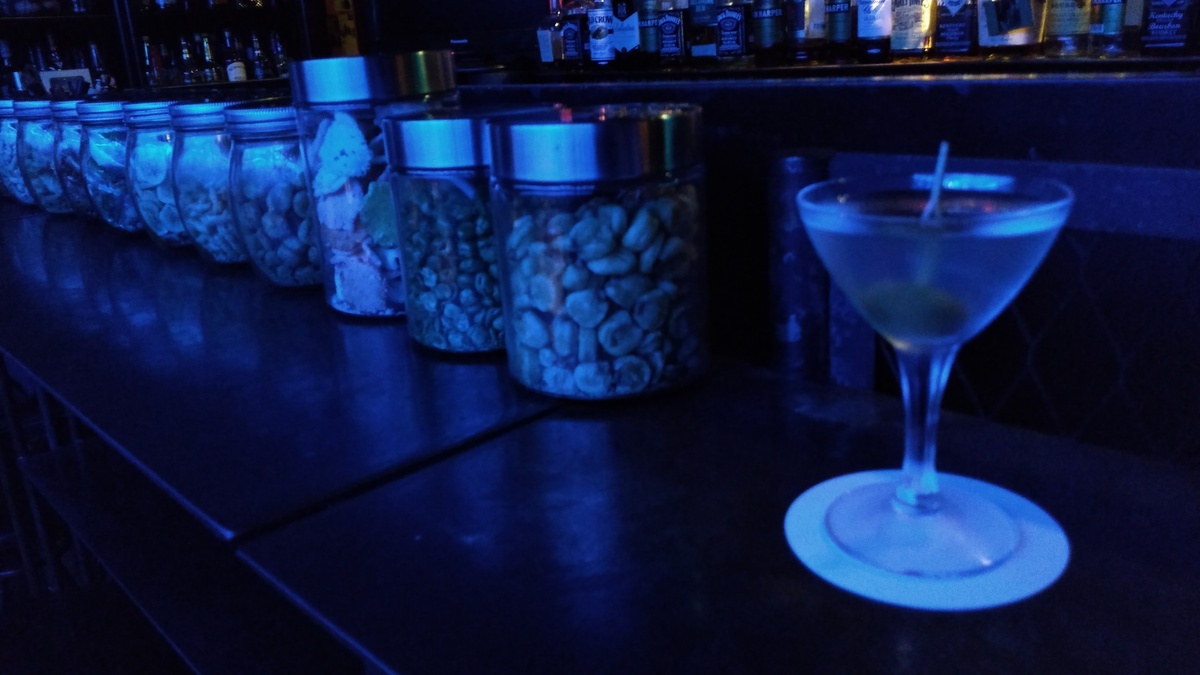
After listening to all that, at first you think, wow, this place seems strict… But then you realize that it’s a good faith effort to communicate across language barriers and make the customs as clear as possible, to avoid common misunderstandings or embarrassing problems later. The constant goal of venue proprietors seems to be to create a place for everyone to enjoy the music and have a good time, while selling drinks and/or food of course, but mainly to create an ideal live concert environment with a smooth experience for everyone.
Right before the music starts, the last few customers fill in, and someone takes a seat at your table. They seem to be a regular customer (jōrenkyaku) who exchanges friendly greetings with the barmaster. Soon thereafter, the barmaster brings that customer’s personal bottle of whiskey to the table with a bucket of ice and mixers to drink throughout the night (the bottle-keep system). Seems interesting, you think, I wonder how this works…
Several customers finish topping up their small plates with nuts from the jars on the bar and return to their seats. A few minutes later, three musicians make their way from the back of the room through the audience to the stage area, and take their positions at the piano, bass, and drums.
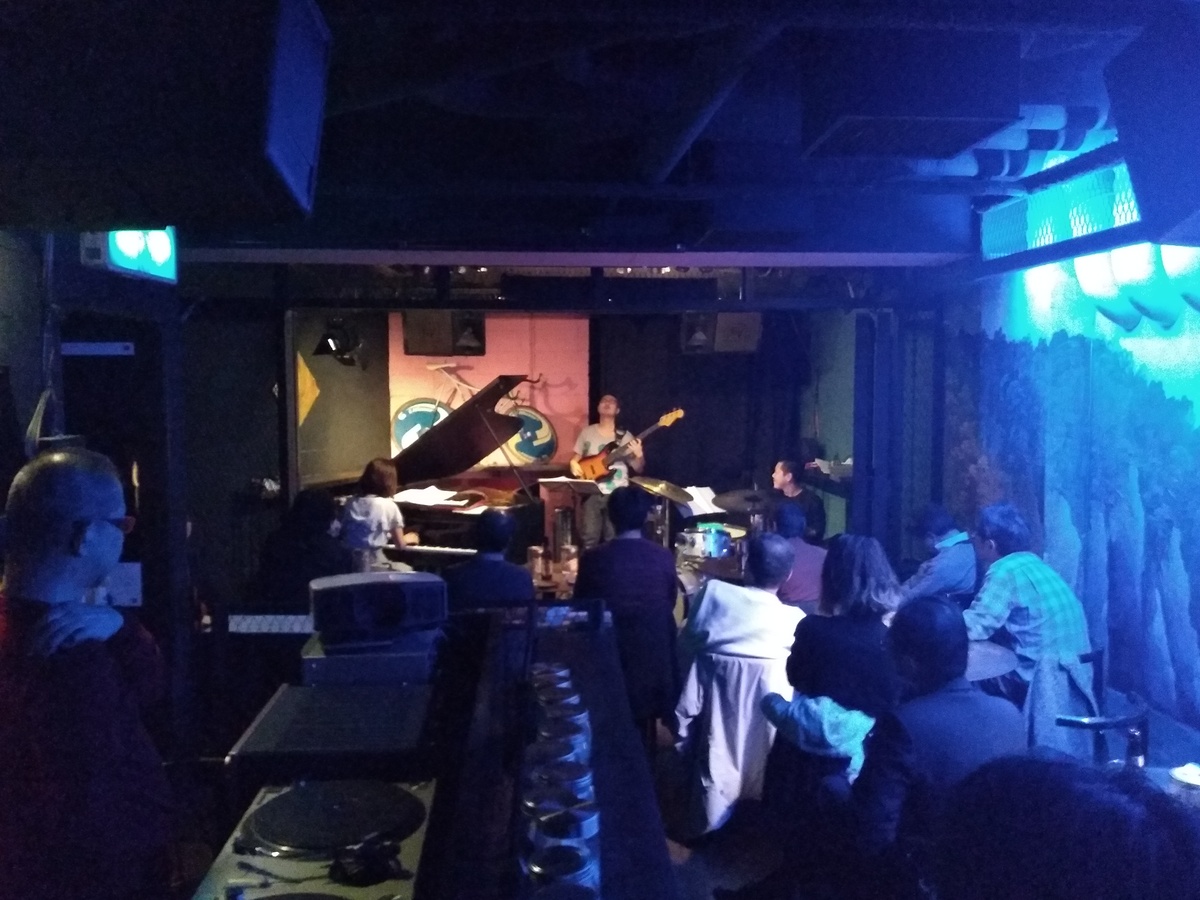
The music starts… and in a flash, it’s over. You were so immersed that the time flew by, and the next thing you knew, it was over. You remember the energy, the clapping, the song introductions and storytelling (longer and with more laughter than you’ve experienced at other concerts). You remember ordering another drink or two, and finding the bathroom all the way in the back. You remember seeing some people taking photos from their seats using their phones, and so you quickly snapped a few too, and you remind yourself to look at them later to see how they came out. You remember how, after the last song was played, the audience kept clapping together in rhythm, to convince the band to play an encore, which they did with in good spirits and with appreciation for the very receptive audience.
The intermission between the two sets of music also few by. The barmaster continued to play music from his selection of personal CD and LPs, some on display on the back wall above regular customer’s reserved bottles. You see a few titles you recognize as newer releases from local Tokyo jazz musicians that had come up recently.
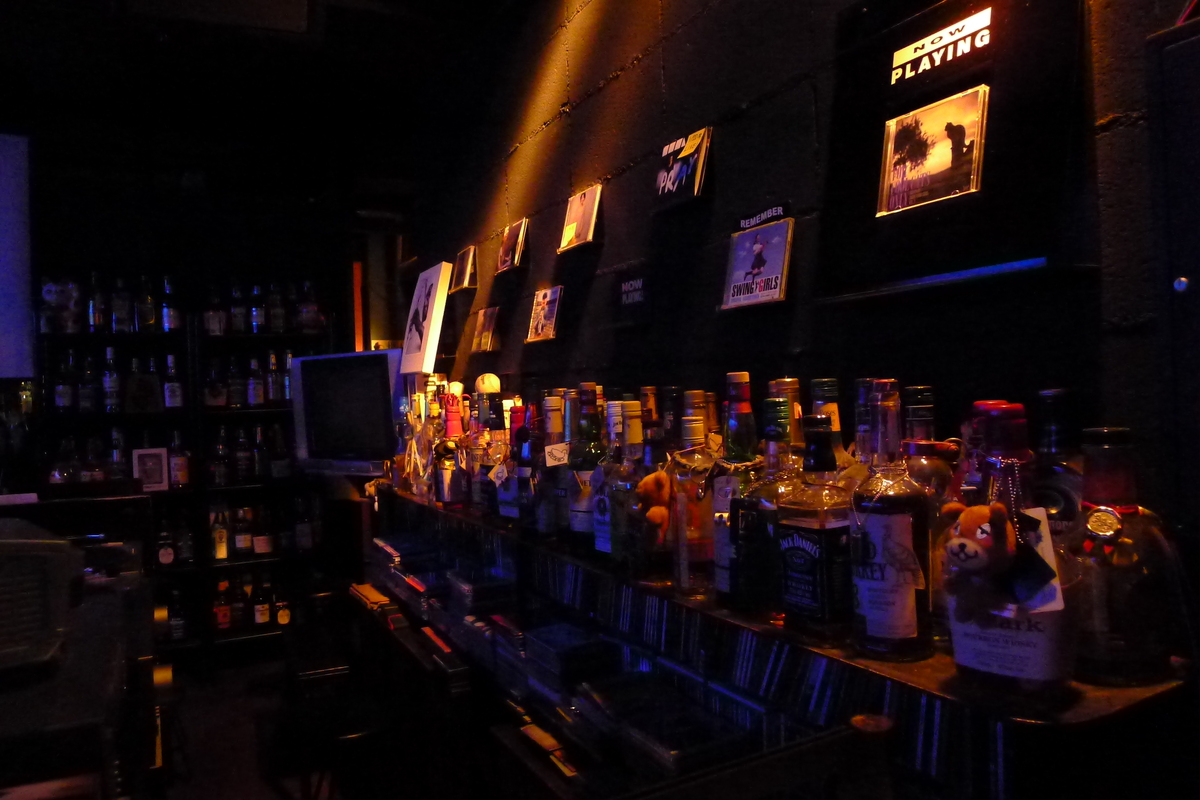
Also during the intermission, your table mate struck up a conversation with you in English. After asking about where you were from and how long you were going to be in Japan, you both enjoyed a pleasant conversation about the musicians and jazz music. You even got some tips about other jazz spots that sound really interesting.
On the way out, you see a small pile of new CDs on the bar near the jars of snacks, and realize that these must be the new releases from the musicians that played here tonight. You immediately decide to get one, as both a souvenir of this night and also a tangible way to help support the musicians who played here and the live jazz scene in Japan. The musicians are very pleased to hear that you’re interested in their music, and after letting you know the price, you agree to buy one. They ask if you would like to have it signed, and you do, so they carefully open the plastic wrap, pull out an autograph marker pen, and ask you your name as they sign and date the CD for you.
Finally, you ask the barmaster how much your bill comes to. He tells you while holding up some fingers to represent the amount. No formalities of itemized paper bills or breakdowns here, but I’m sure if you needed one… You happily pay for a night of great music and drinks and plenty of snacks, and you leave in a good mood with irreplaceable memories of a fun first time out at a jazz bar in Japan.
Lastly
This covers some of the common patterns and information that I’ve collected over years of absorbing Japanese jazz culture. Let me know what you think, if I missed anything, or whatever you have to add. Is there anything you would like to know more about? Send me a message or leave a comment, and I will try to cover what I can in future articles. In the meantime, the next article will go into more detail about how to choose the right jazz spot to suit your taste.
Jazz of Japan #331 (Premium) • Oct 15, 2025 • Brian McCrory
Add a comment: