
Otohito Fuse Trio: Thus Have I Heard
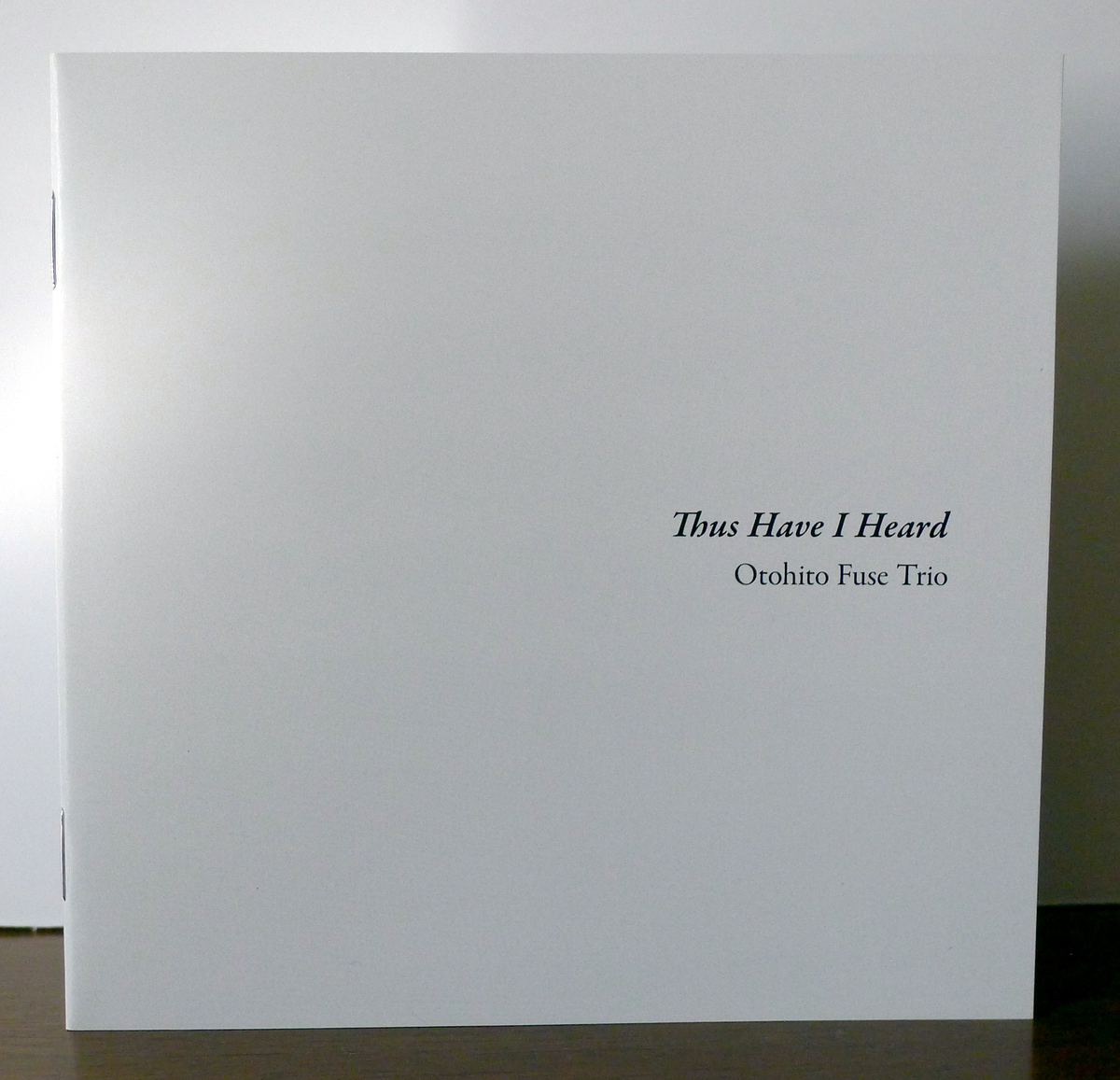
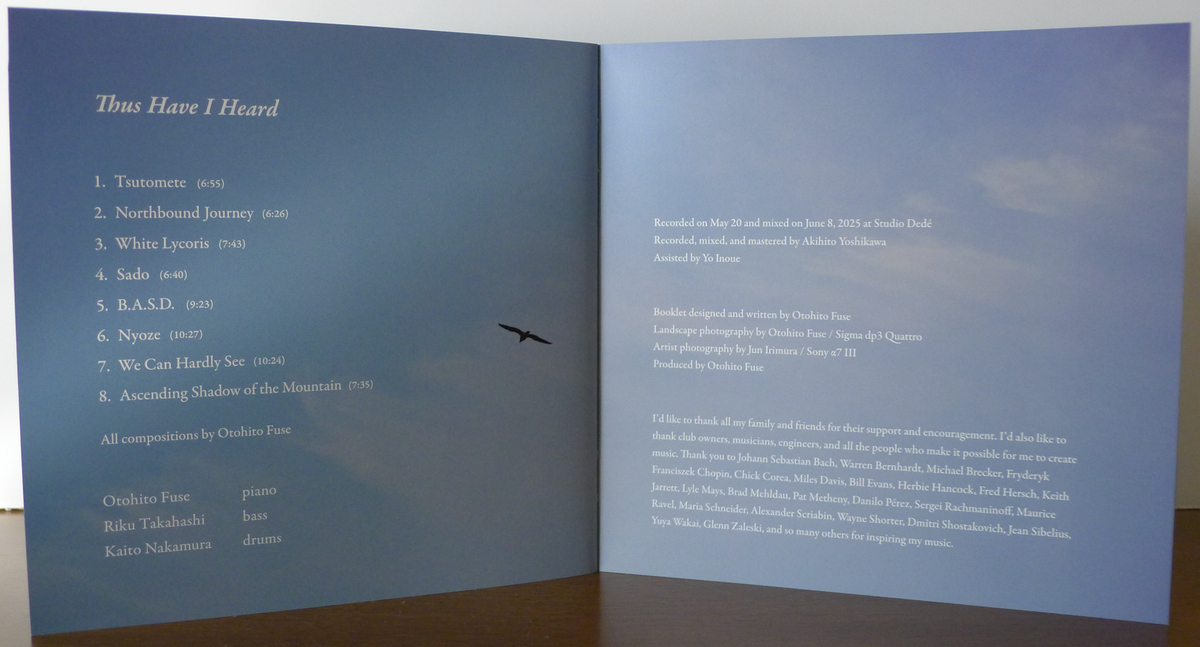
This I Have Heard is a 2025 release from pianist Otohito Fuse, a second album as a leader quick on...
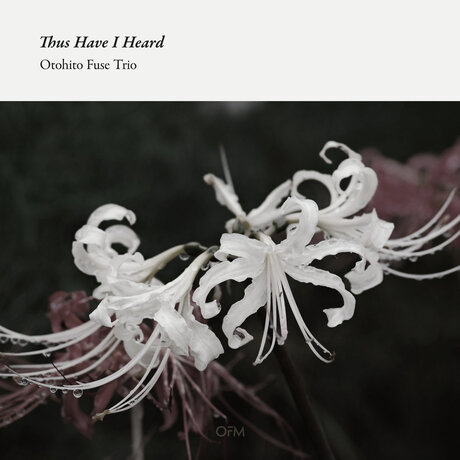
This I Have Heard is a 2025 release from pianist Otohito Fuse, a second album as a leader quick on the heels of his Isolated from 2024. Joining him on this release are his regular trio members, Riku Takahashi on bass and Kaito Nakamura on drums. It’s a continuation and evolution of the trio sound created on their previous release, with an increased maturity and depth added to the new music. This music is patient and deep, and while there are intense tempos with free-flowing jazz improvisation and burning solos, the musicians do not hurry to get there, as if there is an abundance of confidence in building beautiful moments that will come together when the time is right.
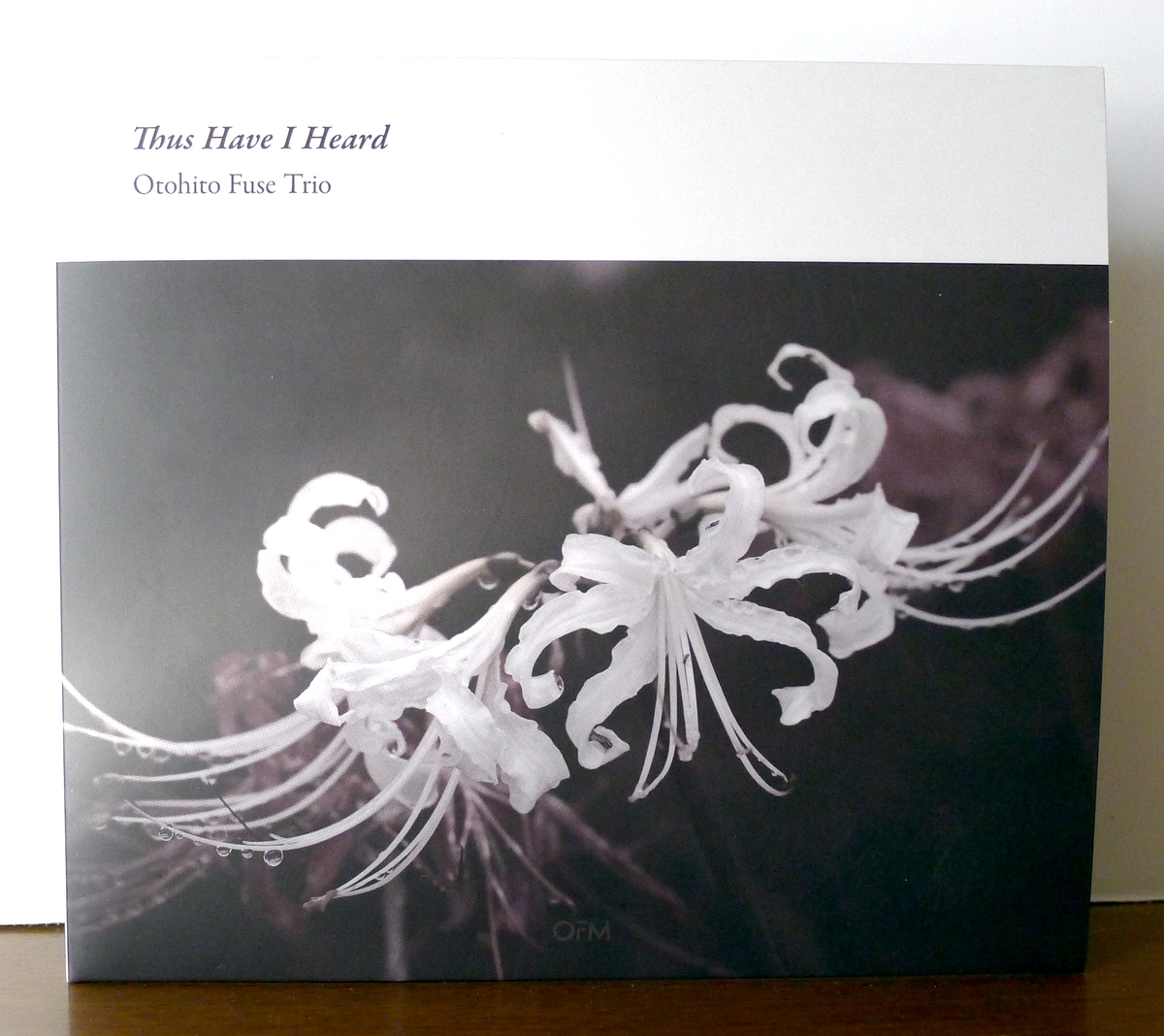
Those moments are contained within eight songs that run from six to eleven minutes apiece on the 65-minute album. Several songs open with Fuse’s solo piano, a style of improvisation that starts from players like Bill Evans and Keith Jarrett and seems to bring in some modern jazz and classical concepts as well. Those absorbing introductions can wind out for several minutes before the trio coalesces and the main rhythms, melody, and harmonies of the written compositions begin. In series, the album traverses a path as if flowing through an opening meditation, brighter stimulation, a tropical lilt, a ballad break, more inner mediation to modern pop jazz, some free improvisation, wavering suspense, and a final piece for peaceful reflection.
Fuse composed all the songs for his trio, and in contrast to his previous release that included no explanatory musical notes, this CD includes a booklet of Fuse’s detailed observations (riffing on the phrase Thus I Have Heard?) about Buddhist concepts and how they relate to this present work… and how it all connects to isolation, self-realization, and the ability to lay down an artistic statement (for any work) in the context of what one has experienced.
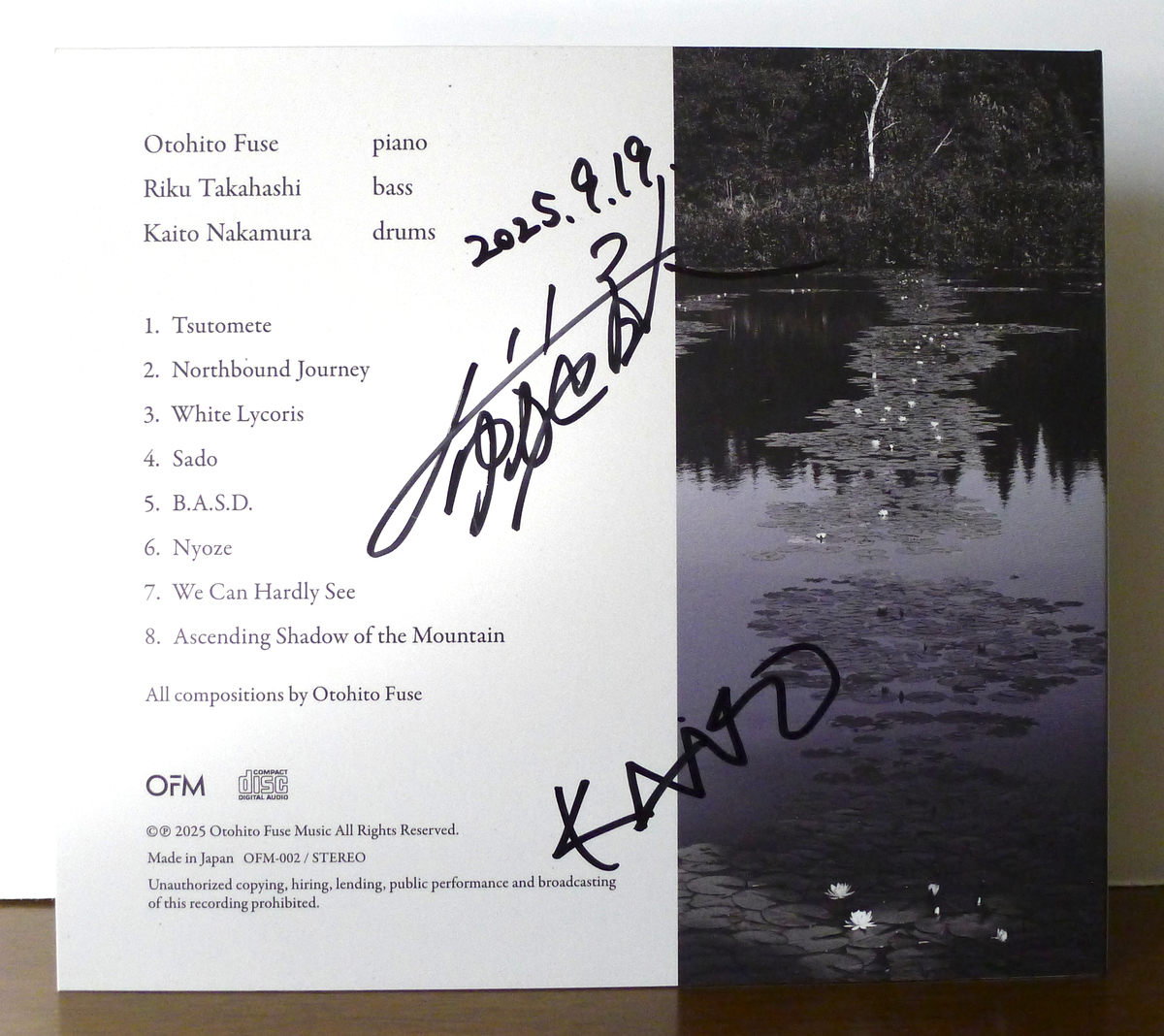
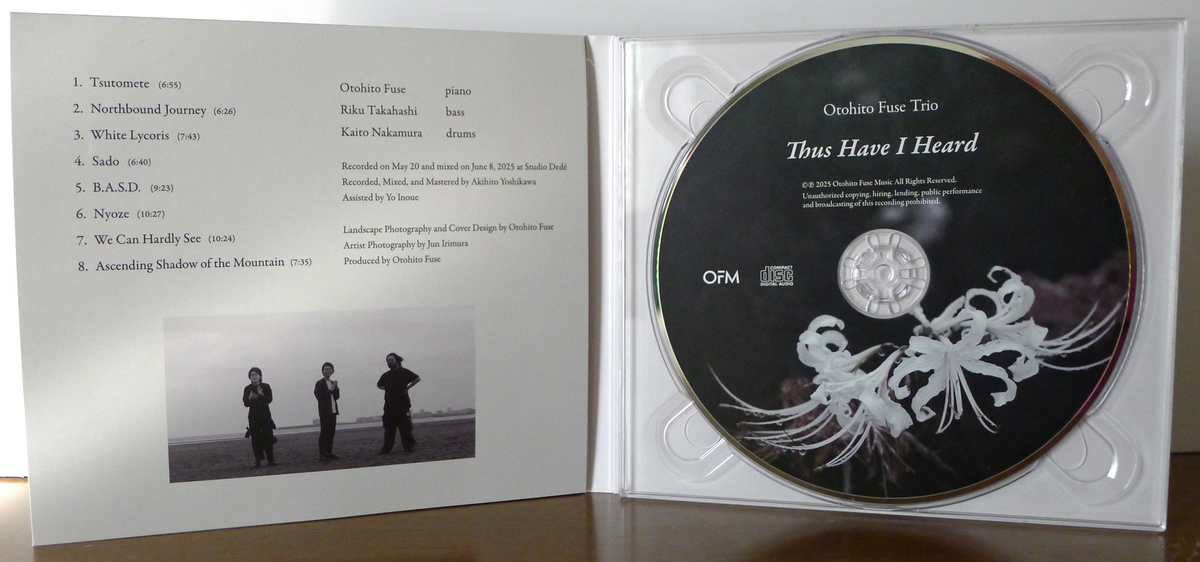
Liner Notes
(Translated from Otohito Fuse’s original Japanese liner notes.)
“Thus Have I Heard” is the English translation of “如是我聞”, a phrase that opens many Buddhist texts to announce that what follows is a record of what was said. This is usually said at the opening of Buddhist scriptures due to the fact that they were not written by the Buddha himself, but recorded in that form by his disciples who listened to his teachings.
The teachings of the Buddha are boundless, and since the ways of teaching these lessons to humankind is so varied and dependent on each individual, it is impossible to put those into words. “Being conscious of that, this is what I have heard and understood so far.” I think this is a wonderful phrase that overflows with humility and sincerity.
***
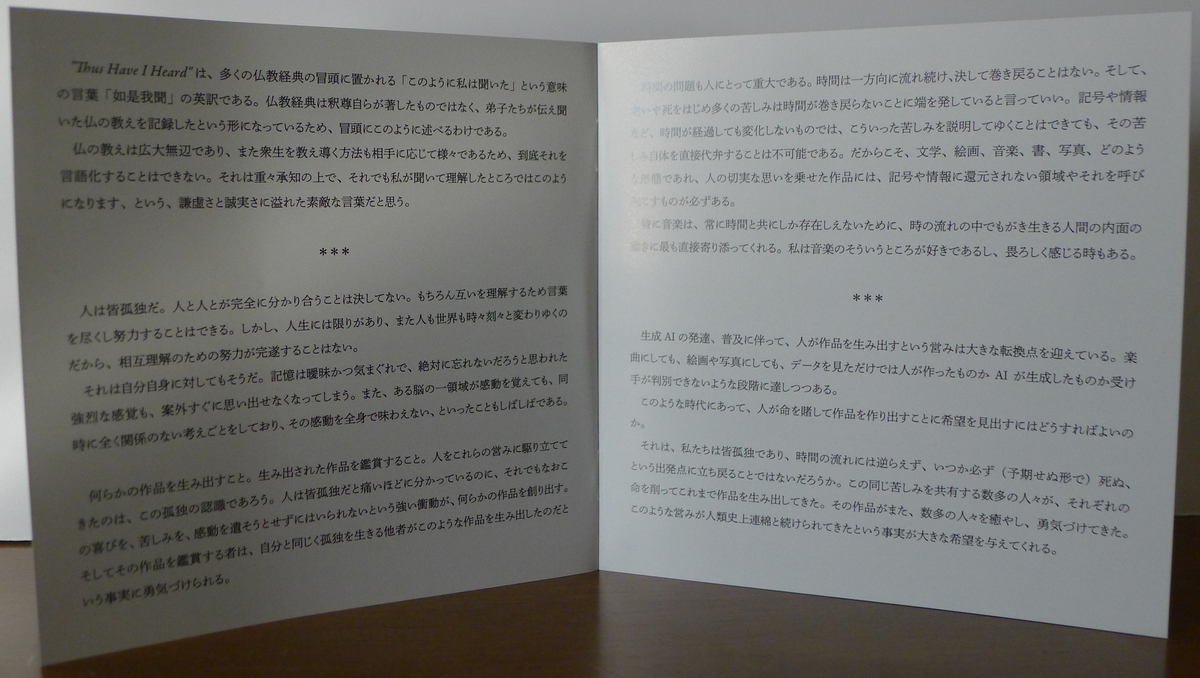
People are all isolated. Perfect understanding between people is an impossible task. Of course, we are able to make efforts through words to understand one another. Yet, lifespans are limited, and both people and the world gradually change over time, so efforts towards mutual understanding cannot be fully achieved.
The same goes for oneself. Memories are vague and capricious, and even intense feelings that you sense you will never forget can become unexpectedly difficult to recall. Moreover, even if a certain region of the brain is experiencing an emotion, it often happens that completely unrelated thoughts are occurring at the same time, preventing the whole system from appreciating that emotion.
Creating a piece of work. The appreciation of the work that has been created. What may drive people to these actions is awareness of their isolation. Even though we all are painfully aware of our own isolation, we are so strongly moved by our joy, pain, and emotions that we cannot help but try to create some kind of work to leave behind. And those people who appreciate that work are encouraged by the fact that there are others, living in the same conditions of isolation as themselves, who produced such pieces.
The issue of time is also a critical one for people. Time keeps flowing in only one direction and can never be reversed. It can be said that much suffering stems from by this irreversibility of time, not the least of which is aging and death. Even as symbols and information, things that do not change with the passage of time, can go on to explain this suffering, it is impossible for them to directly represent this suffering themselves. This is exactly why the creation of work from an earnest mind, whether in literature, art, music, writing, photography, or whatever form, always brings forth something that evokes a realm that cannot by reduced to symbols and information. Music in particular only exists in conjunction with time. For this reason, it can give us the most direct connection that resonates to the inner struggle of human existence in the flow of time. Not only is this what I love about music, there are also times when I find it awe-inspiring.
***
Considering the progress and spread of generative AI, the activity of human-derived works is approaching a turning point. When it comes to music, paintings, and photography, the listeners and viewers may be reaching a stage where they cannot determine based solely on the data if those works were made by a human or generated by AI.
In this sort of era, how can those who stake their lives in creating works of art find hope?
Perhaps it’s by returning to the starting point: that we are all isolated, we cannot oppose the flow of time, and one day we will inevitably die (in some unknown way). There are countless people who have shared in this same suffering and have used up their lives to bring forth their work. That work has in turn comforted and encouraged many other people. The fact that such endeavors have continued unbroken throughout human history can give us a great amount hope.
From this perspective, the essence of the person who created the work stands out distinctly. However, that essence is not a fixed characteristic, but rather one that is unstable and ambiguous in the extreme. In the vicissitudes of the flow of time, it’s unknowable whether some future self, or some different self that is occupied by other thoughts at the moment, will later betray the fact of “At this moment and in this place, I feel moved in this way.” Even while struggling to give a sense of form to this emotion, both the self and the world are changing moment by moment, and there is no guarantee of consistency in that which is being created. Still, a work that has been born of strong emotion is the only thing in existence that can speak for its creator’s voice at that time and place, and once it leaves their hands, it drifts on through time and space.
***
By the way, I enjoy taking photos. There’s a repetition in the act of taking photos in the naive hope of capturing what you see just as it is, but then those expectations are more or less betrayed by the results once the shutter is released and you examine the picture. Within that trial and error process of recognizing the difference between the two states and attempting to bring them closer to one another, you can suddenly notice a way of viewing the landscape that you had not seen before. Or, there are times when the emotions conveyed through a scene are captured best through a photo with a slightly different form. Through photography, the way of engaging with a landscape can be disassembled and then reconstructed, and this sense is fascinating.
I also like the kind of impartiality involved in how the camera records photographs through a completely mechanical process. In theory, anyone can take the exact same photo if they use the same camera, the same settings, are in the same location, and release the shutter at the same time. Conversely, it is for that exact reason that the photographer’s individuality manifests as the person who existed there at that time and place. Photographs become very significant in the life of the photographer as a modest proof of an isolated existence that emotes “Certainly, I was there, and I observed this scene.”
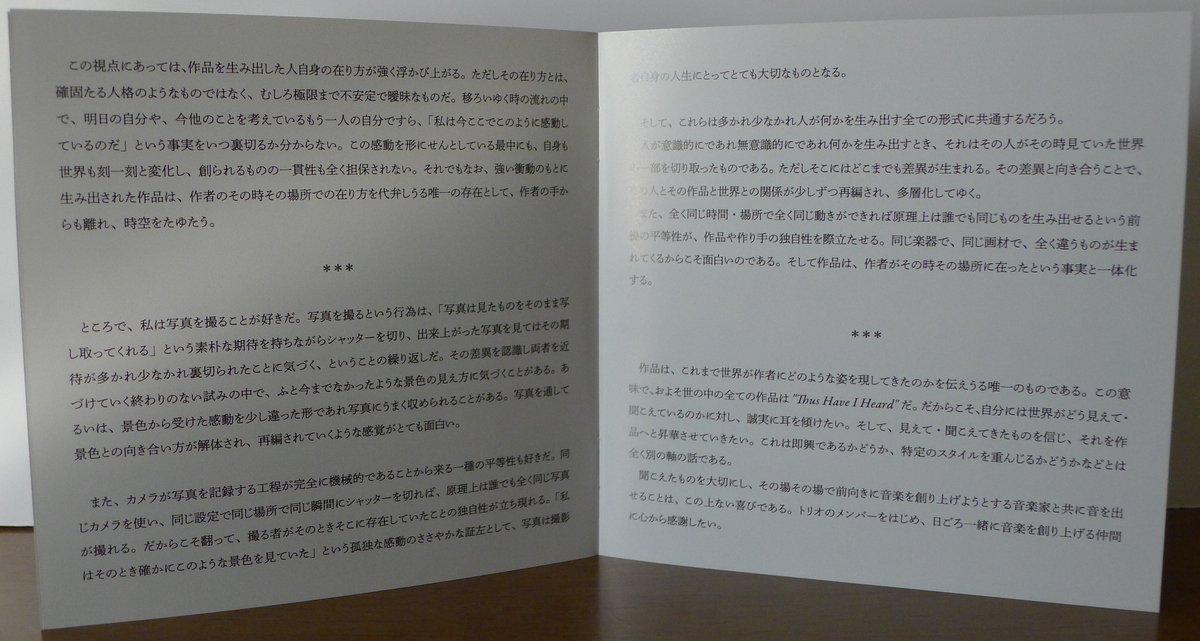
And this is a quality that is common to all forms of human creation to some degree.
When someone creates something, whether consciously or unconsciously, it is slice of the world that that person experienced at that time. Even still, unending differences rise from that. When confronting those differences, the relationships between that person, their work, and the world is reorganized little by little and becomes multi-layered.
Furthermore, the premise of impartiality that suggests that anyone could produce exactly the same work given the exact same time, location, and movements, makes prominent the uniqueness of the work and the creator themselves. This is precisely why it is so interesting that completely different things are be produced through the same instruments and materials. The work becomes one with the fact that that creator existed and was there at a certain time and place.
***
A work of art is the only thing that conveys how the form of world was revealed to the artist up until that time. In that sense, almost all the works that have been produced in the world are “/Thus I Have Heard/”. This is truly why I want to sincerely and carefully observe how the world appears and sounds to me. And I want to trust in what I see and hear, and transform those experiences into works. Whether this takes the form of improvisation or that of honoring the traditions of a designed style is a completely different matter. There is nothing more pleasurable than creating music together with musical partners who place such importance on what they hear and respond to each place and situation independently. I want to express my gratitude to the members of the trio with whom I make music on a daily basis.
Tsutomete
“Tsutomete” is an old word that carries the meaning of early morning.
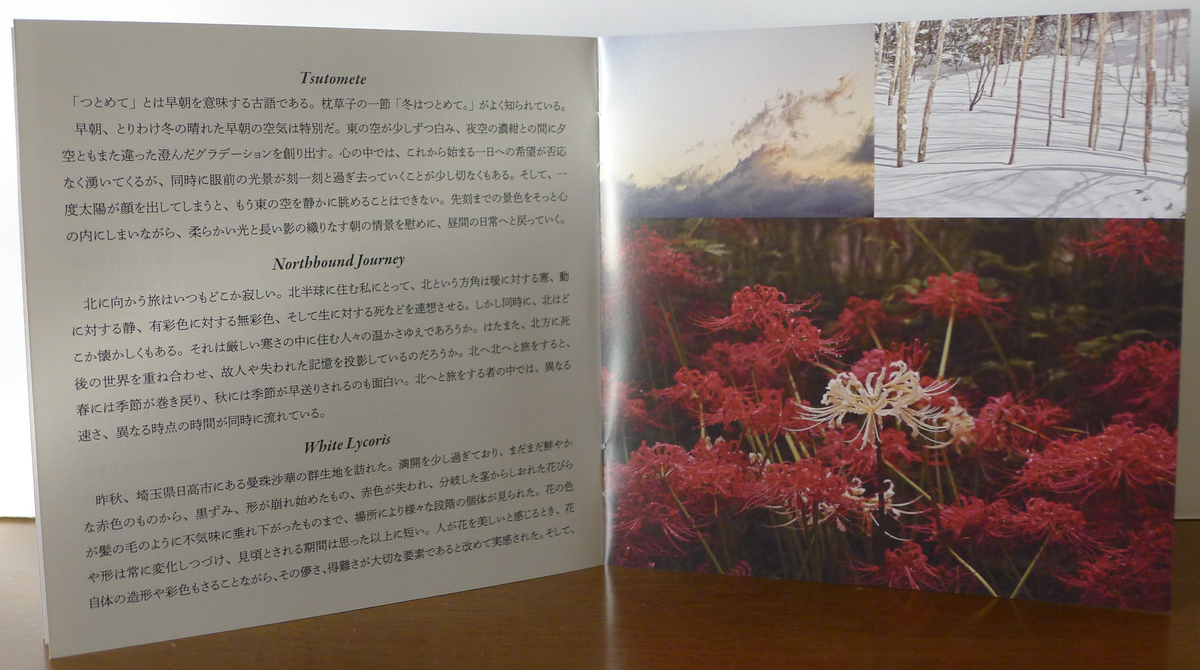
A phrase from The Pillow Book that is widely known is “In winter the early mornings.” The atmosphere of the morning is special, particularly those refreshing early mornings in winter. The eastern sky gradually begins to glow, and the gap between it and the deep blue of the night sky create a twilight in clear gradation. Hope for the new day uncontrollably springs in the heart while at the same time there’s a painfully bittersweet feeling as the scene disappears before your eyes, moment by moment. And once the sun fully emerges, you can no longer peacefully gaze upon the eastern sky. While storing away in your chest that landscape that was visible only just moments ago, you find comfort in the morning scenery of the interweaving of soft light and long shadows as you return to the ordinary habits of the day.
Northbound Journey
A trip to the north always carries some sense of loneliness. For someone from the north like me, the northward direction includes connotations of cold versus warmth, stillness versus motion, neutral colors versus the chromatic, and death versus life. Simultaneously, the north summons a feeling of nostalgia. Perhaps this is because of the warmth of the people who live within that bitter cold. Or maybe it’s because the north is superimposed with the afterlife, where we project memories of our loved ones who have died and memories we have lost. As travel continues northward, it’s also interesting how in spring the season seems to rewind, and in autumn, fast-forwards. For those traveling north, it’s as if time moves at a different speed and different moments flow and intersect in time.
White Lycoris
In the autumn of last year, I visited a habitat of red spider lilies (Lycoris radiata) in Hidaka, Saitama. The full bloom had just passed, so depending on the spot, there were specimens in various stages, from those that were still vivid red to those who were beginning to lose their form, fade in color, or even whose withering petals on drooping branches where eerily hanging like wisps of hair. Flowers’ colors and forms are always changing, and their peak viewing period is shorter than one thinks. I was struck again when admiring the beauty of flowers that aside from their colors and shapes, those fleeting and precious qualities are even more crucial factors. And, thoughts of kazuso (Buddhist contemplation of the nine stages of decomposition) entered my mind as I kept on looking at those wilted flowers for a while.
Later, mixed in the midst of those red spider lilies I spotted a tiny sprinkling of white ones. Coupled with having just been looking at those withered flowers, those white flowers made me feel how especially beautiful, noble, and precious they were.
Sado
There are several places that I have a special attraction to for some unknown reason. Sado Island is one of those places. To date, I have visited Sado three times.
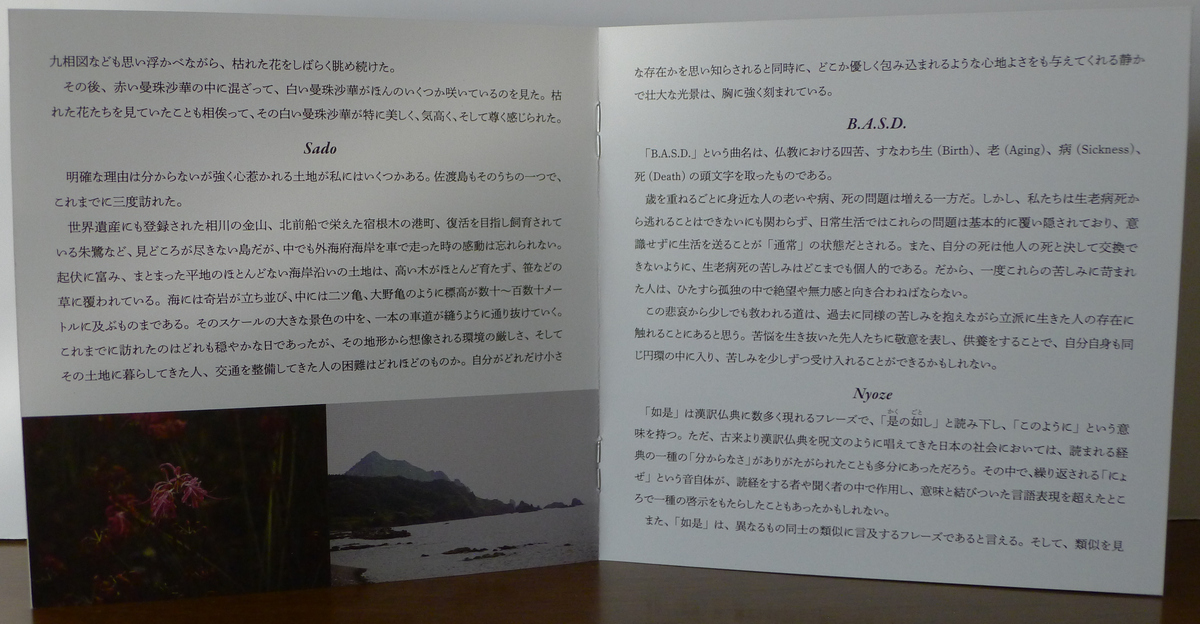
The Aikawa Gold and Silver Mine is a recognized World Heritage Site, the port city of Shukunegi flourished with Edo-era cargo ships, and the locally-bred Japanese crested ibis is headed for a resurgence. This is an island with innumerable points worthy of mentioning. What I cannot forget is the feeling of driving along the Sotokaifu Coast.
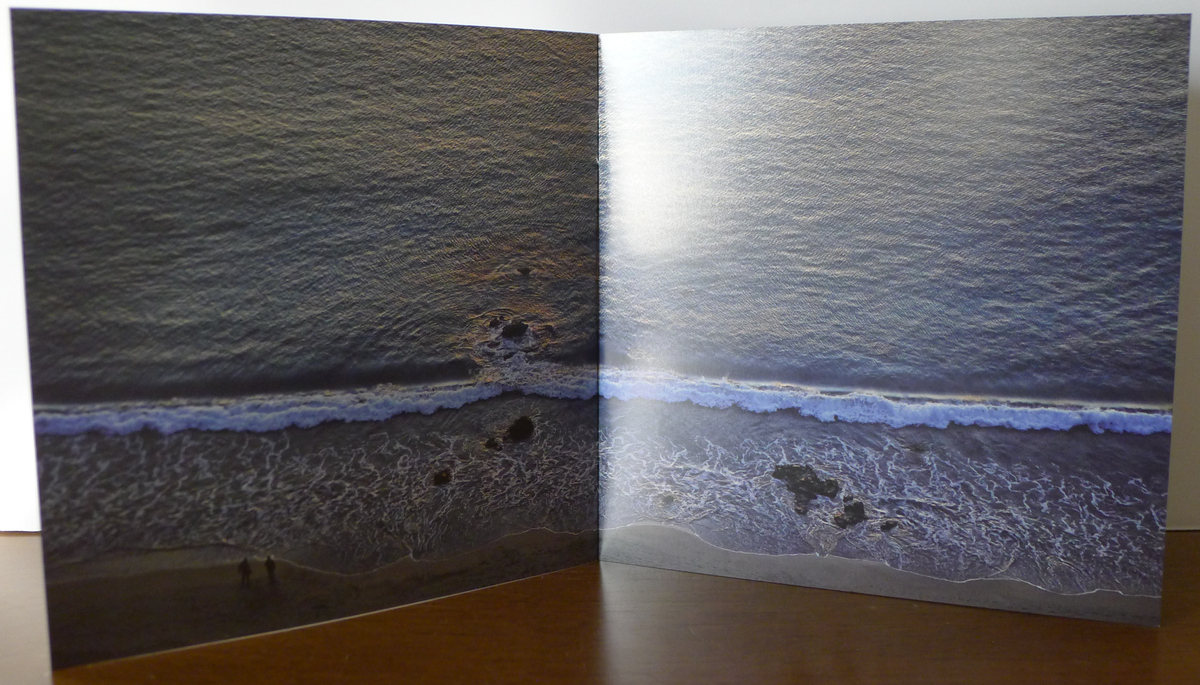
The undulating region next to the sea has almost no areas of flatland and is abundant in peaks and valleys. The landscape is covered with grass and bamboo, with almost no tall trees growing there. Large, strangely-shaped rocks rise from the ocean, including Futatsugame and Onogame, reaching heights of several tens of meters to over a hundred meters above sea level. A single road weaves its way through the middle of this landscape of such huge scale. The days that I’ve visited so far have been calm. Yet, this terrain causes me to wonder about its severe landscape and the hardships faced by the people who live there, as well as those woh maintain its transportation system. This magnificent scenery is etched in my heart, and at the same time makes me keenly aware of my own tiny existence while the landscape comforts me quietly in its embrace.
B.A.S.D.
The letters for the title of the song “B.A.S.D.” are derived from the Four Sufferings of Buddhism, that is: Birth, Aging, Sickness, and Death.
The older we get, the more we experience the issues of aging, illness, and the death of those close to us. However, despite the fact that we cannot evade the Four Sufferings, they are generally concealed in daily life, and it’s considered normal to go about our lives without acknowledging them consciously. Furthermore, just as one individual’s death can never be replaced by that of another, the anguish of the Four Sufferings is a deeply personal one. Therefore, once afflicted by these sufferings, people must be devoted to confronting their despair and powerlessness in isolation.
If even a little bit, I believe that one way out of this sadness is to come into contact with those who were burdened with grief in the past but still led inspiring lives. By offering respect and prayers to those who lived through suffering in the past, we may enter the same sphere ourselves and be able to gradually accept our own pain.
Nyoze
“如是” is a phrase that often appears in Kanji-translated Buddhist scriptures. It is read as kaku no gotoshi and carries the meaning of in this way or manner. However, in Japanese culture where these Kanji-translated texts have long been chanted in the manner of incantations, one part of the allure of reciting these scriptures may be that are difficult to understand. Within that, the repeated sound of nyoze itself may affect both the person who chants the phrase and those who hear it, possibly bringing a kind of revelation that transcends any meaning or representation in language.

It’s also said that nyoze is a phrase that alludes to the common similarities between different things. I believe that identifying such likeness is one of the most primal ideas that drive human beings living on this earth. In a blank, featureless spacetime that was originally filled only with objects, people gradually discovered similarities and created a world of our own making. This is not limited only to objects which can be expressed through language. We can take some solace in the irreversible flow of time as we reflect on our memory of events that occur at different points in time yet vaguely resemble one another.
We Can Hardly See
The things that are truly important to us are actually just nearby. However, they are things we can hardly see. These kinds of words are commonly said across a range of domains, from spiritual contents to the commonplace search for a misplaced item. Isn’t life itself a pursuit of those things that are truly important to us, and that we keep approaching closer and closer to? Furthermore, those concepts of close and far are relative, and we continually recalibrate the meaning of those words as we live our lives. The journey and track of one’s life goes on as we traverse the perimeter of that unreachable destination, never too close nor too distant.
Ascending Shadow of the Mountain
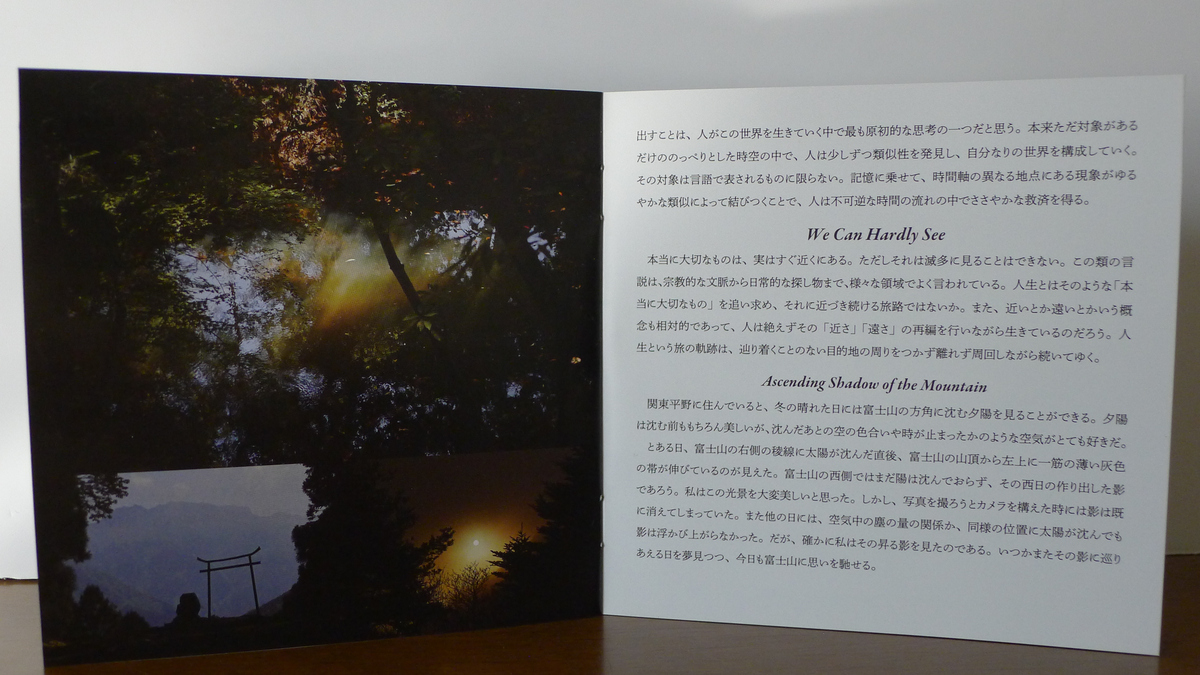
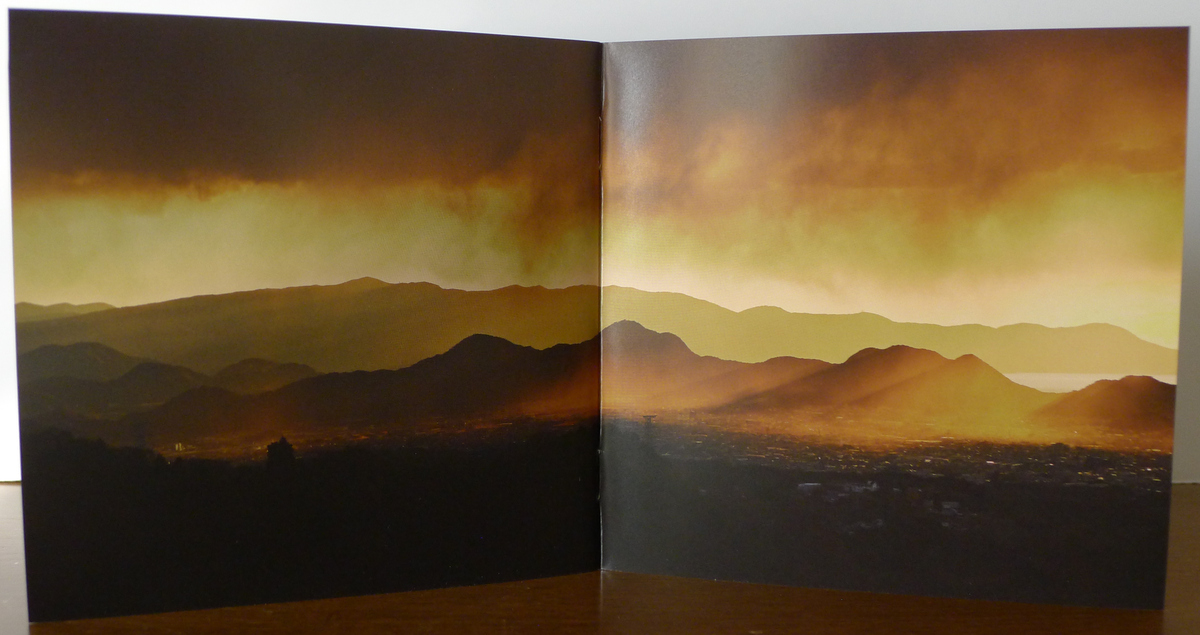
Living on the Kanto Plain, you can see the sun setting in the direction of Mount Fuji on clear winter days. The setting sun is beautiful, of course, but I especially like the coloring of the sky just after sunset. It is as if time is standing still.
One day, right after the sun had set to to the ridgeline on the right of Mount Fuji, I saw a pale gray band of light rising from the summit and stretching towards the left. It must have been a shadow cast by the sun that was still setting on the west side of Mount Fuji. I felt that this sight was incredibly beautiful. I wanted to take a picture, but by the time I prepared my camera, the shadow had disappeared. On other days, the shadow never reappeared, even when the sun set in the same position. Perhaps it was related to the amount of dust in the air? But I had certainly seen that rising shadow. I keep dreaming of the day I can have a chance encounter with that shadow again, and today as well, I find my thoughts returning to Mount Fuji.
Obi Notes
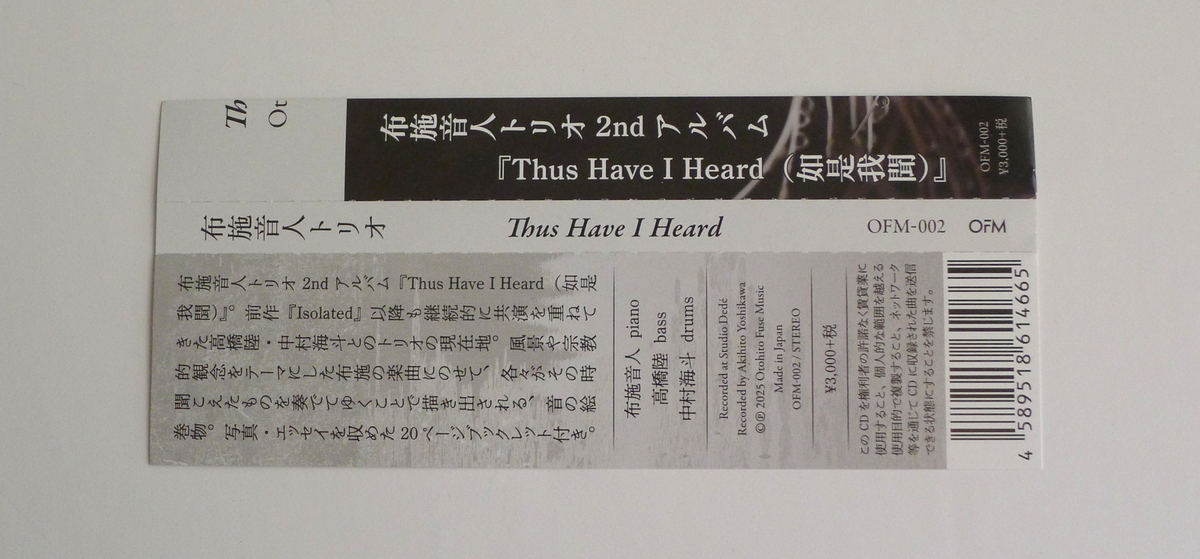
Otohito Fuse Trio’s second album, Thus Have I Heard.
This is the current marker for this trio with Riku Takashi and Kaita Nakamura, who have continued to perform together since the previous release Isolated.
Fuse’s music carries themes of scenery and spiritual concepts as a picture scroll of sound, as each member proceeds to perform what they heard at that moment.
Includes a 20-page booklet of photographs and writings.
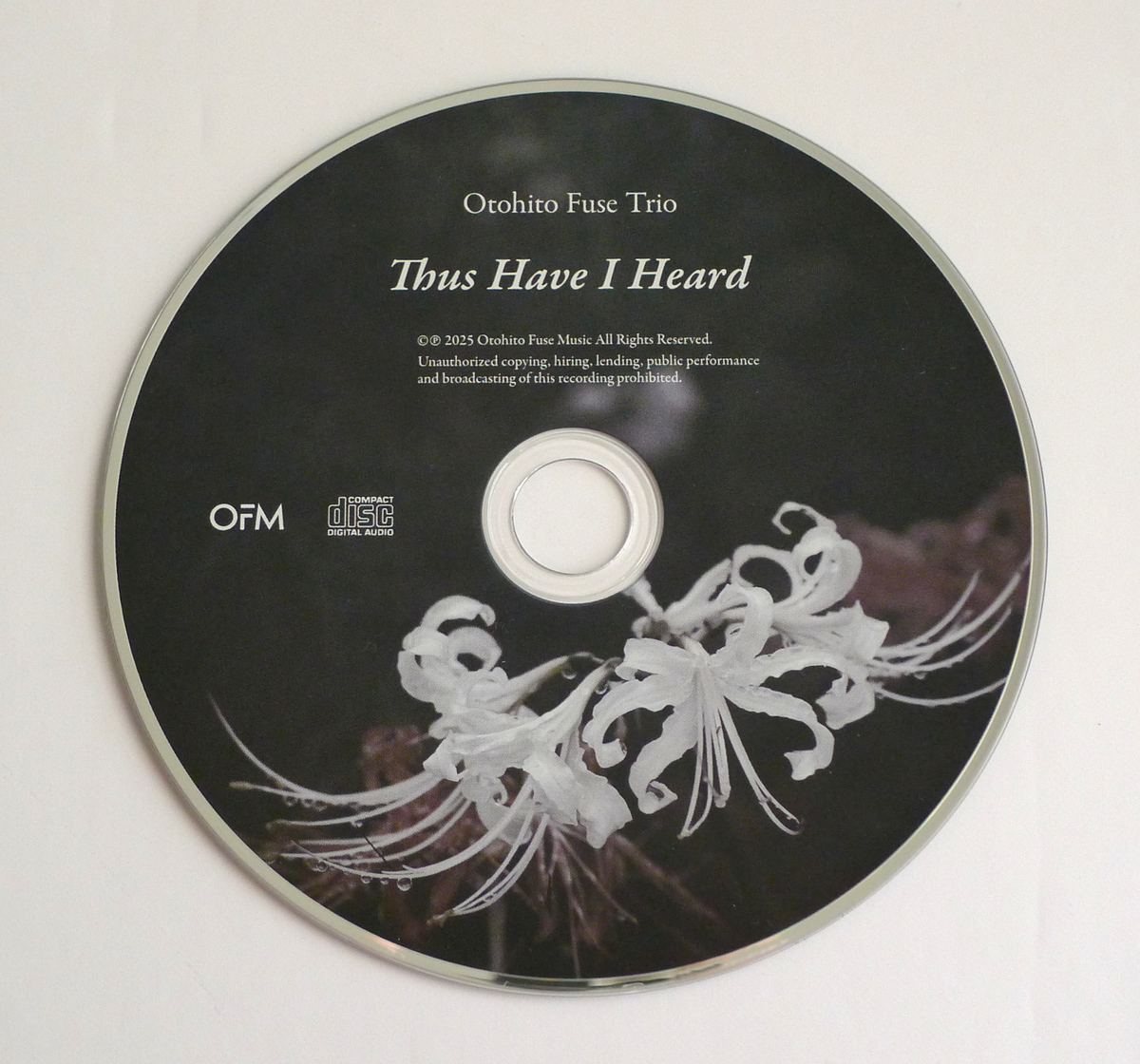
Thus Have I Heard by Otohito Fuse Trio
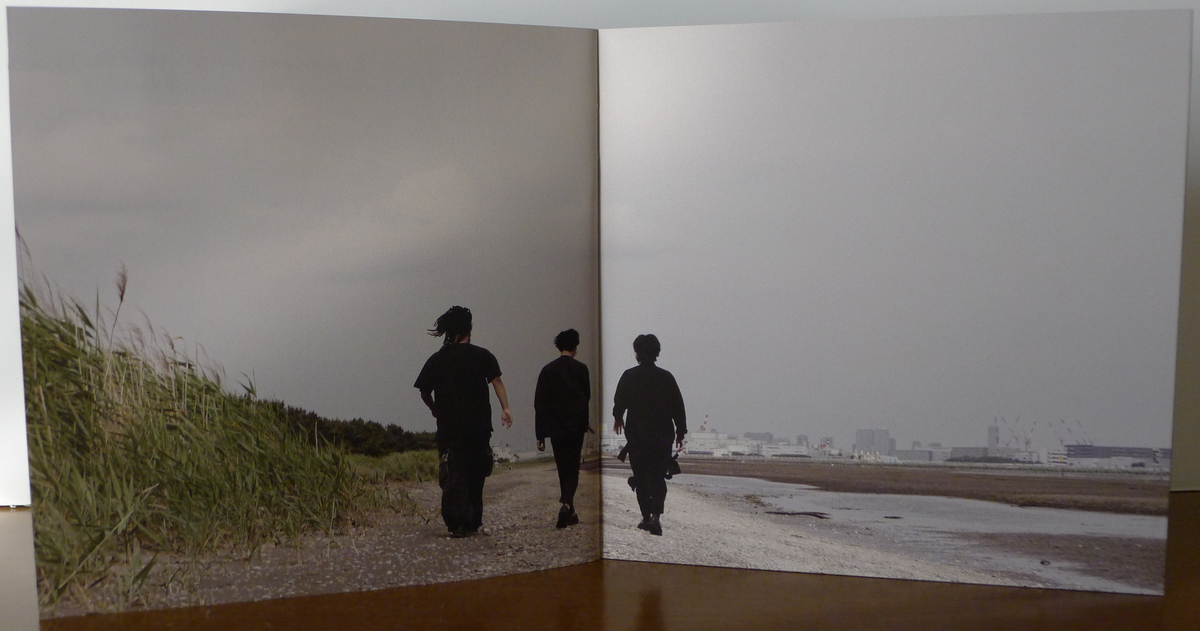
- Otohito Fuse - piano
- Riku Takahashi - bass
- Kaito Nakamura - drums
Released in 2025 on Otohito Fuse Music as OFM-002.
Japanese names: 布施音人 Fuse Otohito 高橋陸 Takahashi Riku 中村海斗 Nakamura Kaito
Audio and Video
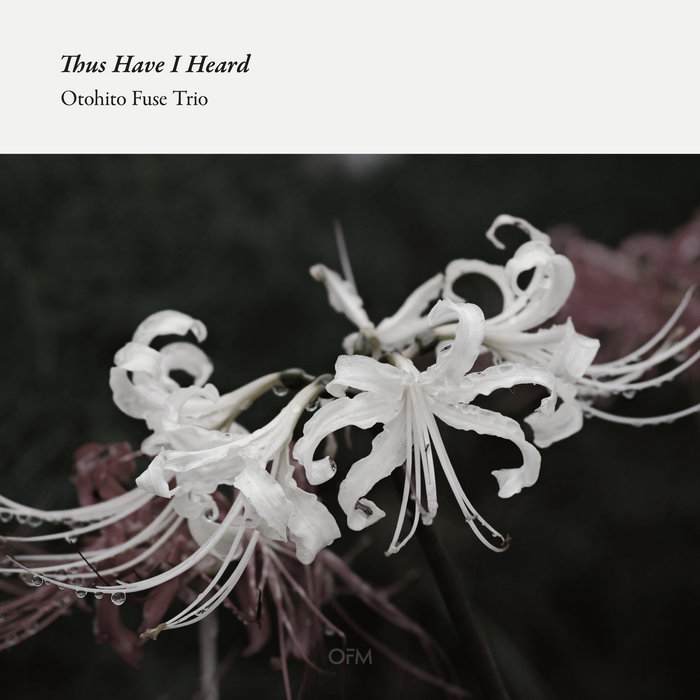
Thus Have I Heard | Otohito Fuse Trio | Otohito Fuse
8 track album
- Full Playlist (YouTube)
- Excerpt from track #7: “We Can Hardly See”
Jazz of Japan #371 • Jun 28, 2026 • Brian McCrory
Related albums: Afterglow (2023), Isolated (2024), Invisible Diary (2025)