
Harumi Nomoto Trio: Anitya
Jazz of Japan #347 — Anitya is pianist Harumi Nomoto’s fourth trio record, released in 2025. It’s been a decade-plus...
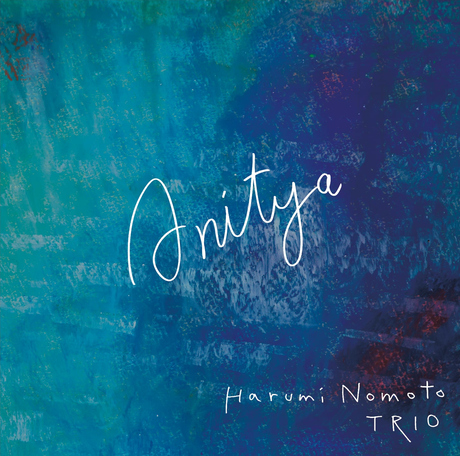
Anitya is pianist Harumi Nomoto’s fourth trio record, released in 2025. It’s been a decade-plus since the trio’s previous release Virgo (2014), with their earlier albums released as far back as 2007 and 2002, so it was a thrilling surprise when plans for a new recording were announced at one of their live shows early last year. The anticipation from their loyal fans rose in 2025 as the trio scheduled more concerts before the recording, to fine-tune the new songs and oil the performance gears at live concerts around Tokyo. Following that, Anitya was quickly recorded over two days in June and released in December 2025 right in the midst of a busy holiday season.
The 45-minute album contains all original compositions from the pianist, eight new songs in her consistently original but true-to-jazz-roots style that incorporates different rhythms, influences, and cultures. The trio members — Harumi Nomoto on acoustic piano, Ryoji Orihara on fretless electric bass, and Sohnozuke Imaizumi on drums — are the same as 2014’s Virgo, and they gel perfectly as a fun, intuitive, and locked-in trio playing a variety of Nomoto’s compositions and great picks from the standard jazz canon.
The album starts with track #1 “Double Touch” with an immediate shift into Nomoto’s style of creative, straight-ahead piano trio jazz. Unexpected accents written into the melody pique curiosity with a feeling of near-imbalance that is rooted in the solid ground of unshakable groove. This sets the mood for a special loose-but-tight feeling in the music, one that displays the skill and excellence the musicians bring together through puzzle-piece coordination and trust.
#2 “Seiran” could be heard as a dichotomy of J-Jazz, where the intro and outro sections serve up a smooth club jazz/hip hop posture surrounding an inner core of medium-tempo good ol’ jazz blues.
#3 “Sudoku” is a song built on a musical challenge as Nomoto arranges twelve notes and twelve chords of the chromatic scale into a hopscotch framework of music. (This puzzle formulation is reminiscent in jazz of Bill Evans’ “T.T.T. (Twelve Tone Tune)” and, in Japanese jazz, Hitomi Nishiyama’s “T.C.T. (Twelve Chord Tune)”.) With Orihara and Imaizumi covering the foundation, Nomoto’s adlibs through most of the song with a wildly unconstrained yet carefully controlled solo. As with many of the moments on this album, the trio walks a tightrope of concentration and relaxation, where only their familiarity, intuition, and skills keep them aloft in the air as they improvise spontaneously.
Track #4 “Cucumber Man” is a happy groove jam in the direction of Herbie Hancock hard bop and New Orleans-style funk, filled with the brightness of three jazz musicians settling in for some fun.
#5 “Guitar no Yo Ni” is another smooth offering that brings laid-back comfort with a rock/hip-hop beat to the fore, similar to the intro and outro of #2 “Seiran”. Some sounds from Nomoto’s earlier releases and also in this style, particularly Belinda (2007) with its emotionally stirring loops of chords-to-chord wrinkles on certain progressions with deep groove drum beats.
Track #6 is the title track “Anitya”, a forward-learning modern jazz song that grabs the attention with its sharp writing and performance.
The last two tracks, #7 “Warm Winter” and #8 “Jacques”, work nicely together as a pair of songs to wrap things up, guiding the listener out gently and lovingly. As the album starts to close, the sounds are slower and more tranquil, as if luring us into a deeper state of peace, an extended goodbye. “Warm Winter” sets a lovely and sweet mood as Nomoto plays expressively throughout the song. The closing track “Jacques” dives even further for a darker feeling of intensity with peace, an immense tidal blue expanse that surrounds and supports everything.
Liner Notes
(Translated from Harumi Nomoto’s original Japanese liner notes.)
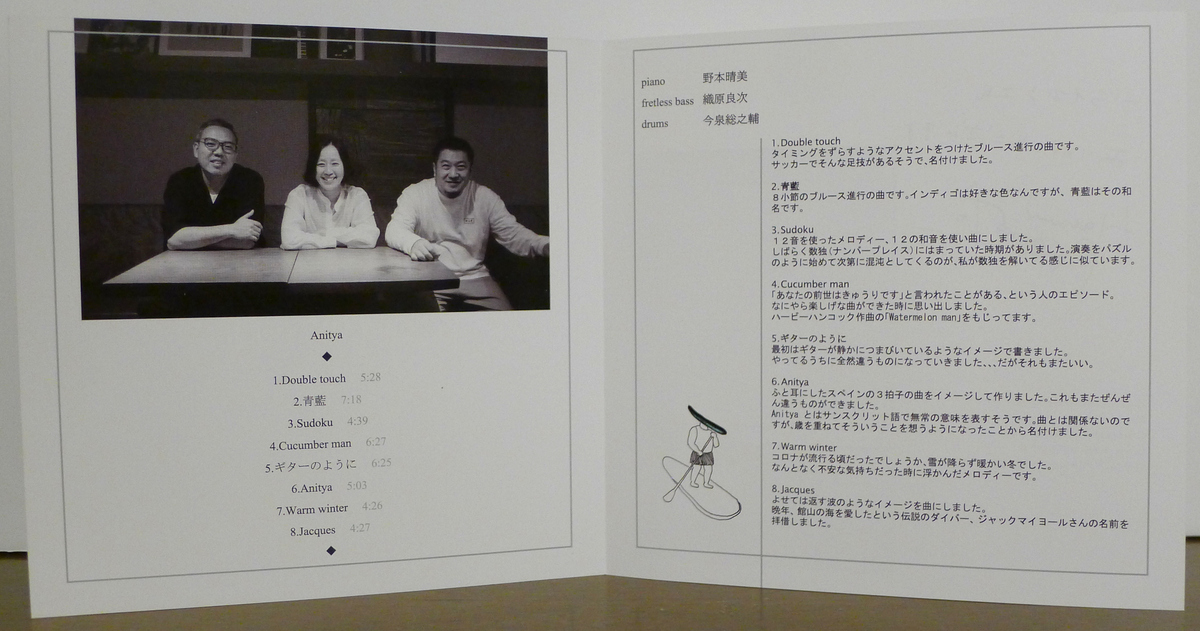
1.Double Touch
This is a blues-form song with accents set in certain places to shift the timing. The title comes from a soccer term related to footwork.
2.Seiran (青藍, indigo blue)
This song is an 8-bar blues progression. I love the color of indigo blue that is called seiran in Japanese.
3.Sudoku
I created a song that uses 12 notes for the melody and 12 chords. There was a time when I was hooked on sudoku (“number place”). The way the performance starts like a puzzle and gradually turns chaotic resembles the way that I feel when I am solving a sudoku.
4.Cucumber Man
There’s an anecdote about a person who was told “In a past life, you were a cucumber”. For some reason, I remembered this at a time when I wrote a cheerful-sounding tune. It’s a play on “Watermelon Man” by Herbie Hancock.
6.Guitar no Yo Ni (ギターのように)
I originally started writing this thinking about the soft strumming of a guitar. As I continued to work it, it became something completely different… but that’s alright, too.
6.Anitya
I wrote this song thinking of a Spanish 3-beat song that I happened to hear. Once again, the result turned out to be something completely different. Anitya is a Sankrit word that expresses the meaning of impermanence. Although it’s is unrelated to the song itself, I come to think more about these things as I grow older, so I chose this title.
7.Warm Winter
If I recall correctly, around the time the coronavirus had started spreading, there was a warm winter without any snowfall. This is a melody that came to me at the time, when I was feeling uneasy for some reason or another.
8.Jacques
I created this song while imagining waves coming in and going out. I borrowed the name from the legendary diver Jacques Mayol, who loved the sea around Tateyama in his later years.
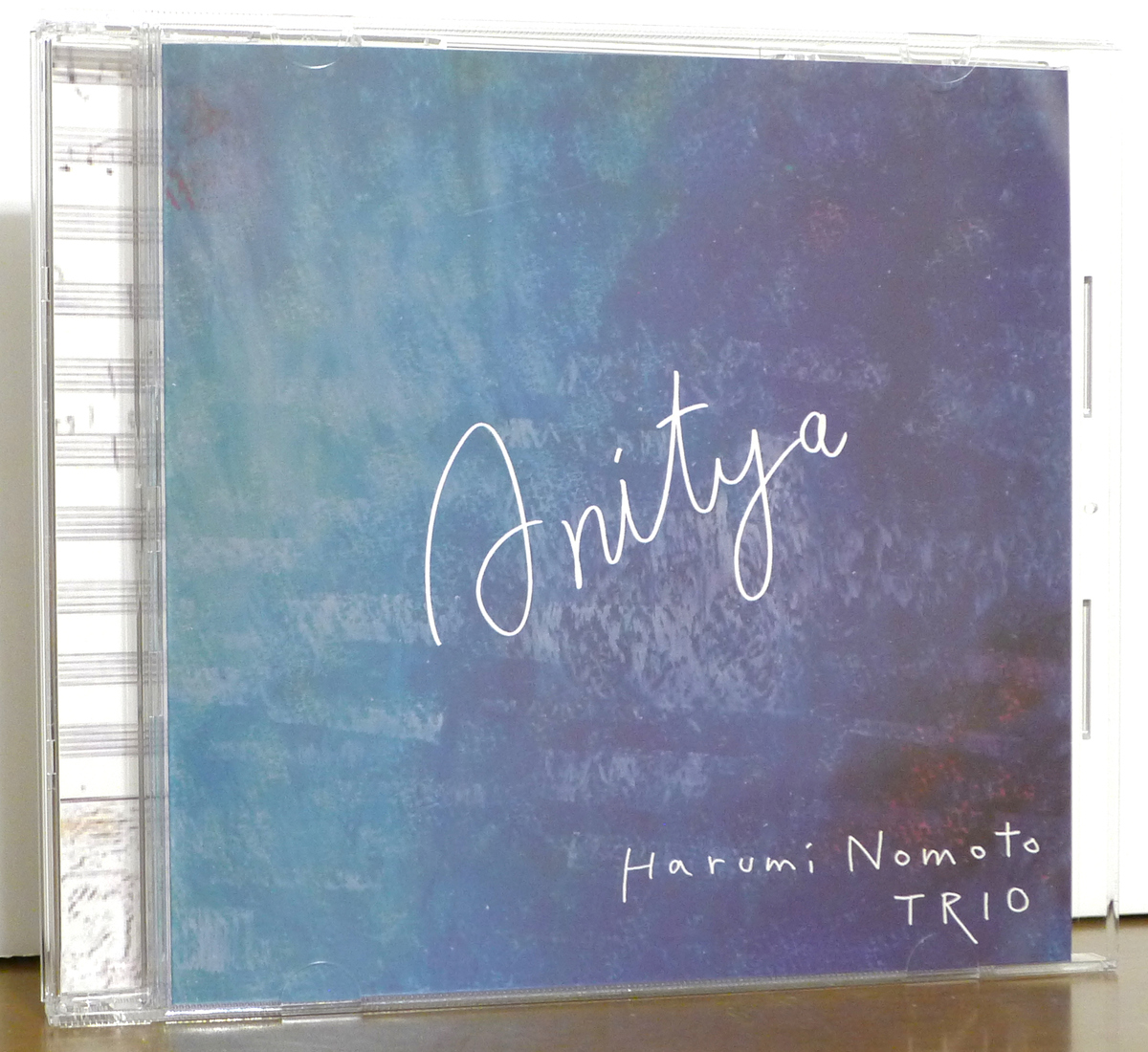
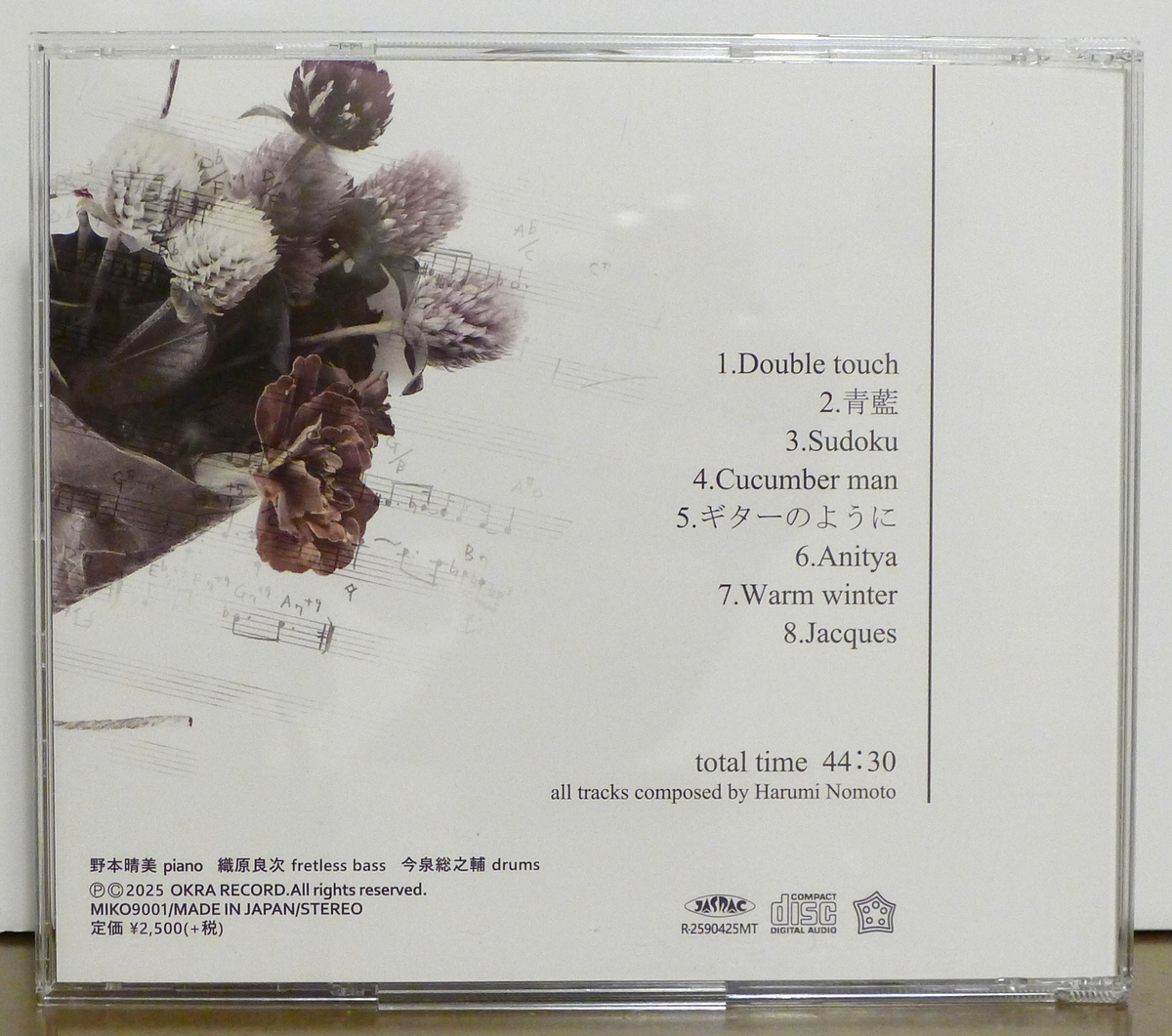
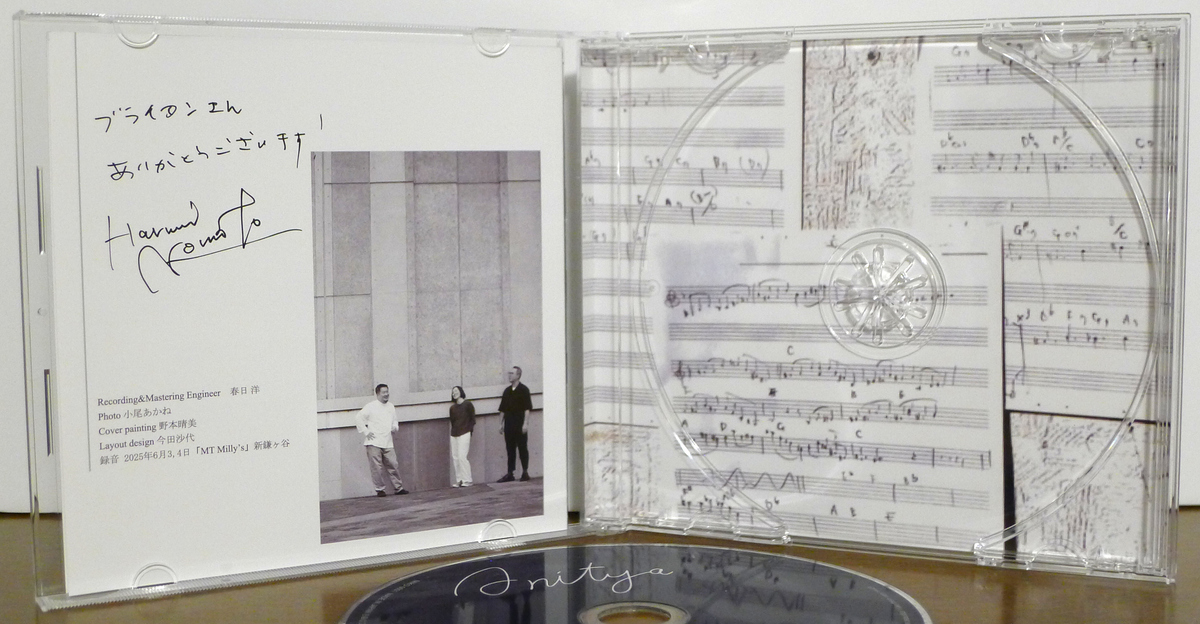
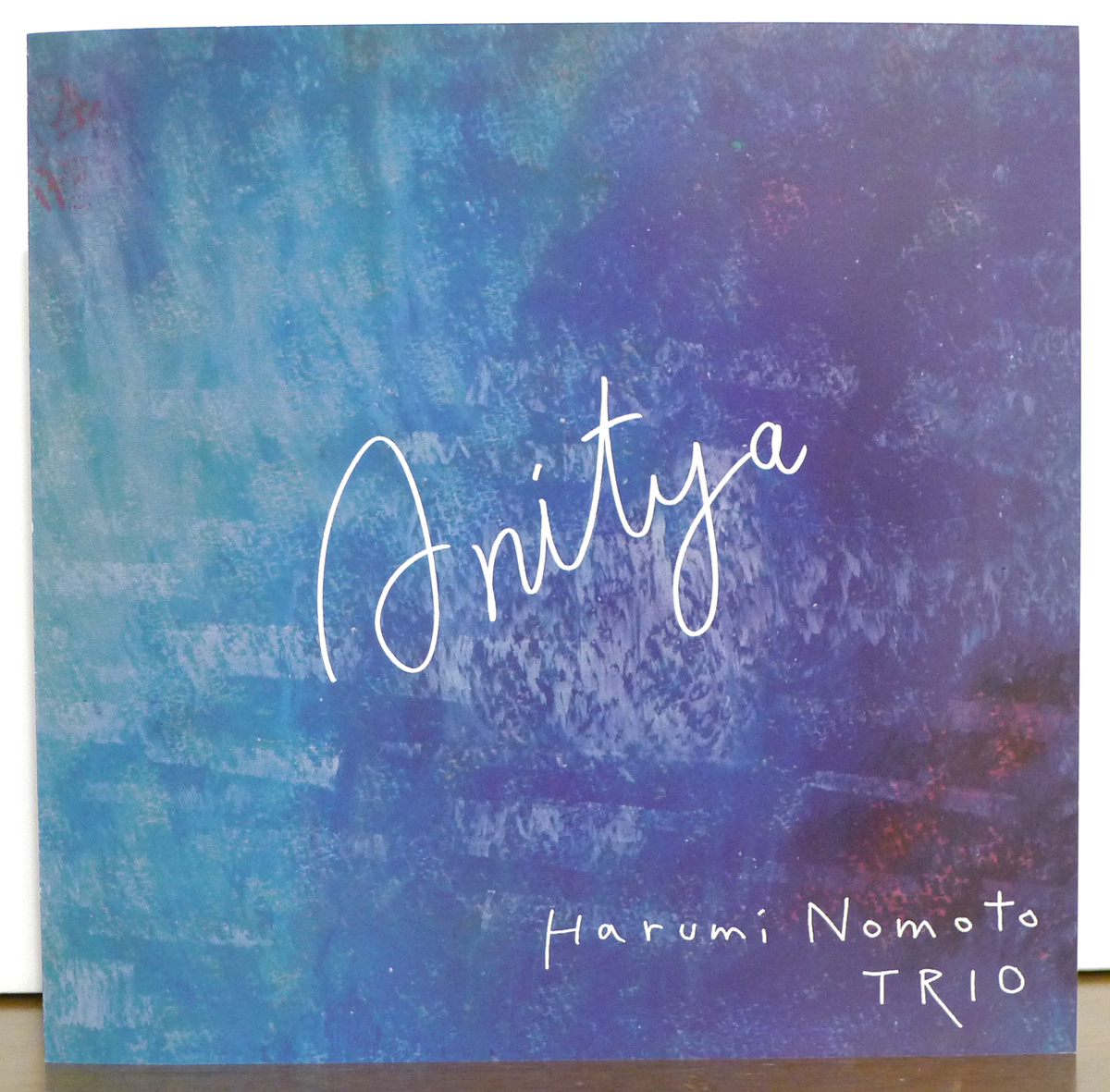
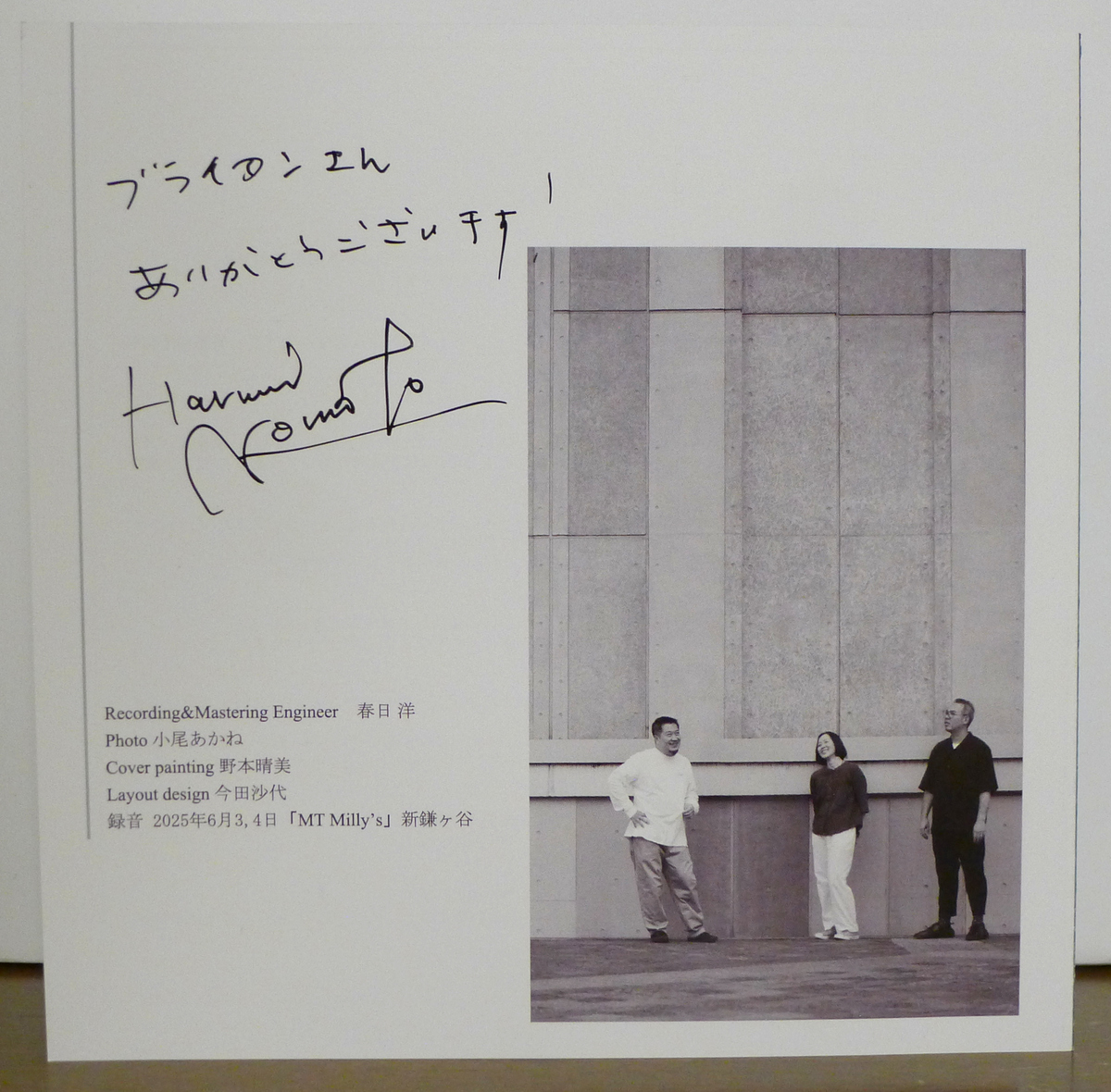
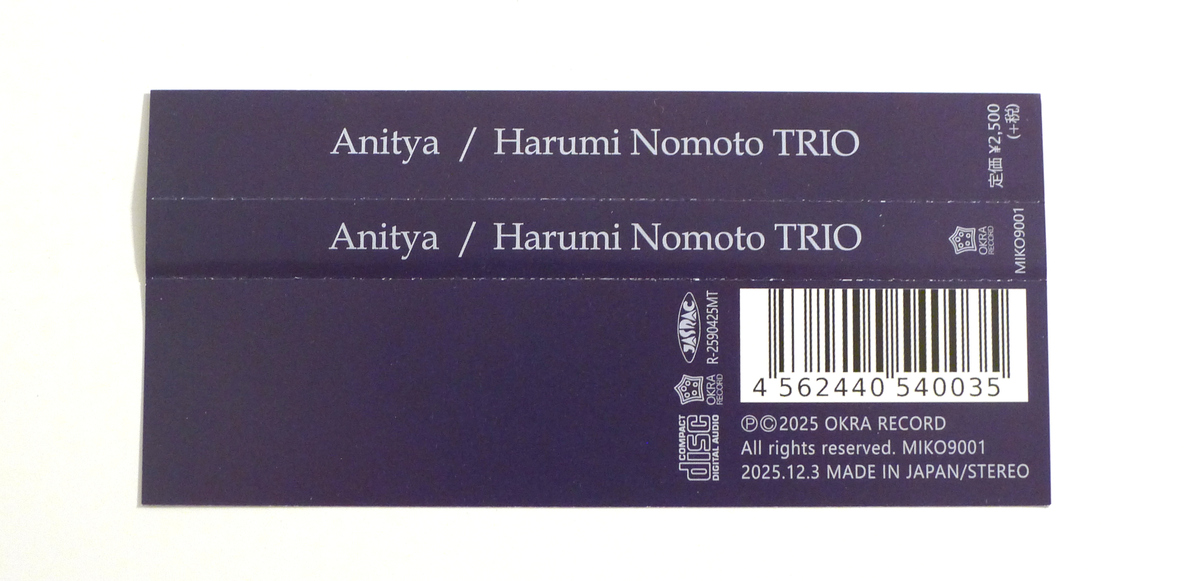
Anitya by Harumi Nomoto Trio
- Harumi Nomoto - piano
- Ryoji Orihara - fretless bass
- Sohnosuke Imaizumi - drums
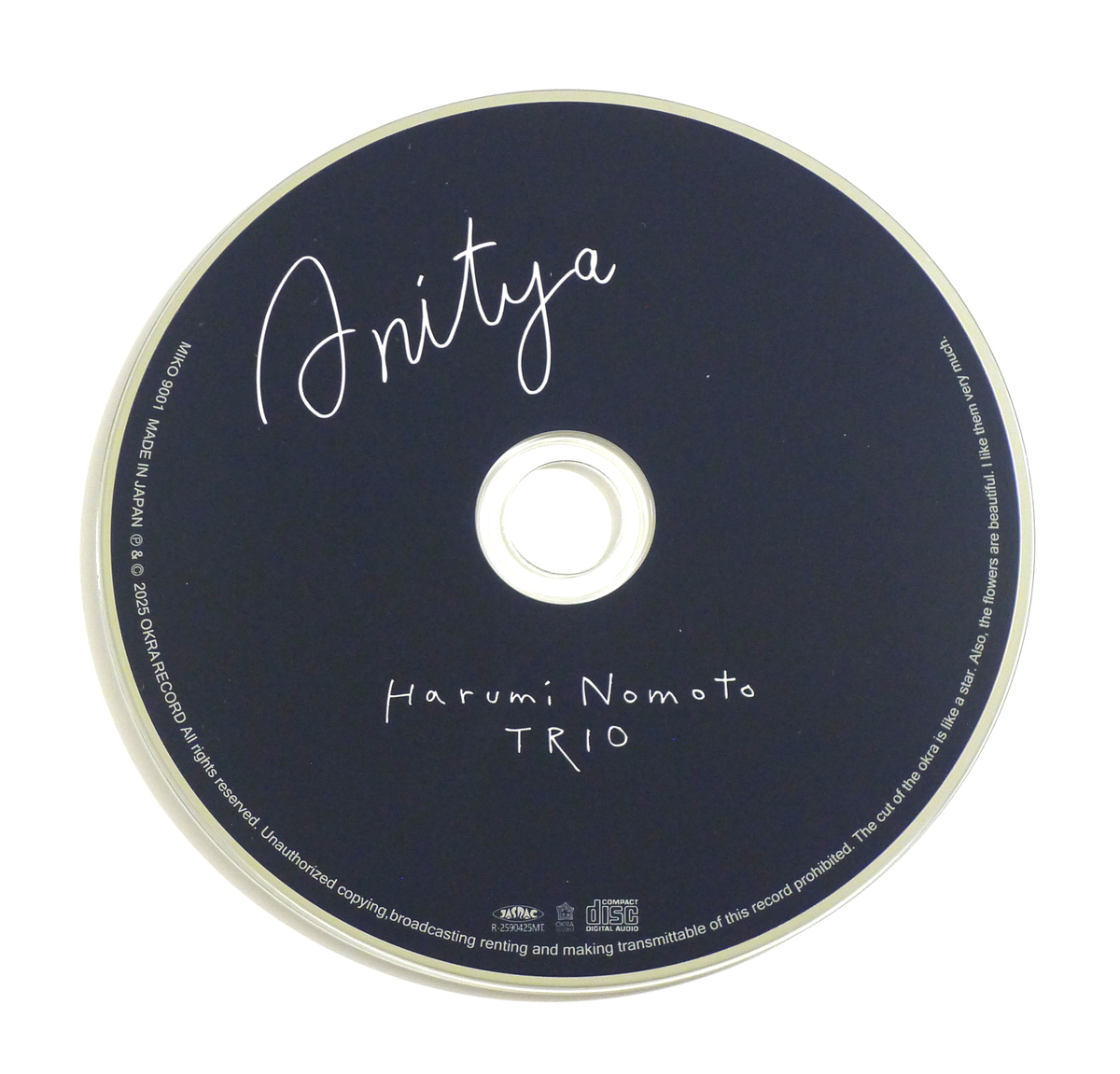
Released in 2025 on Okra Record as MIKO-9001.
Japanese names: 野本晴美 Nomoto Harumi 織原良次 Orihara Ryoji 今泉総之輔 Imaizumi Sohnosuke
Audio and Video
- Full album (YouTube)
- Full album (Spotify)
- Full album (Apple)
- Harumi Nomoto Trio: Anitya promotional video with short excerpt from “Aniyta” (track #6):
- Harumi Nomoto Trio: Anitya promotional video with short excerpt from “Cucumber Man” (track #4)
- Excerpt from track #1: “Double touch”
Jazz of Japan #347 • Jan 18, 2026 • Brian McCrory
Related albums: Another Ordinary Day (2002), Belinda (2007), Virgo (2014), I’ll Be Home for Christmas (2023)
Add a comment: