
Kaoru Azuma: Footprints in New York
Jazz of Japan #339 — Vocalist Kaoru Azuma’s Japanese debut release is Footprints in New York, recorded in New York...
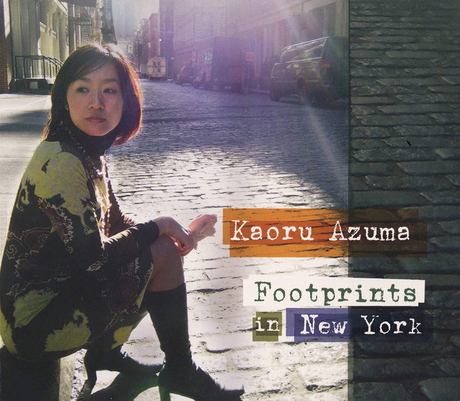
Vocalist Kaoru Azuma’s Japanese debut release is Footprints in New York, recorded in New York in 2008 and released in Japan that same year. Coming two years after her independently released album The Water is Wide (2006), this was her first album to be released in Japan.
Azuma does something a little different from typical jazz vocal albums, selecting songs for Footprints in New York that are great modern jazz tunes known originally and primarily as instrumental compositions. She covers a nice sample of jazz genres — bebop, hard bop, classic, contemporary, and so on — in what could be called a “non-standards” vocal jazz album, or a vocal jazz album for instrumental jazz lovers. Through this selection she also pays homage to master instrumentalists and composers including Chick Corea, Charlie Parker, Thelonious Monk, John Coltrane, and Bill Evans. And, of course, Wayne Shorter, through his composition “Yes or No” and the classic “Footprints” referenced in the album title.
Through these fresh choices, her singing voice is in constant control of the tight NY-based quartet, powerfully graceful and confident. On some songs, she sings lyrics associated with or written for the songs (Corea’s “High Wire”, Parker’s “Confirmation”, Strayhorn’s “A Flower Is A Lovesome Thing”, and Bill Evans’ “Turn Out the Stars”). On other songs, she sings her original lyrics in English or Japanese. Monk’s “Bemsha Swing” becomes “Jungle City New York”, Shorter’s “Yes or No” is “Another Yes or No”, Coltrane’s “Giant Steps” is “Now’s the Time Giant Steps”, and Benny Golson’s “Along Came Betty” is “Along Came Memory”.
In addition to her singing of lyrics, Azuma’s oohs, ahhs, and scatting sections are also featured in parts of different songs and throughout Shorter’s “Footprints”. As for the rest of the band, Scott Reeves on alto flugelhorn and trombone, pianist Mike Holober, guitarist Jesse Forest, bassist Robinson Morse, and drummer Paolo Orlandi never waver and share the spotlight with the vocalist for plenty of improvisational solos, often doubling or trading with Azuma and her pinpoint scatting and crafted interludes on several songs.
Liner Notes
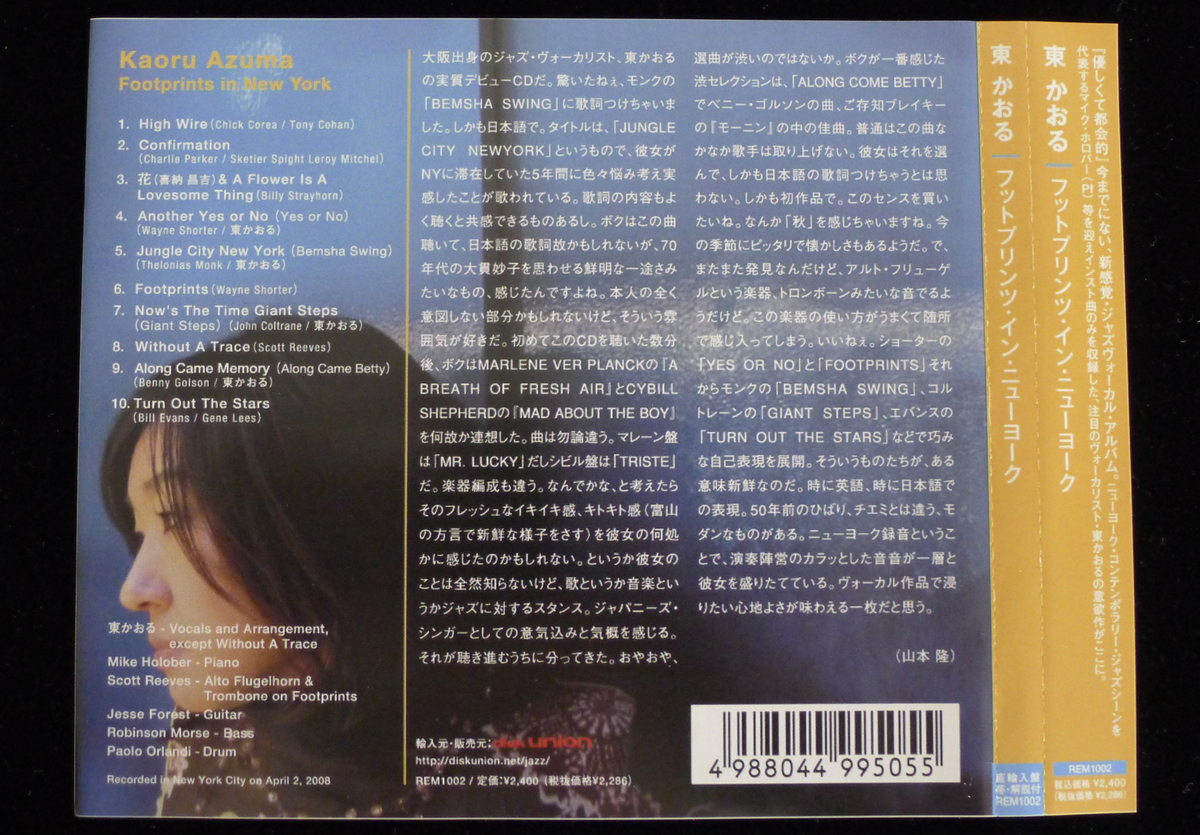
(Translated from Ryu Yamamoto’s original Japanese liner notes.)
This is a substantial debut album from Osaka-born jazz vocalist Kaoru Azuma. I was surprised to find that lyrics were added to Monk’s “Beshma Swing”. Plus, they are in Japanese. Using the title “Jungle City New York”, she sings about the five years she spent in New York and the various worries, thoughts, and real experiences in that period. Listening closely to the lyrics, it’s really relatable. Maybe it’s because the lyrics are in Japanese, but when I listened to this song, I thought of 1970’s Taeko Onuki (Japanese singer-songwriter) and tuned into a clear sense of single-mindedness. This may have not entirely been the intention, but I really like that kind of atmosphere.
Several minutes after first listening to this CD, I thought about Marlene Ver Planck’s A Breath of Fresh Air and Cybill Shepherd’s Mad About the Boy, for some reason. Of course, the songs are different. Marlene’s album has “Mr. Lucky”, and Cybill’s has “Triste”. The instrumentation is also different. I wondered why, and it may be because I felt something in her of that energetic feeling of iki iki or kito kito (which is Toyama regional dialect for that very fresh, full of life feeling). It’s not that I know anything thing about her, but it’s something in her stance towards singing and music for jazz. You can feel the enthusiasm and spirit of a Japanese singer. I realized this as I continued listening.
And wow, isn’t the song selection tasty! This refined sense impressed me most with the inclusion of an excellent tune featured on the great Art Blakey’s Moanin’, Benny Golson’s “Along Came Betty”. Jazz singers don’t usually take on this tune. I wouldn’t have thought that she would pick this song, not to mention adding lyrics in Japanese. Plus, on her first release! I would love to have this kind of sense.
It also really feels like autumn. And, another discovery was hearing the instrument called the alto flugelhorn that sound almost like a trombone. This instrument is used throughout the album in amazing ways, and it’s great.
Wayne Shorter’s “Yes or No”, Thelonious Monk’s “Bemsha Swing”, John Coltrane’s “Giant Steps”, and Bill Evans’ “Turn Out the Stars” are more showcases for her skillful self-expression. In that sense, these choices are also examples of freshness. She expresses herself sometimes in English, sometimes in Japanese. It’s not Misora Hibari and Eri Chiemi from 50 years ago, it’s a modern feeling.
As the album was recorded in New York, the clear, bright sound of the musicians and recording team further elevates her performance. This is an album where you can experience the joy of immersion into a vocalist’s work.
Ryu Yamamoto
Obi Notes
“Tender and sophisticated” as not heard before, a jazz vocal album with a new sense.
Here is an ambitious release from up-and-coming vocalist Kaoru Azuma, joined by Mike Holober (piano) and others from the New York contemporary jazz scene, recording only songs primarily known for being instrumental pieces.
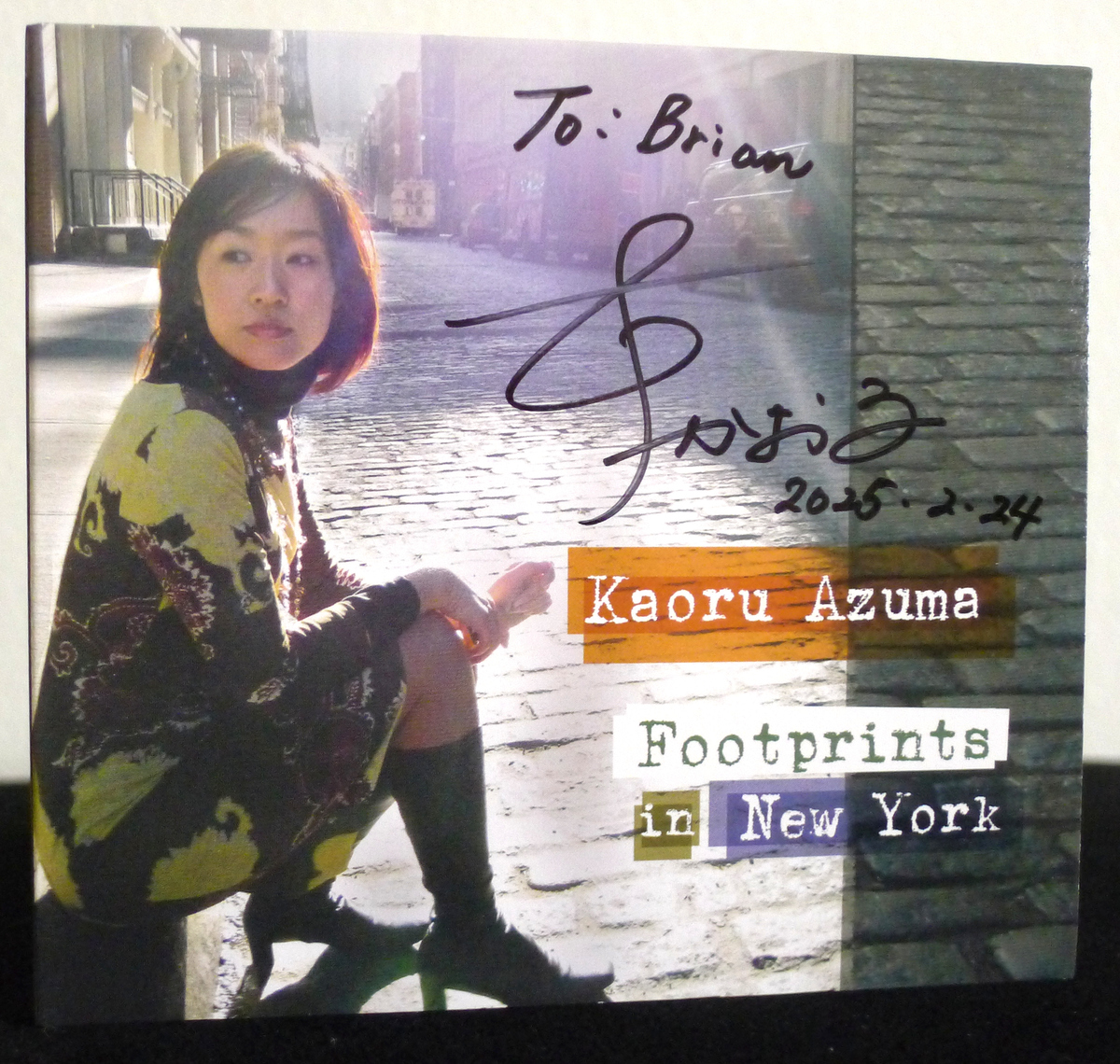
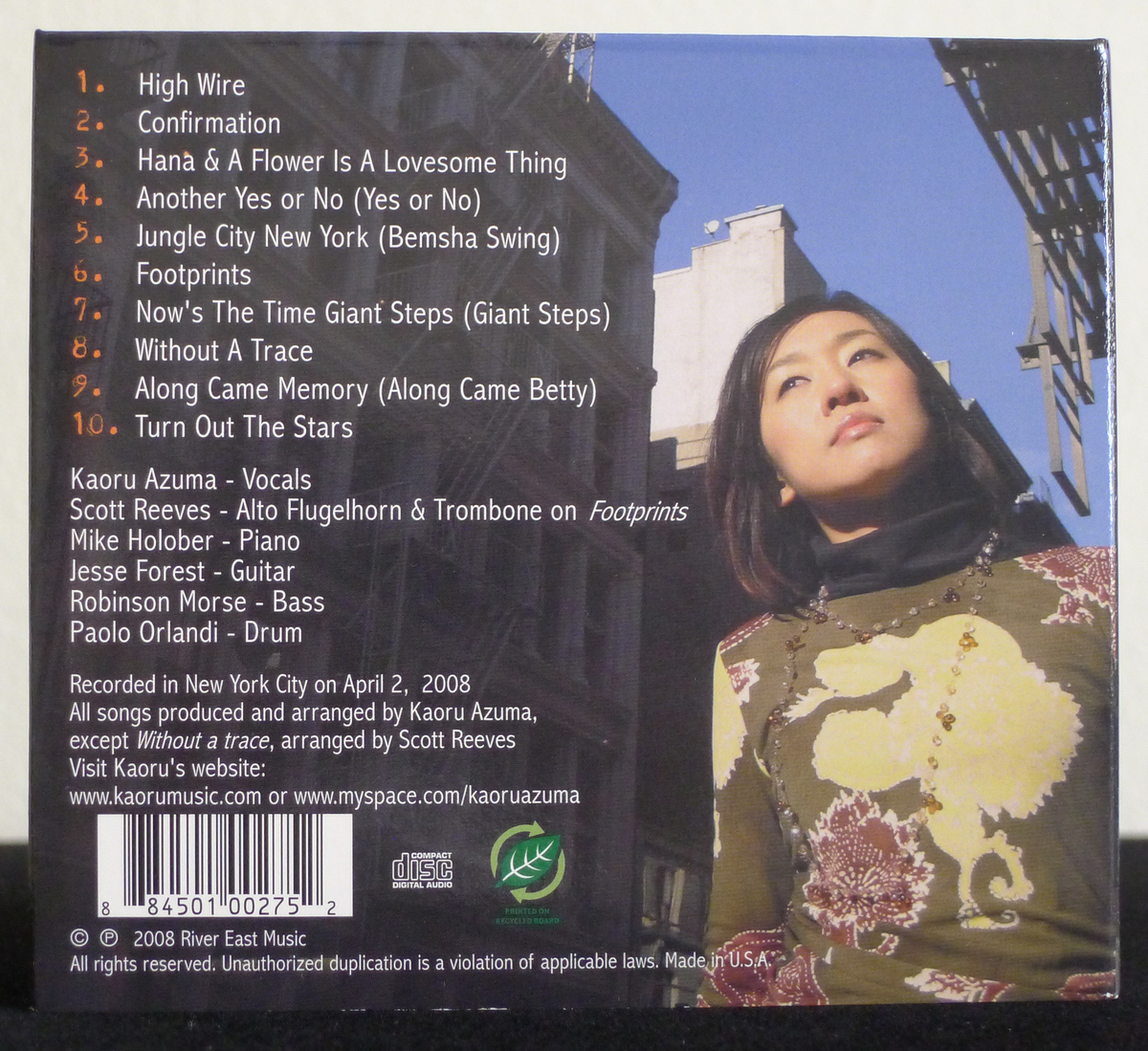
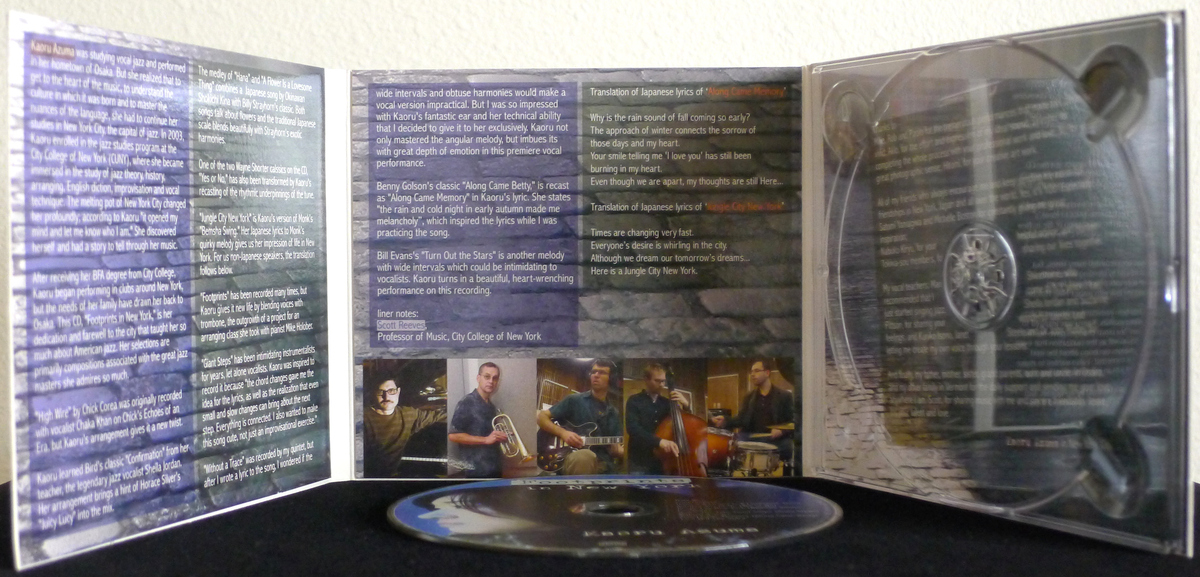
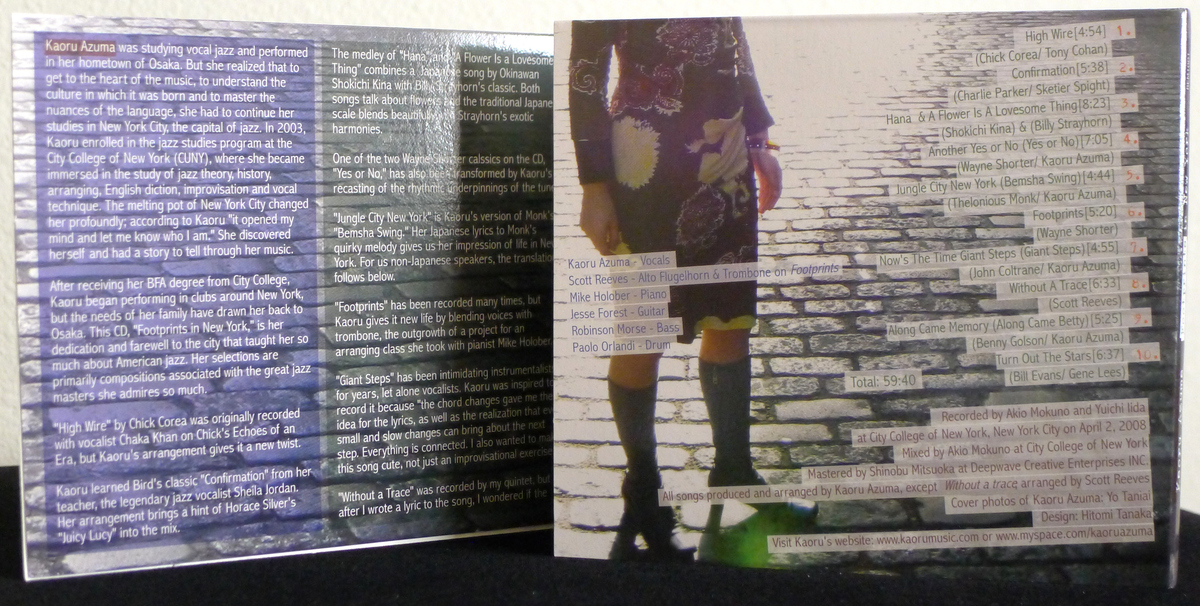
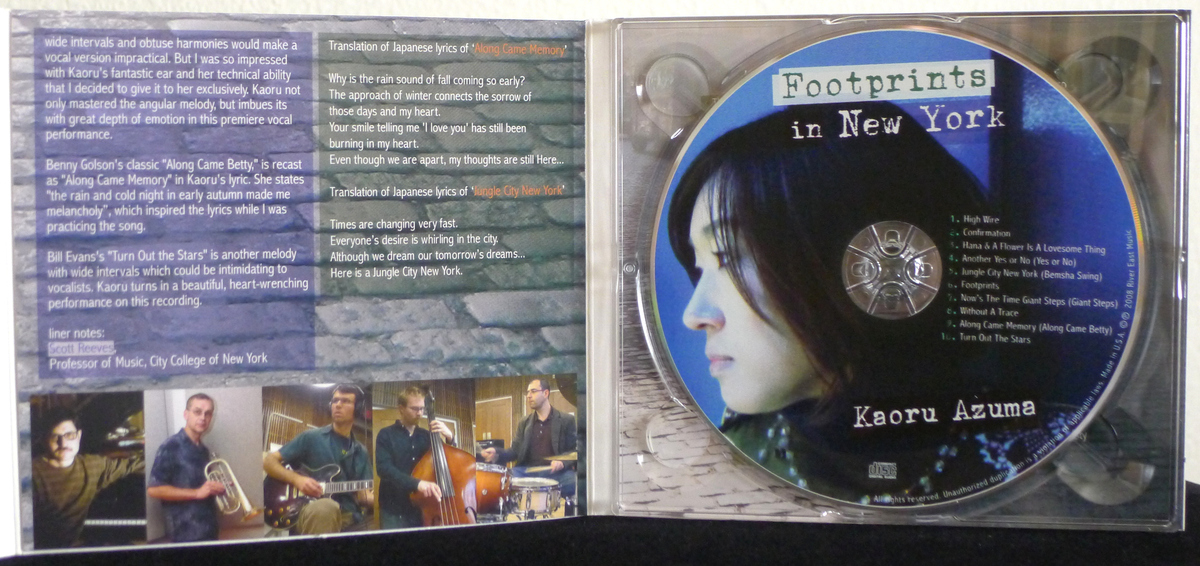
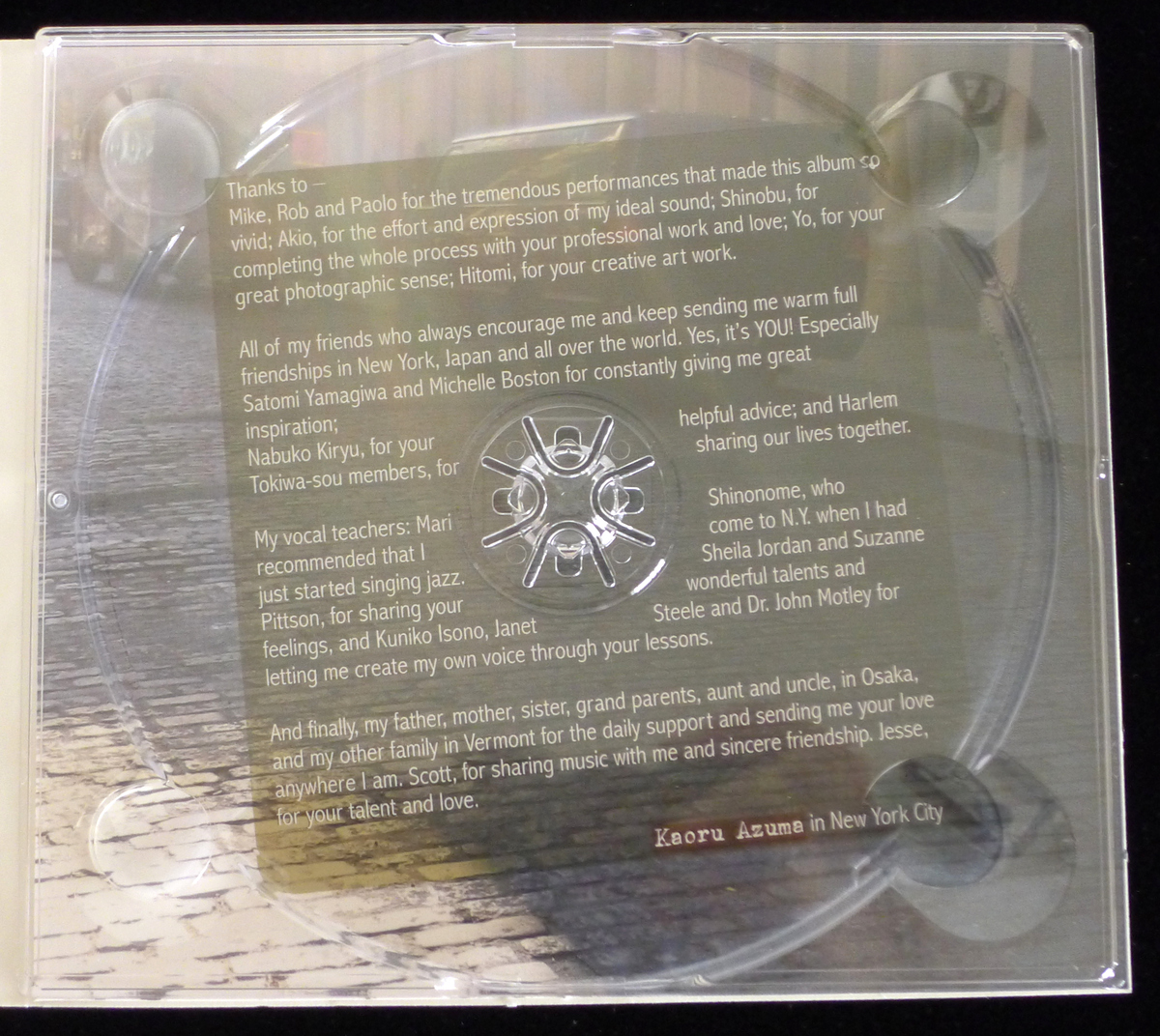
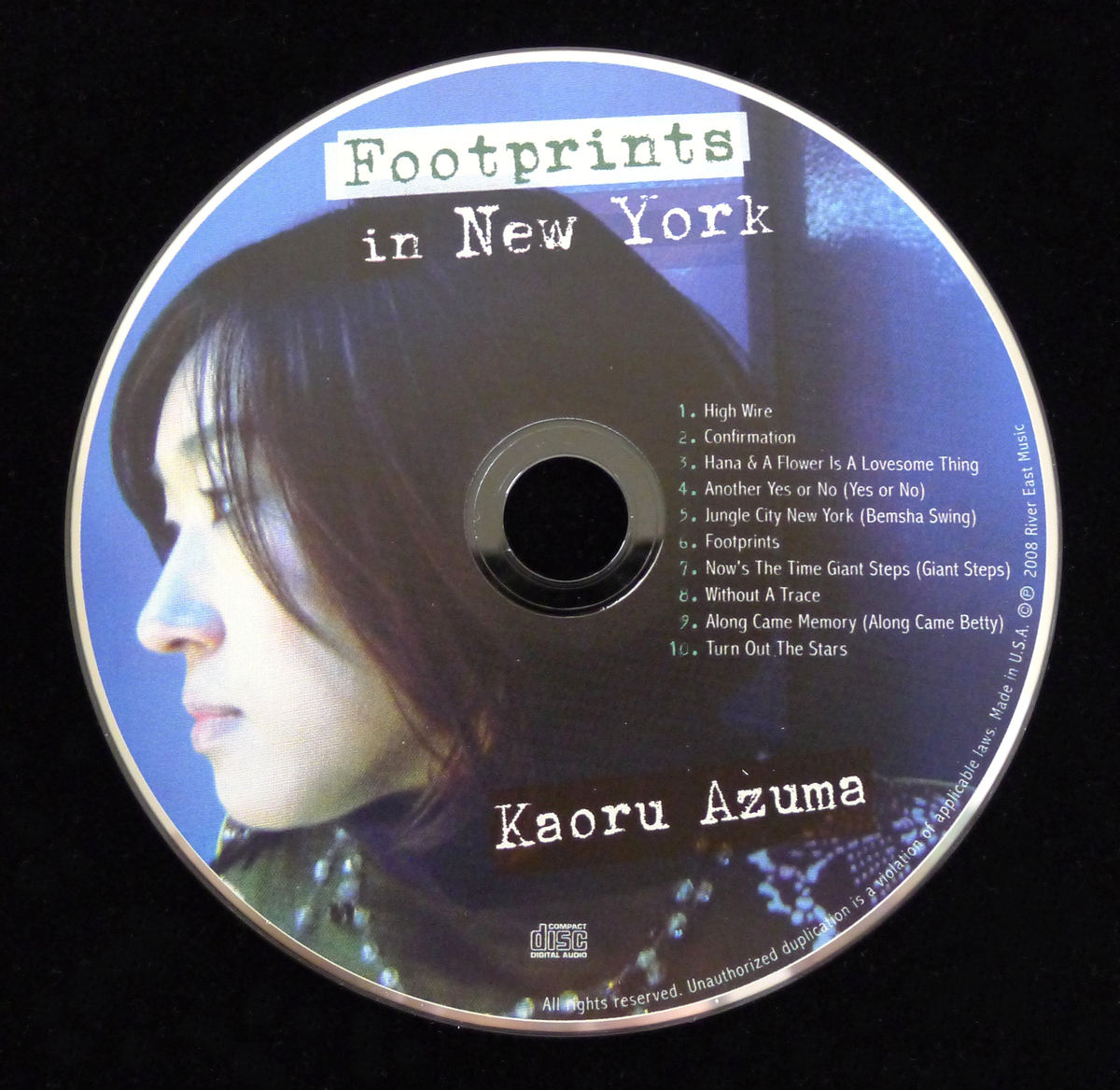
Footprints in New York by Kaoru Azuma
- Kaoru Azuma - vocal
- Scott Reeves - alto flugelhorn & trombone (track #6)
- Mike Holober - piano
- Jesse Forest - guitar
- Robinson Morse - bass
- Paolo Orlandi - drums
Released in 2008 on River East Music as REM-1002.
Japanese names: 東かおる Azuma Kaoru
Audio and Video
- #1 “High Wire”: (alt. link: excerpt)
- #3 “Hana & A Flower is a Lovesome Thing”
- #4 “Another Yes or No (Yes or No)”
- #5 “Jungle City New York (Bemsha Swing)”
- #6 “Footprints”
- #7 “Now’s The Time Giant Steps (Giant Steps)”
- #8 “Without a Trace”
- #9 “Along Came Memory (Along Came Betty)”
- #10: Turn Out the Stars”
- Kaoru Azuma: Footprints in New York full album playlist
- Excerpt from track #4: “Another Yes Or No”
Jazz of Japan #339 • Nov 29, 2025 • Brian McCrory
Related albums: Phase 2 (2009), We Don’t Know Yet (2013), Faces (2020)
Add a comment: