
Manhattan
Jazz of Japan #340 — Manhattan jazz club, located near Asagaya station in Tokyo, Japan
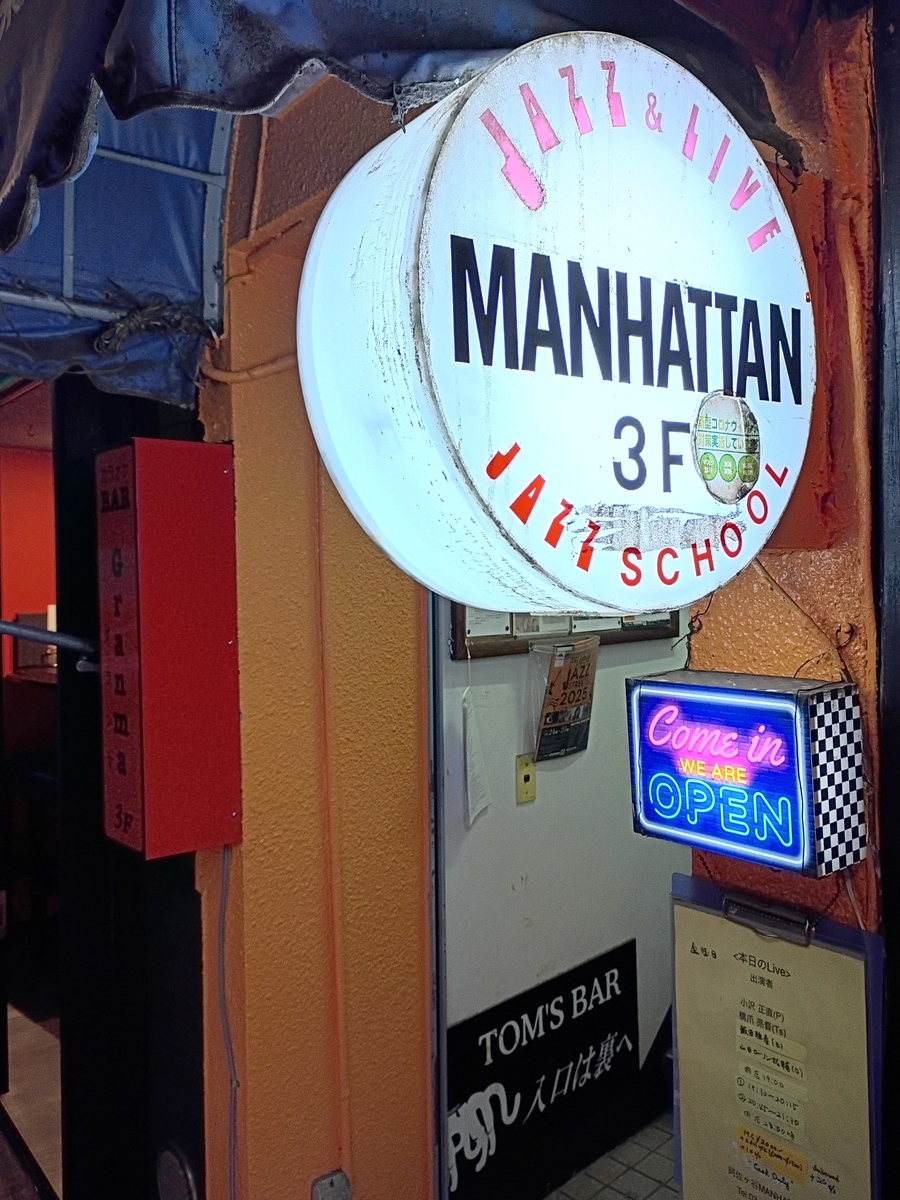
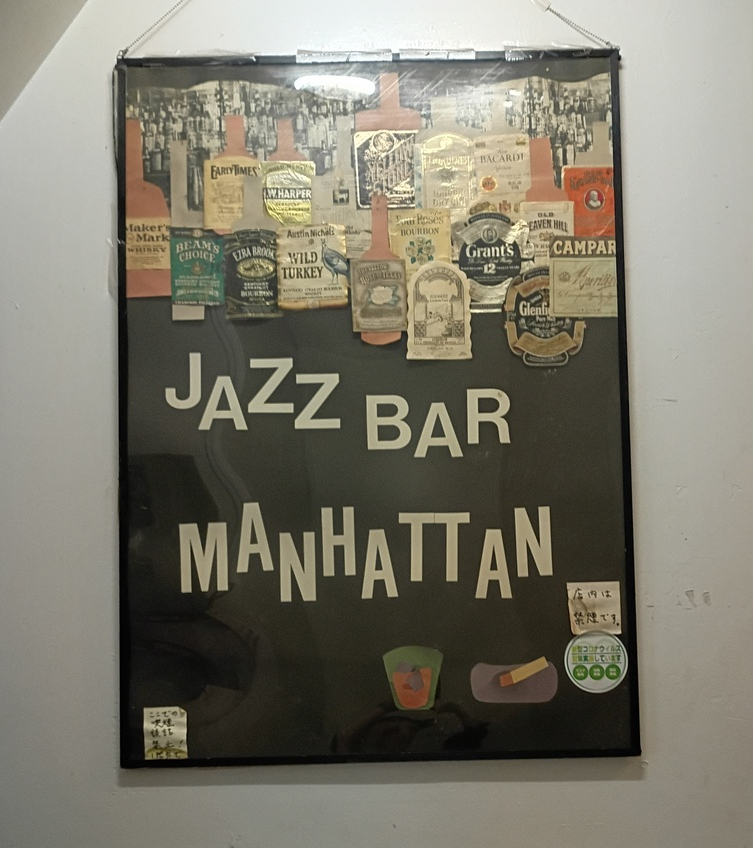
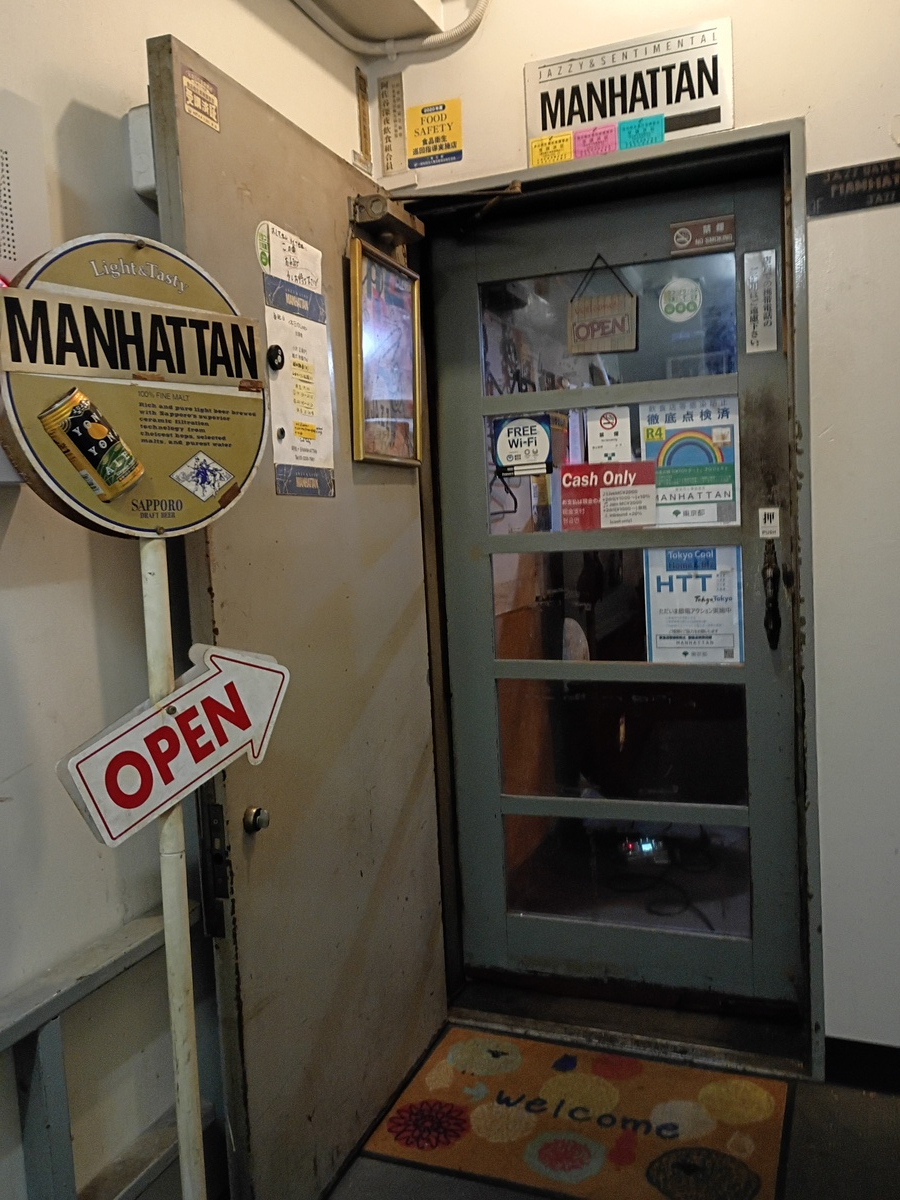
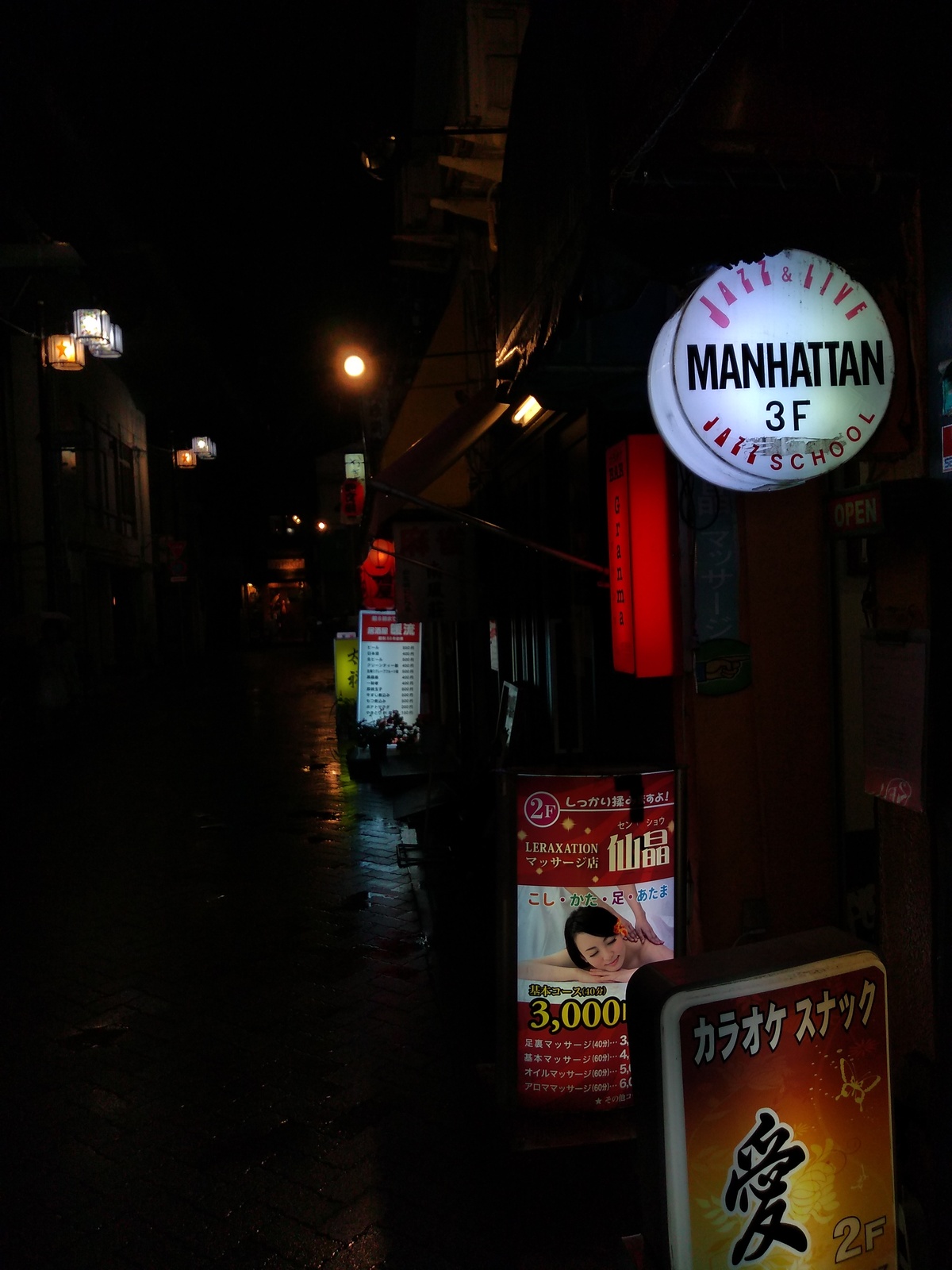
The sign outside advertises “Jazz & Live | Manhattan | 3F | Jazz School” in an illuminated round sign. Coming down the street, it almost resembles a white baseball with red stitching from a distance. Manhattan is nestled along more bars and other joints on Star Road, a street running alongside the Chuo line train tracks, giving a sense of a classic, dark Tokyo neighborhood. Beyond Manhattan’s illuminated sign, the stairs up to the third floor are otherwise nondescript, until you reach Manhattan’s landing where friendly signposts and posters greet your arrival and welcome you in.
And a nice welcome it is. Classic, low-volume jazz BGM plays from behind the bar, where Manhattan’s quietly friendly master waits. Yasutaka “JJ” Mochizuki (JJ for jazz爺, jazu jiji, or jazz geezer, affectionately) is a supremely pleasant older gentleman in a spiffy getup and sometimes a NY baseball cap, naturally. Some of his jazz writing, Jazz Never Sleeps, is published on the Manhattan website and describes his long history with the Japanese jazz scene.
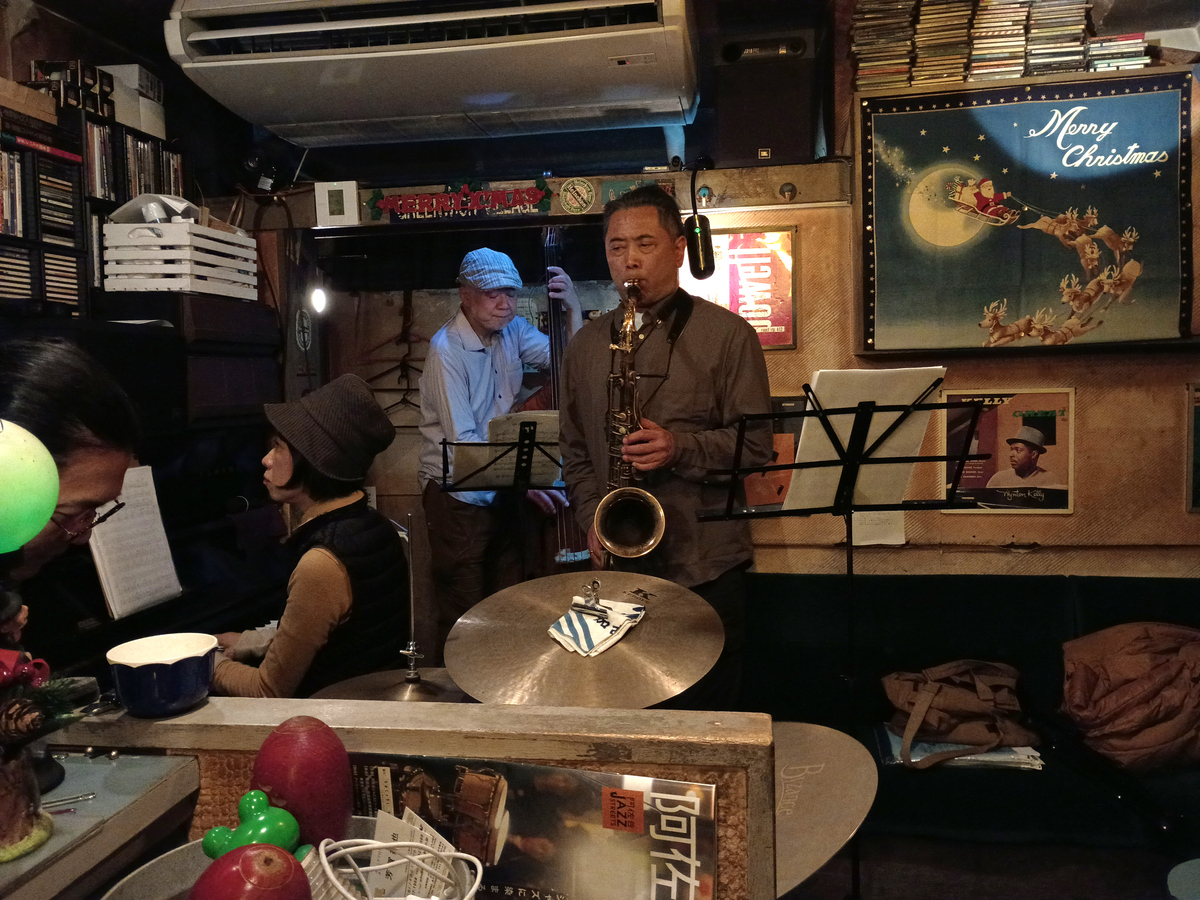
Manhattan is another tiny and beloved Tokyo jazz bar with a long history. Opened in 1985, it’s been run for 40 years by the same jazz lover who runs it today, and is a favorite jazz spot among dedicated locals and curious travelers alike.
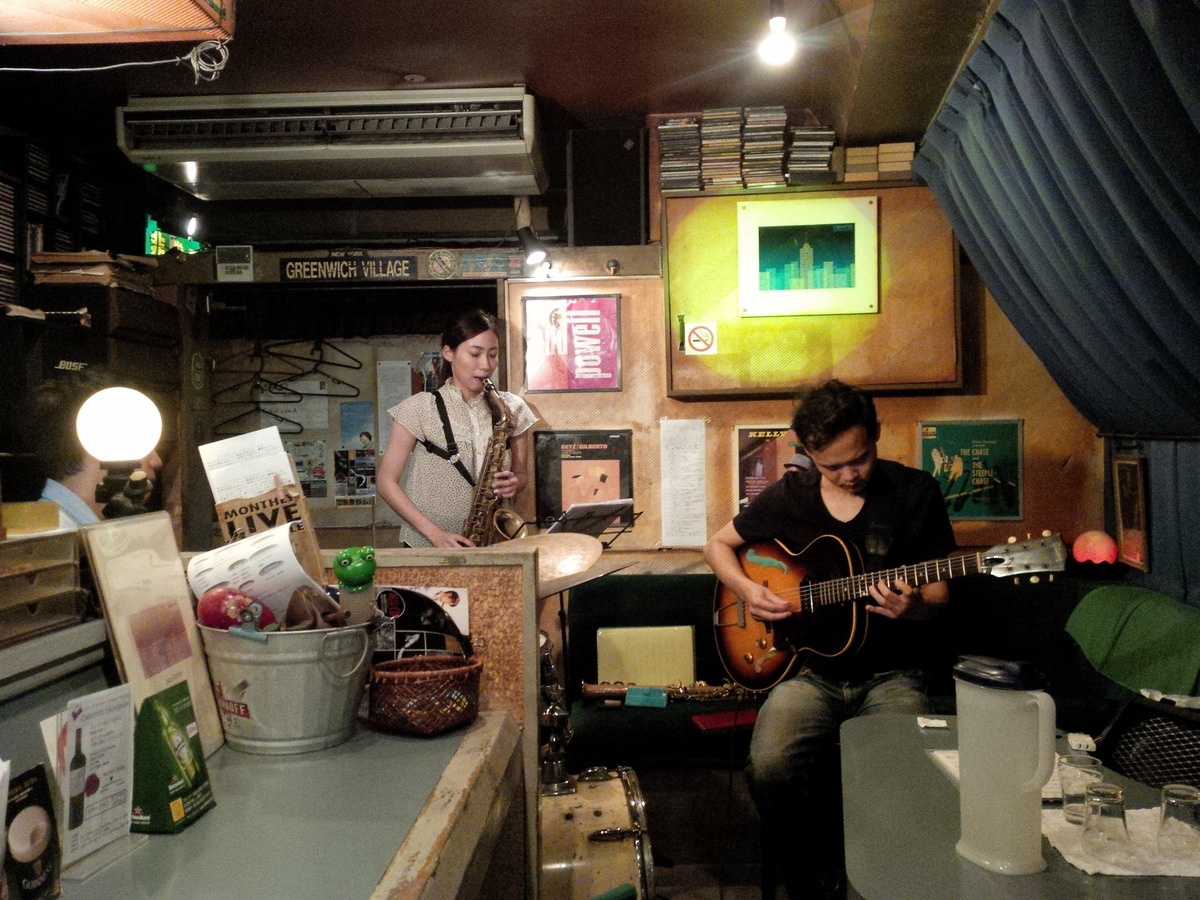
The atmosphere immediately reads easy and comfortable, if a little dated. It’s an old-fashioned jazz-lover’s nook, and possibly contends for a tie with Thelonious for Tokyo’s current smallest live jazz bar.
With it’s homespun entrance and simple setting, Manhattan feels like a secret hole-in-the-wall where an authentic jazz atmosphere is maintained and celebrated by in-the-know musicians and regular patrons. But this storied venue is more well known than it appears, with recommendations and references found in local and international guides such as Time Out Tokyo, Japan Travel Navitime, Experience Suginami, and others.
Additionally, Manhattan’s reputation is raised by being located in the “jazz town” Asagaya district, known for having great live spots, an annual jazz street festival, and as being another stop on the JR Chuo train “jazz line”. Although, this is the kind of place that would be sought out no matter where it was located, with its inimitable personality in a tiny hideaway jazz bar providing authentic, no-frills jazz.
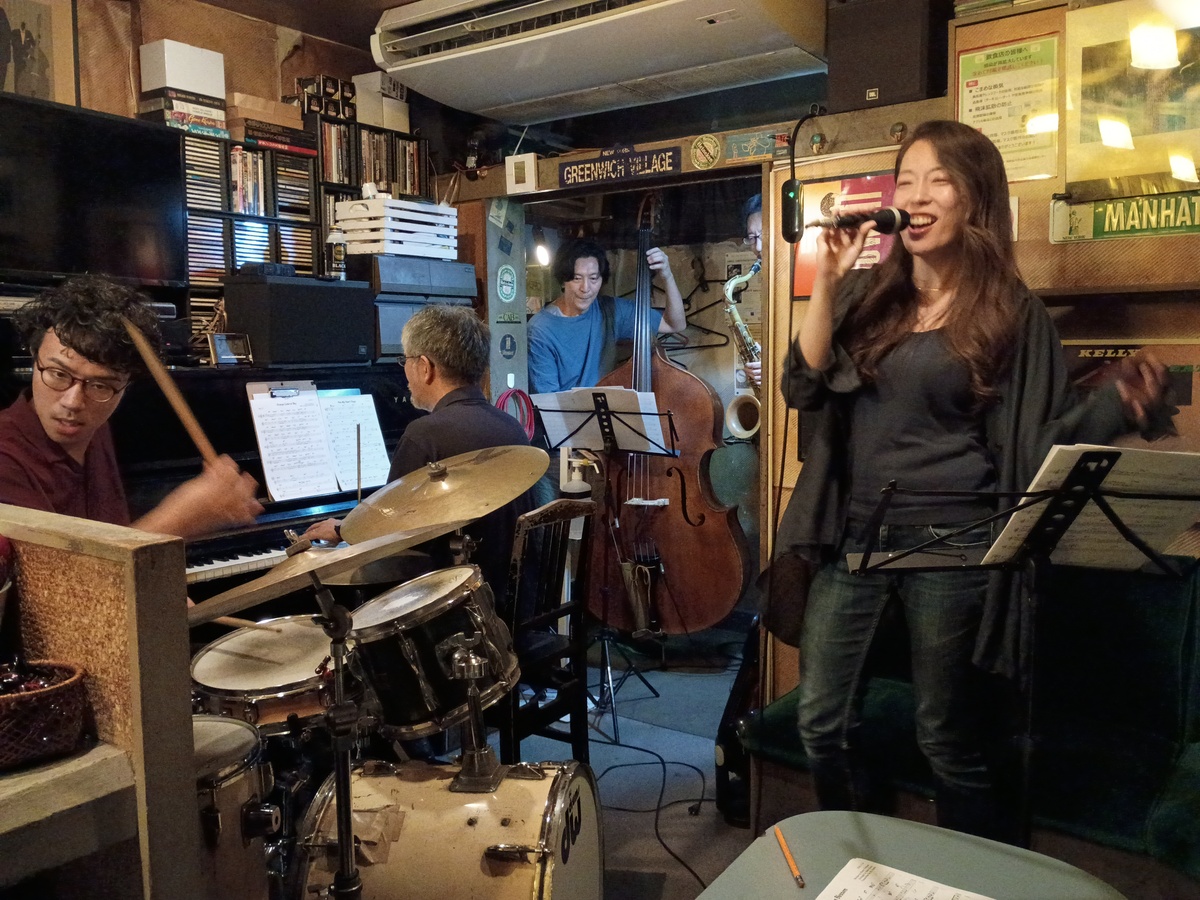
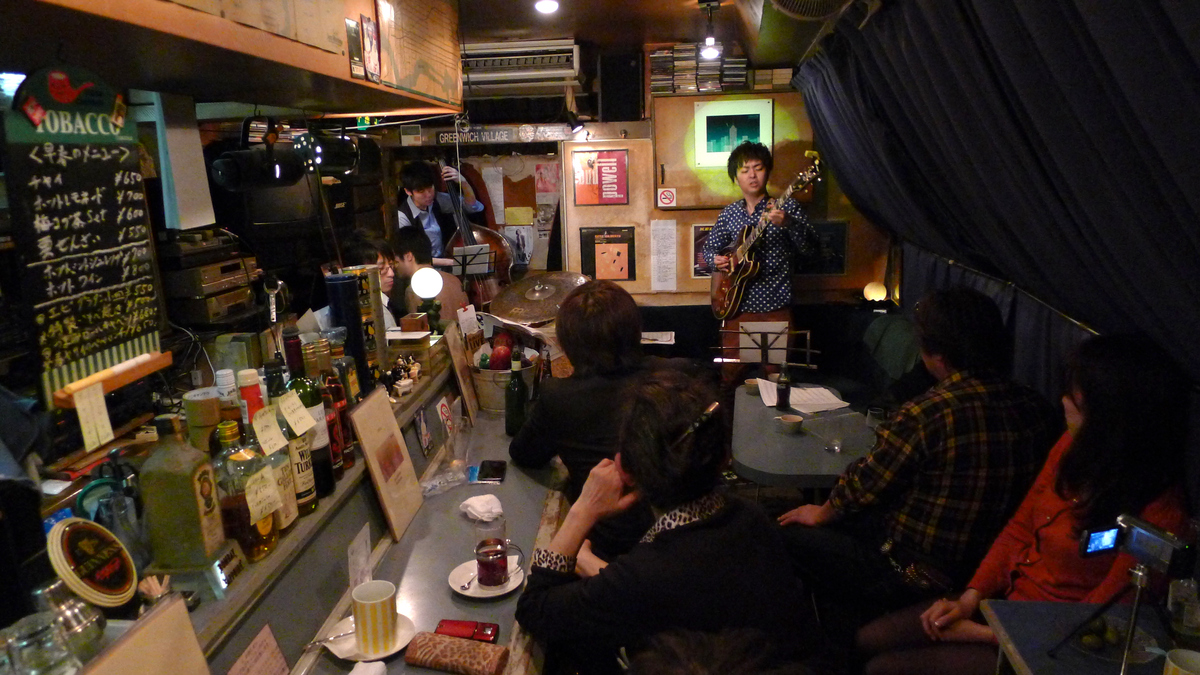
Small and narrow, this spot may not be great for the claustrophobic, with its narrow seating space and a leaning-in window ceiling and curtain at an angle, making for slightly lower headroom on one side of the room. Taller customers may need to mind their heads if they are seated against the wall.
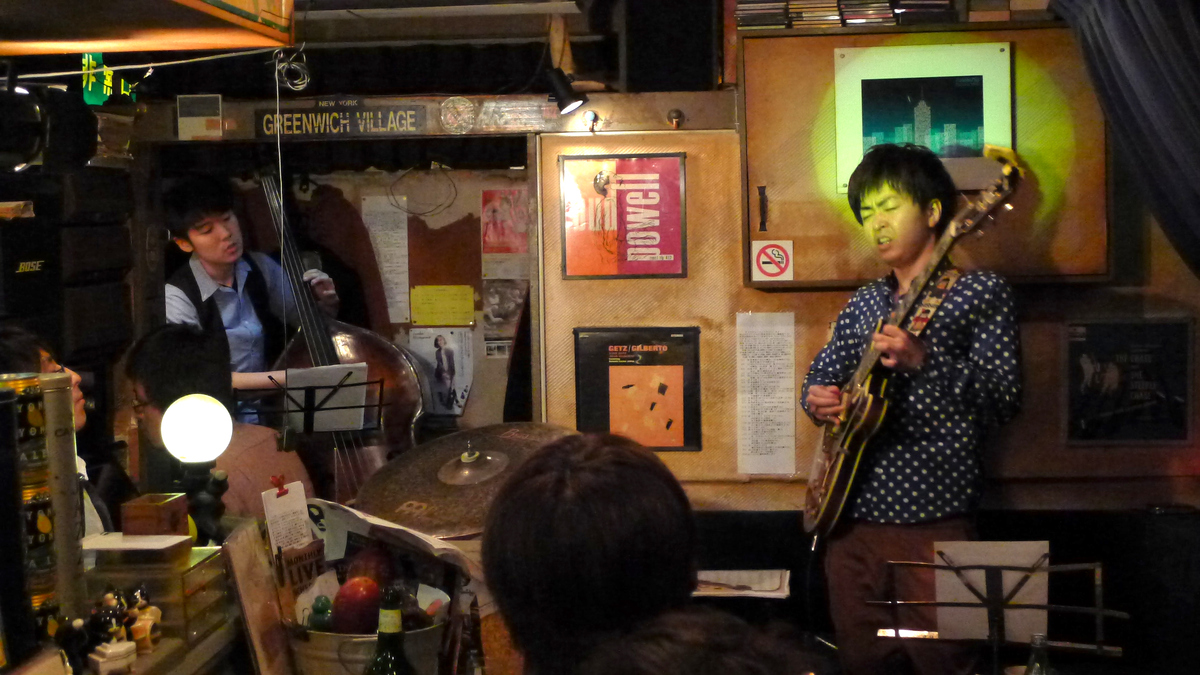
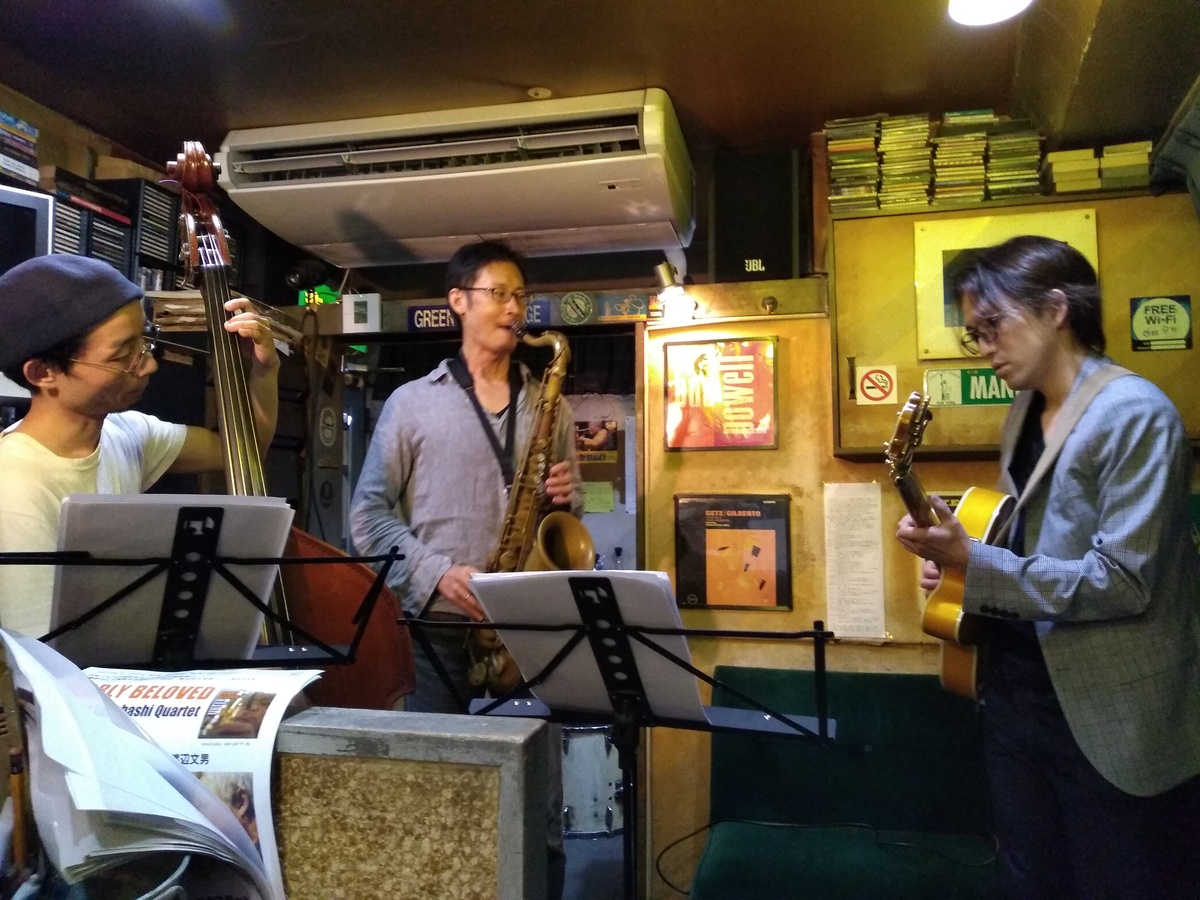
While things in tuhe room seem may crammed together, the small space is used to greatest effect. An upright piano and drum set are nestled closely together by the entrance. An upright bass rests in a small alcove right next to the door, where the bassist stands and plays when the music starts. Front players (horns, guitars, vocalists) are indeed right up front, standing in the space before the first table and seats. Despite the closeness of the audience, the piano and drums are not overly loud. Even when seated up close, the live music is at a comfortable level and not too noisy, just real and raw and right in front of your eyes and ears.
As a result of Manhattan’s cozy layout and the musicians playing near the entrance, customers arriving during the performance may need to hang out just inside the door at the entrance, next to the upright bass player, to wait for a song to end and the musicians to make room for passage into the heart of the bar.
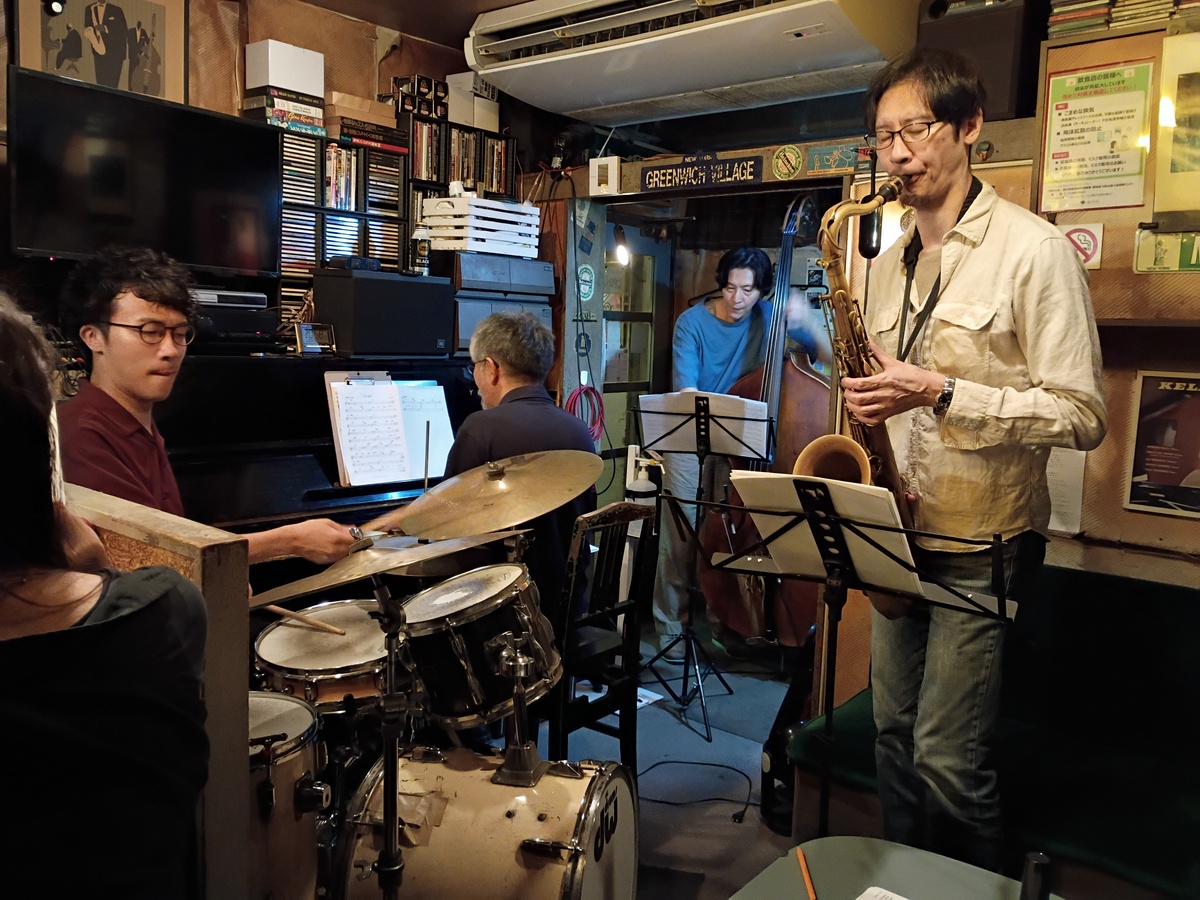
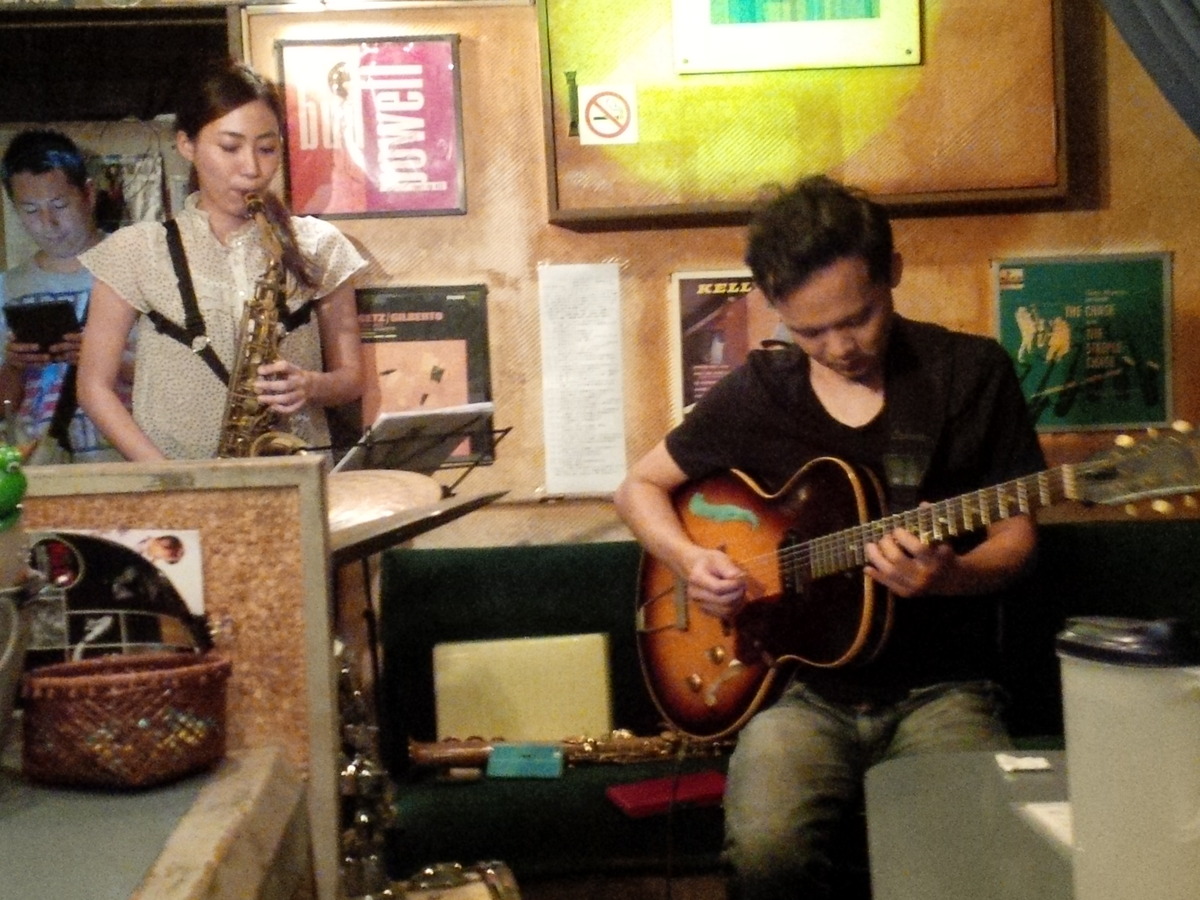
Manhattan also provides support for up-and-coming young talents, featuring regular jam sessions as well. As the shop’s signs and website include “Jazz & Live | Manhattan | Jazz School” and “Manhattan jazz school”, generous attention is paid to providing learning opportunities for enthusiastic amateur musicians. Scheduled times for jazz jam sessions, where local amateurs and jazz students can play with and learn from experienced local and professional musicians, are on slotted on the calendar alongside events featuring professional jazz performances. For students and amateurs, practical playing experiences are the essential ingredients found at these frequent jam sessions, where experienced musicians mentor and play alongside younger generations, a new batch of players, and with whoever shows up. Manhattan can also be booked for private lessons with in-house teachers.
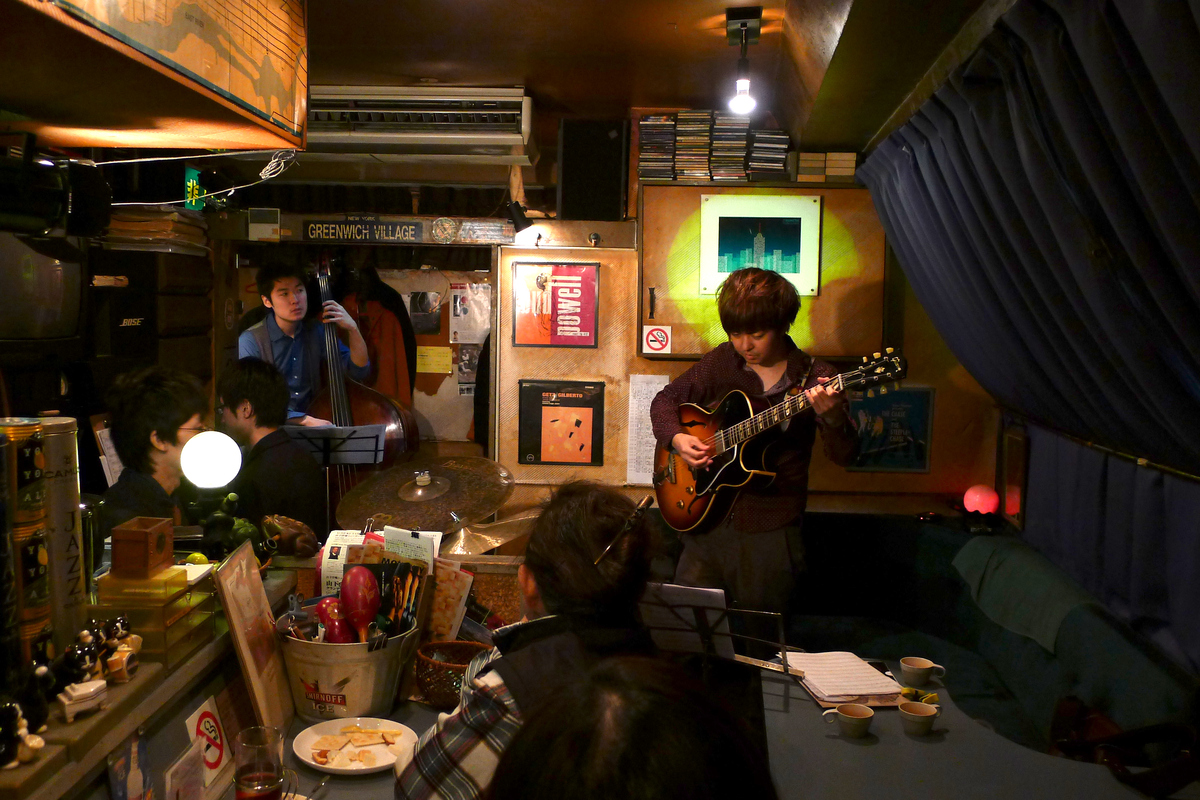
Although Manhattan has long been a venue with ‘no smoking’ signs indicating such, at times, the smell of tobacco occasionally seems to leak in from adjacent snack and karaoke bars, along with the faint sound of party music. But in general, neither this odor or noise distracts from the vibe of Manhattan, and is all part of the well-worn charm.
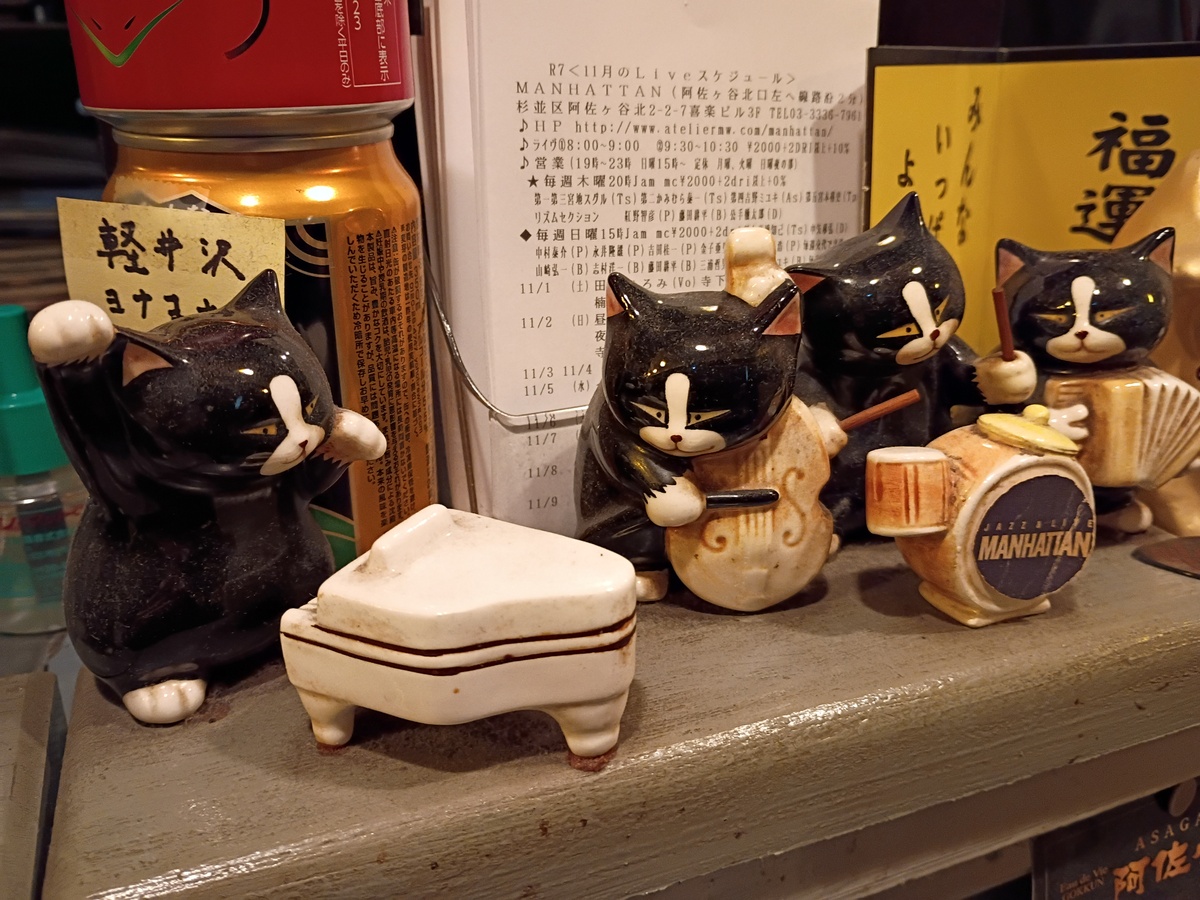
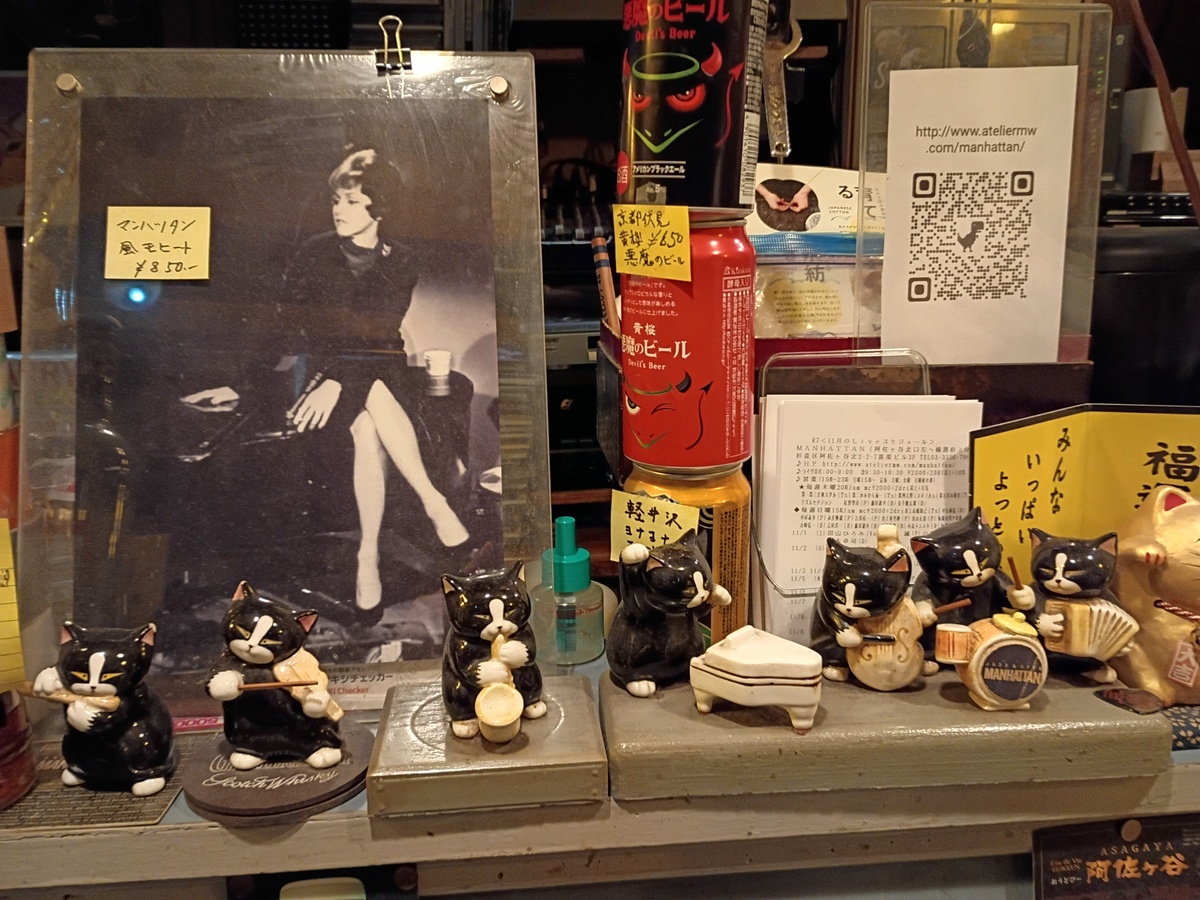
In November 2025, Manhattan already has Christmas decorations hung up here, and, in the far corner, a small Christmas tree with lights on. Even in humble settings, the love for the space shows in the attention to decor and changing the setting according to the season. The owner, who is getting up there in age, makes these decisions and cares for his bar, his personal slice of the Big Apple in Tokyo. It’s good to see a cheerful attention to details — to the decor, atmosphere, and seasonal changes all in order to delight the customers and enhance the Manhattan environment.
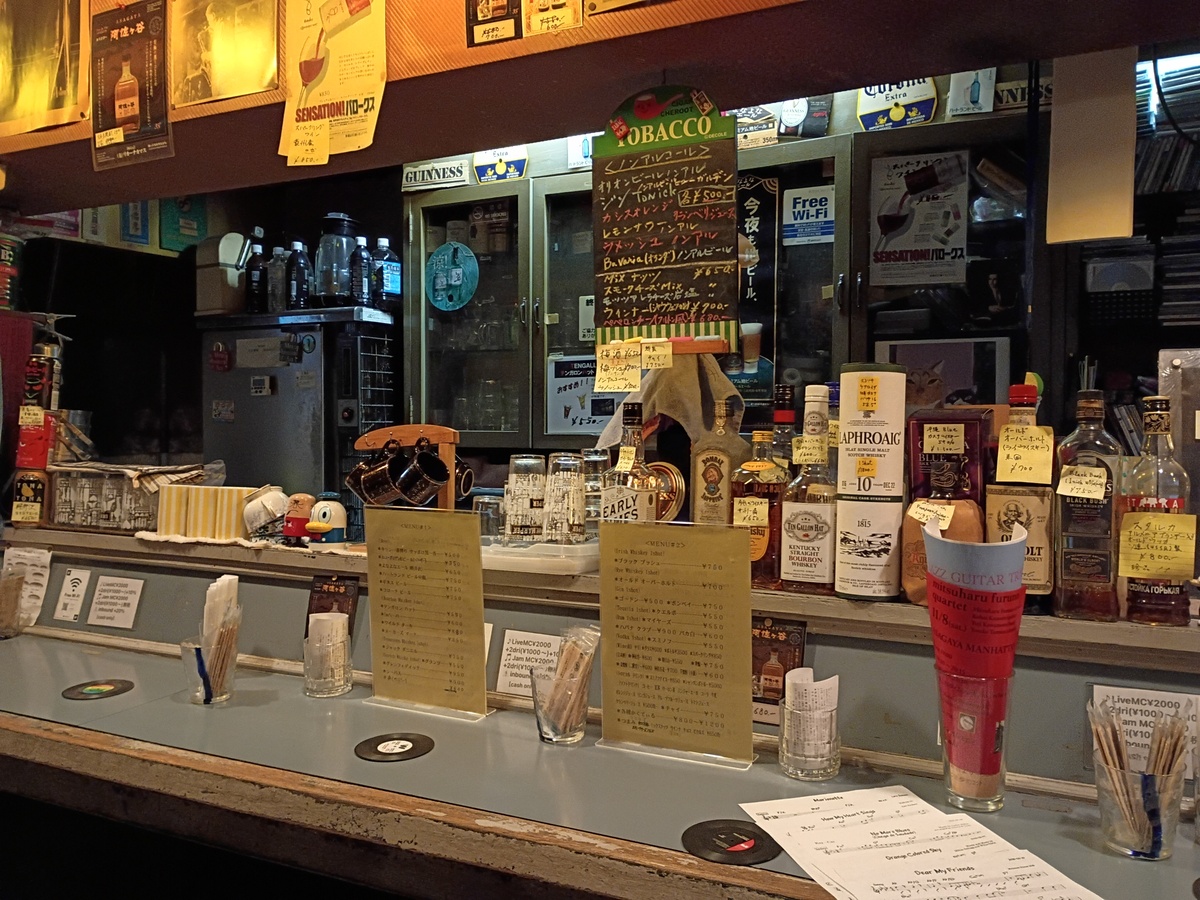
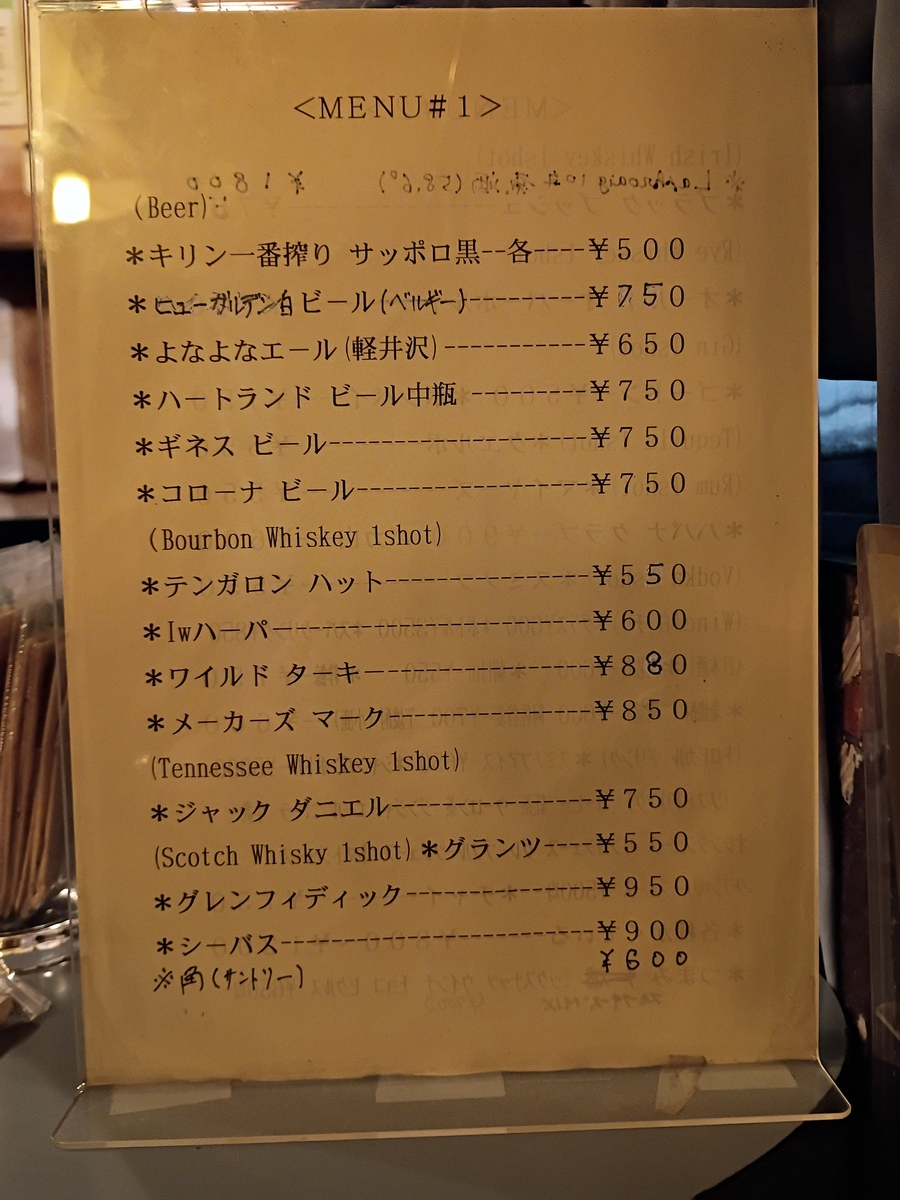
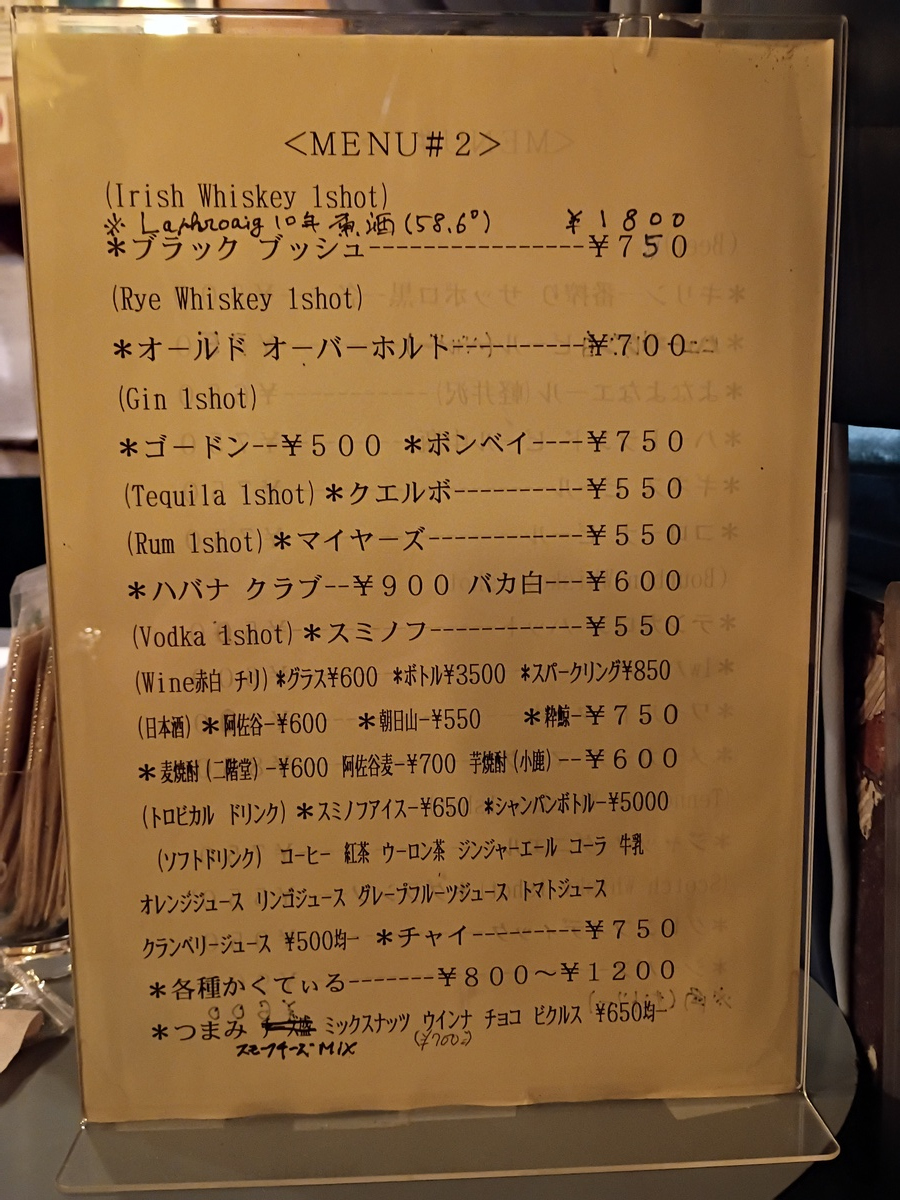
With its unpretentious charm, Asagaya’s Manhattan is also relatively inexpensive. A recent kyukanbi (休肝日, liver resting day) ended up totaling only 3300 yen for one, including the live charge, a ginger ale, and a grapefruit juice. Of course, the charges do add up quickly, once food and alcohol enter the picture, but overall the prices are surprisingly modest.
A last note on finding this spot: With a name like “Manhattan”, online searches may be trickier than normal: Typing “manhattan” or “jazz bar manhattan” into a maps app will likely lead to spots in New York City, but trying something like “manhattan asagaya jazz bar” will get you to the right place.

For more information:
Jazz of Japan #340 • Dec 3, 2025 • Brian McCrory
Add a comment: