
Ochikochi: Ochikochi
Ochikochi is the 2013 album released from a trio of the same name consisting of Taiichi Kamimura on sax, Norikatsu...
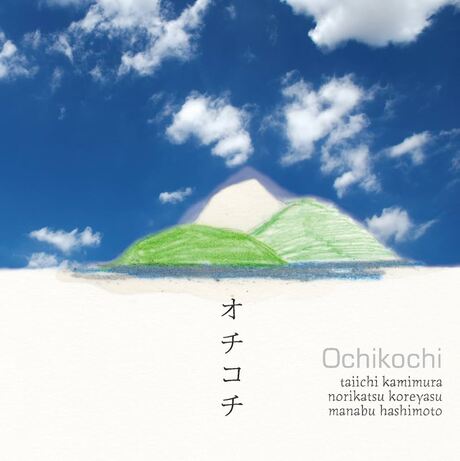
Ochikochi is the 2013 album released from a trio of the same name consisting of Taiichi Kamimura on sax, Norikatsu Koreyasu on bass, and Manabu Hashimoto on drums. All songs are by the group’s front horn player Kamimura. It’s adventurous jazz music in the uninhibited hip style of rugged jazz legends like Ornette Coleman and Eric Dolphy. Even through to the current day, when Kamimura plays live, he still often leads Ornette Coleman-style concerts and jam sessions at various jazz spots around Japan.
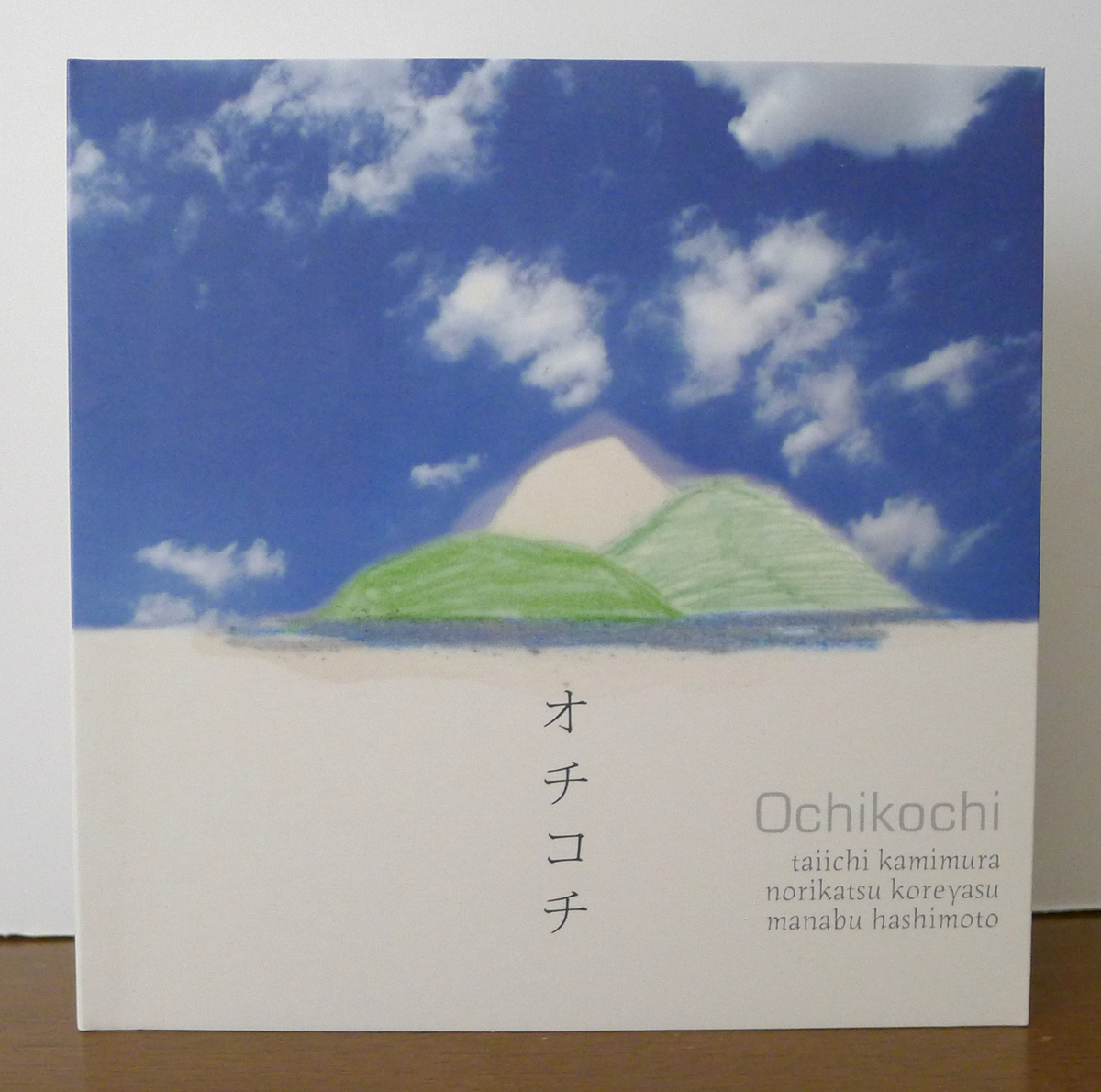
Ochikochi, the Japanese word used as the band name and album title (オチコチ, oh-chee-koh-chee, 遠近), is an uncommon Japanese word that sounds like the more common, everyday word achikochi (あちこち) and shares a similar meaning. Ochikochi is apparently an old literary term with a mimetic repeated rhyming sound that means far and near, here and there, or even past and present. Written in Japanese kanji, the two characters 遠 and 近 literally represent the two distance words “far” and “near”, and together as 遠近 or ochikochi can also contain the nuance of perspective.
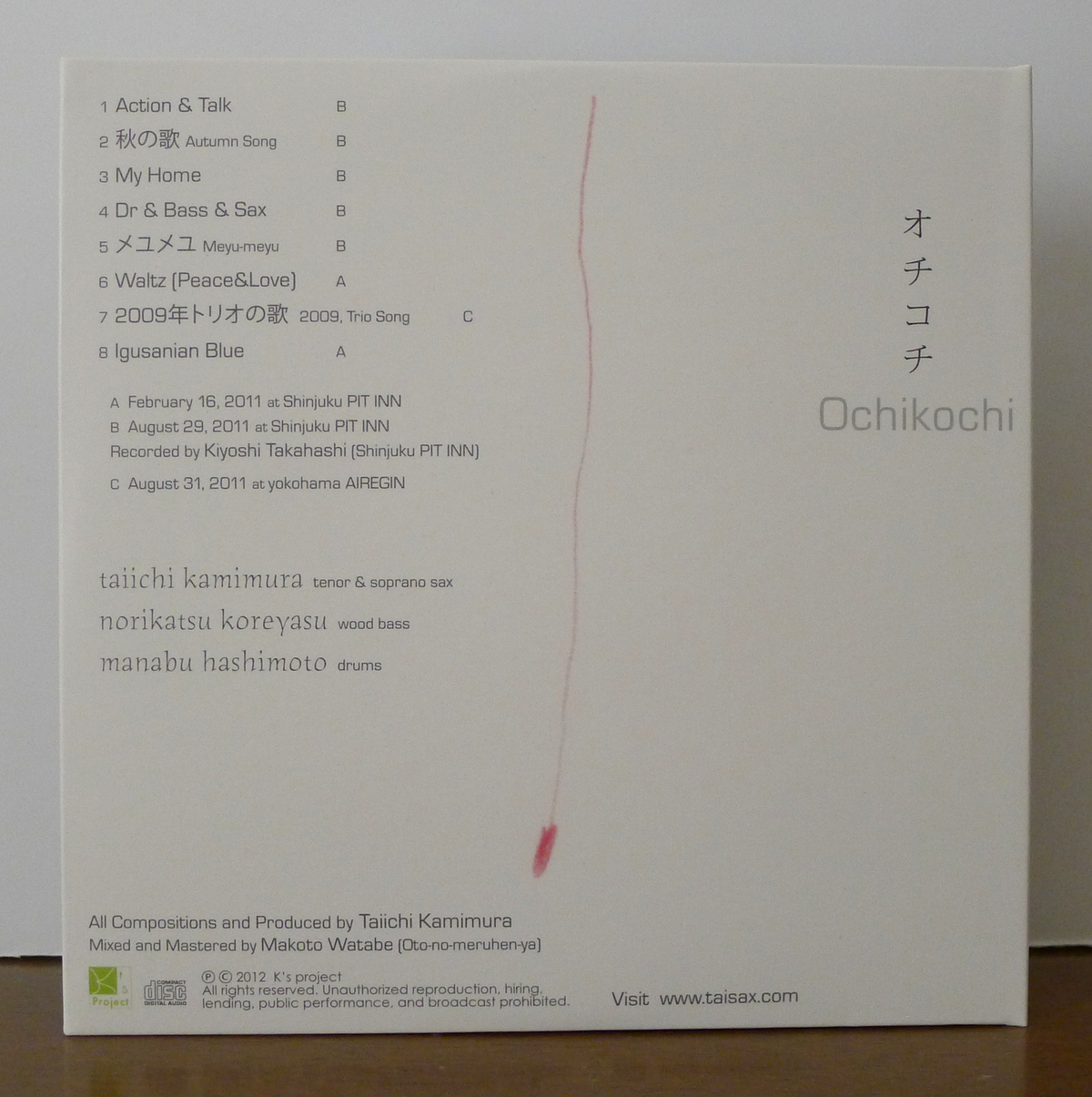
At 1:14 runtime, the album Ochikochi includes eight tracks lasting anywhere from six to twelve minutes apiece, long enough for the three musicians to settle into a mood and explore unhurried free improvisation. The songs were recorded by the trio at three different live concerts in 2011, two at Shinjuku Pit Inn (February 16 and August 29, 2011) and one at Yokohama Airegin (August 31, 2011).
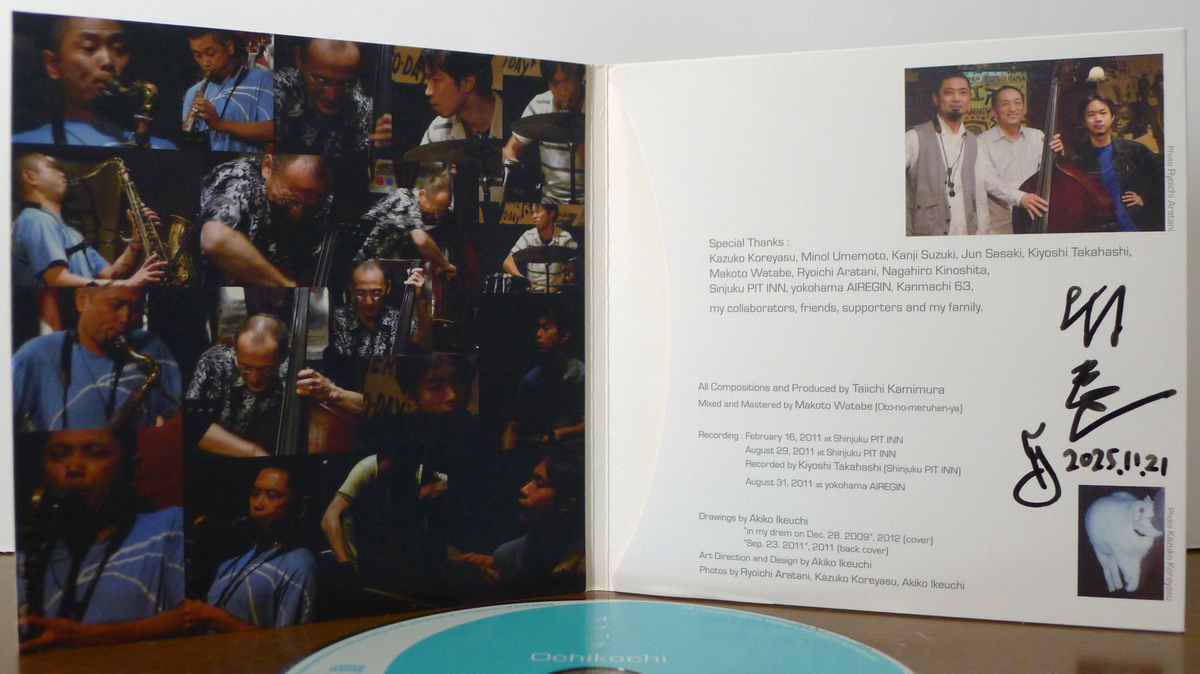
With only three musicians, the sturdiness of the three-legged stool rests on the equal measure and coordination of the trio. With Kamimura on tenor and soprano saxophones as the main player up front, he is the de facto leader who captures attention visibly and audibly as the forefront melody and adlib player. Still, the songs (all composed by Kamimura) stand up firmly through the imaginatively constructed moods and the smart balance of free and locked-in patterns that the members generate. While there are some wild sections in the music (as in, some free jazz and wide-open improvisations), they rise from the groundwork of composed ideas, themes, harmonic structures, and frameworks that the trio uses to journey together. And through it all, there’s plenty of space for the three musicians to stretch out for extended improvisation, either out in front of the other two musicians, or in simultaneous soloing modes.
There is never the feeling that the musicians are lost or simply wandering without a map. These compositions are such that that the resulting music is fascinating but also dangerous and risky, as this kind of music can sometimes take a careful ear and deliberate attention to uncover the plan in the seeming chaos. Alternatively, just unplugging and letting the trip carry you along and wash through you is a completely enjoyable experience, too… maybe even the best way.
Track #1 “Action & Talk” seems complicated at first with a seemingly unsteady beat (or, one that is initially hiding) but the melody played by synchronized sax and bass is one that guides listeners through the opening chapter of a complex, interesting, but potentially confusing story. This dual- or triple-barreled sharing of the melody is something that the sax, bass, and drums enjoy throughout the album.
#2 “Autumn Song” (秋の歌, Aki no Uta) continues the adventure and pushes boundaries with freeish swing and vamp-like movements, that is, swing with its own thing that takes form out of a cauldron of potent musical chemicals and skill.
#3 “My Home” (マイ・ホーム) is an offbeat tune with a steady beat that seems to be easier listening but with unexpected angles, and some 4 over 3 polymeter moments to keep the edges sharp.
Track #4 “Dr & Bass & Sax” pulls a melody with staggered fenceposts of gaps and wires, one that is doubled, linked, and responded to Hashimoto’s drums. Forward motion and creative spontaneity move according to an unpredictable plan, as irregular patterns bubble up in the turbulent flow. It’s a entrancing conversation between the three players.
Track #5 “Meyu Meyu” (メユメユ) is another highlight with a variety of action based on loops of melody, rooted tones based on vamps and breaks, and a series of open sections. The musical complexity can be seen through a close counting reveals a 13-beat meter (3/4, 3/4, 3/4, 2/4/, 2/4?) that is surprisingly easy to follow based on the clear melody and harmony, and the tightness of the rhythm section.
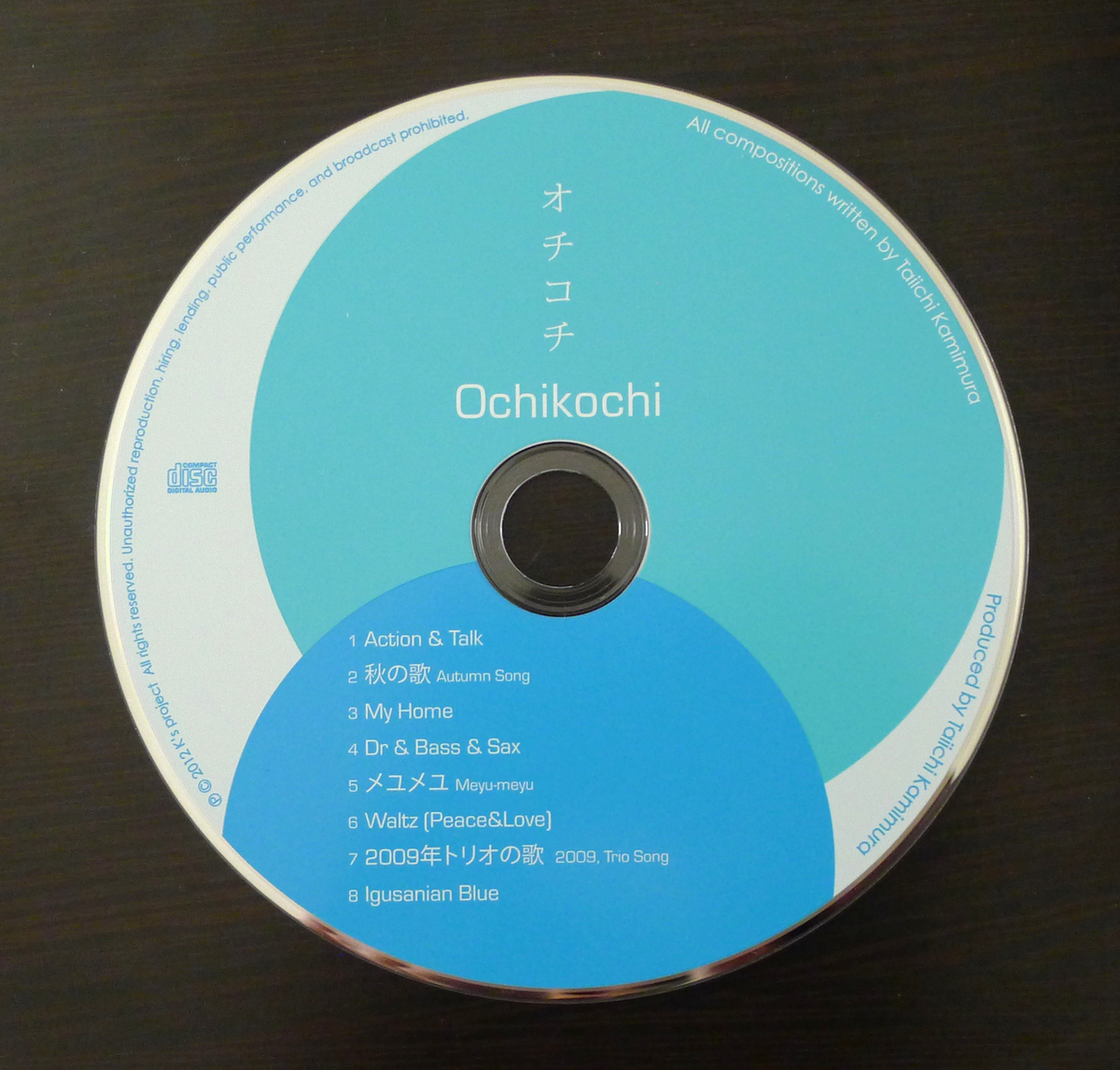
Track #6 is titled “Waltz (Peace & Love)” and is a medium-paced 9-minute ballad that leans mostly towards a quiet jazz waltz that encourages good feelings and ease, doubtlessly. It’s an extended moment of repose and contentment.
Track #7 is “2009, Trio Song” (2009年トリオの歌, 2009 Nen Trio no Uta) is also calm and pretty played with a straight beat that walks through unfamiliar but comfortable changes.
Finally, the last song is track #8, “Igusanian Blue”, a meditative song that develops slowly and deeply. This song’s shifting tonal centers and straightly fashioned melody seems to share some ancient DNA with Herbie Hancock’s composition “Maiden Voyage” (could the mysterious title “Igusanian Blue” somehow be an undecipherable reference to Herbie’s prior album Empyrean Isles?) Be that as it may, this final statement on the album wraps up the lengthy and atmospheric journey into the distance, near and far, of Ochikochi’s layered concepts of near and far, here and there, simple and complex.
Obi Notes
Sound - Space - Resonance - Jazz
Three distant gazes intersect and unfold. Looking upwards, downwards, and far away - warmth emanates and dissipates.
A recording of the distance, far and near (ochikochi), that is the musical performance of Kamimura, Koreyasu, and Hashimoto. At Shinjuku Pit Inn and Yokohama Airegin. First album.
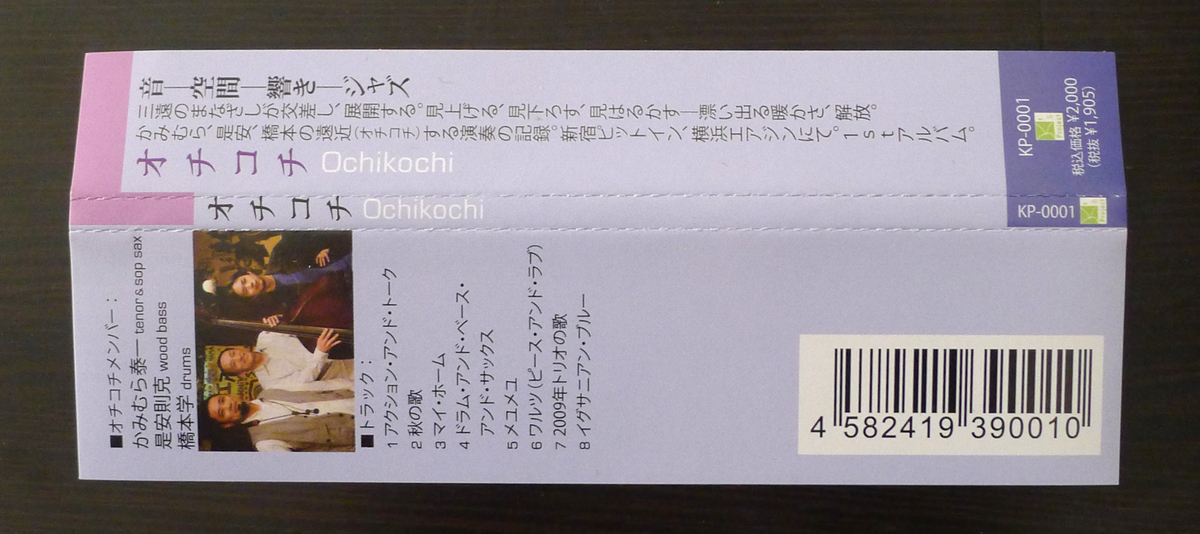
Ochikochi by Ochikochi
- Taiichi Kamimura - tenor and soprano sax
- Norikatsu Koreyasu - wood bass
- Manabu Hashimoto - drums
Released in 2012 on K’s Project as KP-0001.
Japanese names: かみむら泰一 Kamimura Taiichi 是安則克 Koreyasu Norikatsu 橋本学 Hashimoto Manabu
Audio and Video
- Excerpt from track #5: “メユメユ Meyu-meyu”
Jazz of Japan #366 • May 24, 2026 • Brian McCrory
Related albums: Sketches (2007), Incomplete Voices (2017), Duets Till Now, From Here (2025)